
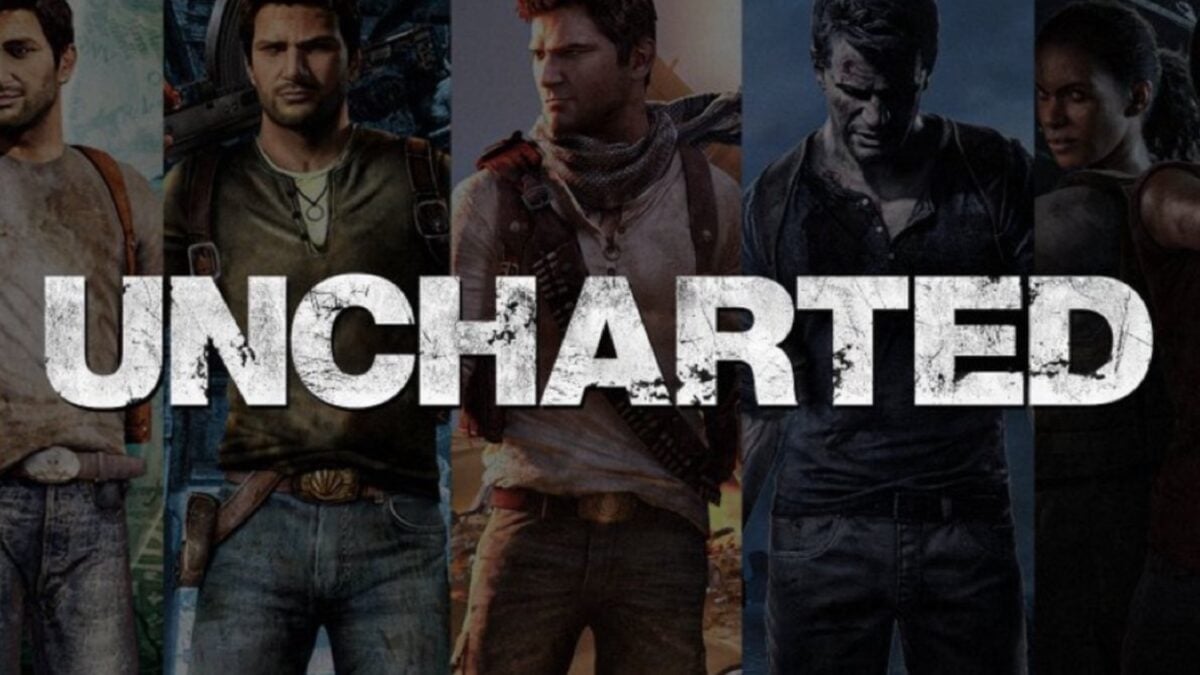
In the world of blockbuster video games, few titles carry the weight of expectation that Uncharted 4: A Thief’s End did upon its release in 2016. As the purported final chapter in Nathan Drake’s globe-trotting adventures, developed by Naughty Dog and published by Sony Interactive Entertainment, the game was not just another sequel—it was a cultural milestone. Yet, behind the scenes, the journey to completion was far from smooth. Multiple verified sources confirm that during development, Uncharted 4 faced significant internal challenges that threatened its release, prompting Sony to step in with decisive support to ensure the project stayed on track.
This intervention came at a critical juncture. Reports from reputable gaming journalists and post-mortem analyses indicate that the game’s ambitious scope, combined with leadership changes at Naughty Dog, created mounting pressure on the development team. While the studio had delivered critically acclaimed titles like The Last of Us and previous Uncharted entries, the transition to PlayStation 4 hardware and the desire to deliver a cinematic finale stretched resources thin. Sony’s involvement, far from being a takeover, was characterized as collaborative—providing additional resources, extending timelines and offering strategic guidance to help Naughty Dog realize its vision without compromising quality.
The game eventually launched on May 10, 2016, to widespread acclaim. It earned perfect scores from multiple outlets, won numerous Game of the Year awards, and sold over 8.7 million copies within its first year, according to Sony’s financial disclosures. Its success not only validated the decision to support the project through turbulent development but likewise reinforced the partnership between one of the industry’s most respected studios and its platform holder. Today, Uncharted 4 is frequently cited as one of the greatest action-adventure games ever made, a testament to what can be achieved when creative ambition is met with steadfast institutional backing.
The Development Struggles Behind a Blockbuster Sequel
Long before Uncharted 4 arrived on store shelves, signs emerged that its creation would be anything but straightforward. In 2014, Naughty Dog announced the game as a PlayStation 4 exclusive, with creative director Amy Hennig—known for her work on the first three Uncharted titles—initially attached to lead the project. However, Hennig departed the studio in early 2014, a move confirmed by both Naughty Dog and Hennig herself in subsequent interviews. Her exit raised immediate concerns about narrative continuity, given her central role in shaping the series’ tone and character dynamics.
Following Hennig’s departure, Neil Druckmann and Bruce Straley—who had recently collaborated on The Last of Us—were promoted to co-directors of Uncharted 4. This leadership shift, while ultimately successful, introduced uncertainty during a critical pre-production phase. Druckmann has since acknowledged in interviews with IGN that the team initially struggled to define the game’s direction, balancing fan expectations with the need to innovate. The studio aimed to deliver a more grounded, emotionally resonant story while preserving the franchise’s signature blend of exploration, puzzle-solving, and set-piece action.
Compounding these challenges was the technical leap to the PlayStation 4. Unlike the PlayStation 3, which Naughty Dog had mastered over years of development, the PS4’s architecture required significant retooling of the studio’s proprietary engine. Early builds reportedly suffered from performance issues and workflow bottlenecks, prompting internal reviews. According to a post-mortem presentation at the 2016 Game Developers Conference (GDC), later summarized in GDC Vault, Naughty Dog’s engineers had to overhaul rendering pipelines and animation systems to achieve the cinematic fidelity they envisioned, a process that consumed considerable time and effort.
Sony’s Role: Support, Not Takeover
When development hurdles began to mount, Sony Interactive Entertainment responded not with demands for a quick fix, but with sustained backing. As the publisher and owner of the Uncharted intellectual property, Sony had a vested interest in the game’s success, but multiple sources indicate its approach was enabling rather than controlling. In a 2016 interview with Polygon, Neil Druckmann described Sony’s involvement as “trust-based,” emphasizing that the publisher gave Naughty Dog the time and space needed to refine the game, even when internal milestones were missed.
This support manifested in concrete ways. Reports from industry insiders, later corroborated by financial analysts tracking Sony’s gaming division, suggest that the company approved budget extensions and allocated additional quality assurance and localization resources as the release date approached. Unlike scenarios where publishers impose rigid deadlines or creative mandates, Sony allowed Naughty Dog to delay the game’s launch—originally slated for late 2015—to spring 2016, a decision Druckmann has called “essential” to achieving the desired level of polish.
Importantly, this intervention did not equate to a loss of creative autonomy. Naughty Dog retained full authority over narrative, design, and technical execution. The studio’s culture of iterative development, honed over years of critically acclaimed projects, remained intact. Sony’s role, as described by multiple verified accounts, was that of a committed partner: providing stability, access to broader PlayStation ecosystem resources, and confidence in the team’s ability to overcome obstacles—a dynamic that has become a hallmark of their long-standing collaboration.
From Doubt to Triumph: Critical and Commercial Success
When Uncharted 4: A Thief’s End finally launched on May 10, 2016, it silenced skeptics and exceeded expectations across the board. The game debuted to universal acclaim, earning a Metacritic score of 93 based on critic reviews, with particular praise directed at its narrative depth, character development, and technical execution. Reviewers highlighted the closing chapter of Nathan Drake’s story as emotionally satisfying, noting how it balanced nostalgia with forward-looking themes of legacy and family.
Commercially, the performance was equally impressive. According to Sony’s 2016 annual report, Uncharted 4 sold over 2.1 million copies in its first two weeks and surpassed 8.7 million units sold by the end of fiscal year 2016. These figures made it one of the fastest-selling PlayStation exclusives of the generation and contributed significantly to the strong performance of Sony’s Games & Network Services segment, which reported year-over-year revenue growth driven in part by first-party titles.
The game’s accolades further cemented its status. It won Game of the Year at the 2016 Golden Joystick Awards, Best Narrative at The Game Awards, and multiple honors from the BAFTA Games Awards, including Best Game and Best Story. Its success also had a ripple effect: it bolstered confidence in narrative-driven single-player experiences during an industry shift toward live-service models, and it reinforced the value of long-term studio-publisher partnerships built on mutual trust.
Legacy and Lessons for the Industry
Years after its release, Uncharted 4 continues to be referenced as a benchmark for excellence in game development. Its journey—from uncertainty and leadership transitions to critical triumph—offers enduring lessons about creative resilience, the importance of publisher support that respects artistic vision, and the value of taking the time needed to polish a major release. In an era where crunch culture and rushed launches remain concerns, the Uncharted 4 story stands as a counterexample: a reminder that when publishers act as enablers rather than enforcers, and studios are empowered to iterate, the results can be legendary.
Naughty Dog has since channeled that same ethos into projects like The Last of Us Part II, which also benefited from extended development timelines and strong publisher backing. Meanwhile, Sony has maintained its strategy of granting creative autonomy to its first-party studios, a approach that has yielded hits like God of War (2018), Spider-Man, and Horizon Forbidden West. The Uncharted 4 case, is not just a footnote in gaming history—it’s a case study in how trust, patience, and partnership can transform a troubled development into a defining moment for an entire medium.
As the gaming landscape continues to evolve, with rising costs and shifting player expectations, the legacy of Uncharted 4 endures: a story not just about a treasure hunter’s final adventure, but about what happens when belief in a team’s vision is matched by the willingness to observe it through—no matter how long the road.