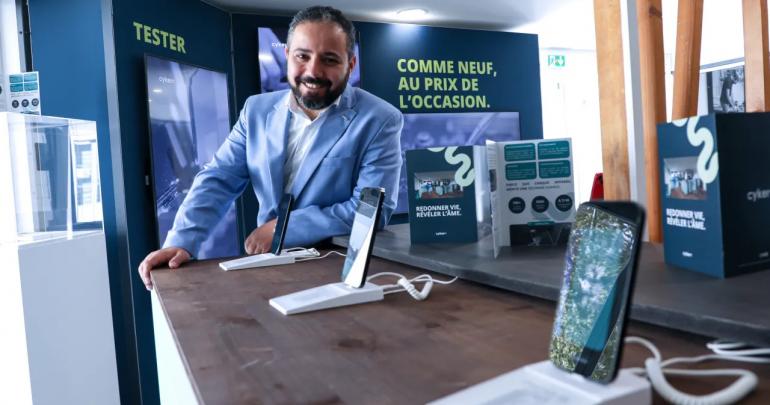
Montpellier, France – A burgeoning hub for technological innovation and sustainable practices, is poised to turn into a key player in the burgeoning market of refurbished electronics. Cykero, a European leader in the refurbishment of smartphones, tablets, laptops, and smartwatches, is solidifying its presence with a significant investment in the region. Founded in Berlin in 2020, the company is constructing a state-of-the-art “Technocentre 5.0” in Castelnau-le-Lez, aiming to redefine the perception of refurbished technology and create up to 160 jobs by 2030.
The move represents a strategic expansion for Cykero, which already operates bases in Berlin and Paris. The company’s founder, Bichoi Metias, envisions Montpellier as the “capital of premium reconditioning,” shifting the industry’s focus from simply offering a cheaper alternative to providing a high-quality, sustainable option for consumers. This ambition is backed by a substantial €21 million investment in the latest facility, as reported by Echo des Tribunes.
A New Vision for Refurbished Electronics
Cykero’s approach to refurbishment goes beyond cosmetic repairs and basic functionality checks. The company focuses on a “premium” reconditioning process, aiming for quality levels comparable to new devices. According to Cykero, each device undergoes a comprehensive diagnostic assessment, repair using high-quality components, meticulous cleaning, and over 80 rigorous testing points. This commitment to quality is reflected in the company’s impressively low return rate of less than 2%, significantly lower than the industry average of around 15% for publicly available refurbished devices.
This dedication to quality is driven by a desire to change consumer perceptions. Metias and his co-founder, Romain Palanques, believe that refurbished electronics should not be seen as a compromise but as a smart and sustainable choice. The Technocentre will play a crucial role in achieving this goal, allowing Cykero to process large volumes of devices and enhance its competitiveness in a rapidly expanding market. The founders have already relocated to Montpellier to oversee the project and facilitate local recruitment, as noted in Le Petit Journal.
Technological Innovation and R&D Focus
The core of Cykero’s strategy lies in its investment in research and development. The company’s R&D team is focused on achieving complete component-level repair for smartphones, extending the lifespan of devices and reducing electronic waste. This commitment to innovation is a key differentiator for Cykero, positioning it as a leader in the circular economy. The Technocentre, spanning 3,800 square meters, is designed to facilitate this advanced repair function.
Construction of the facility began in November 2025, with a partial opening anticipated in December 2026 and full operational capacity expected by March 2030, according to Midi Libre. Initially, the Technocentre will process approximately 40,000 devices per month, with plans to scale up to 150,000 devices as demand grows. This ambitious growth trajectory underscores Cykero’s confidence in the future of the refurbished electronics market.
The Economic Impact on Montpellier
Cykero’s investment is a significant boost to the economy of the Montpellier Métropole, which is actively seeking to develop its expertise in the reconditioning sector. The creation of 160 jobs within the Eurêka district represents a substantial contribution to local employment. The project has garnered support from local authorities eager to foster innovation and sustainable business practices.
Bichoi Metias, the founder of Cykero, described his move to France as a “dream reach true,” highlighting the company’s commitment to long-term growth and innovation within the French market. His background as a former engineer in the railway industry demonstrates a dedication to technical excellence and a passion for innovation, qualities that are central to Cykero’s mission.
Addressing the Growing Demand for Sustainable Electronics
The rise of Cykero and the growth of the refurbished electronics market are driven by a growing consumer awareness of environmental issues and a desire for more sustainable consumption patterns. The environmental impact of electronic waste is a significant concern, and reconditioning offers a viable solution by extending the lifespan of devices and reducing the need for new manufacturing.
The demand for refurbished smartphones, tablets, and laptops is increasing as consumers seek affordable and environmentally friendly alternatives to new devices. Cykero’s focus on premium quality and rigorous testing aims to address concerns about the reliability and performance of refurbished products, making them a more attractive option for a wider range of consumers. The company’s commitment to transparency, with a clear quality charter and a low return rate, further builds trust and confidence in its products.
Cykero’s success story highlights the potential for innovation and sustainability to drive economic growth. By investing in advanced technology, prioritizing quality, and fostering a culture of environmental responsibility, the company is not only transforming the refurbished electronics market but also contributing to a more sustainable future. The Montpellier Technocentre represents a significant step towards realizing this vision, solidifying the region’s position as a leader in the circular economy.
The next key milestone for Cykero is the partial opening of the Technocentre in December 2026, marking the beginning of large-scale operations in Montpellier. Consumers and industry observers alike will be watching closely to see how Cykero’s innovative approach to refurbishment reshapes the market and drives the adoption of more sustainable practices. Share your thoughts on the future of refurbished electronics in the comments below.
Related reading
- Hungarian president Tamás Sulyok signs constitutional amendment ending his own mandate
- Protests Erupt in Kyiv Over Fedorov’s Dismissal: Tensions Escalate Between Military Leadership and Government
- Iran War Updates: U.S. launches 7th straight day of strikes as traffic freezes up in Strait of Hormuz (archyworldys.com)