
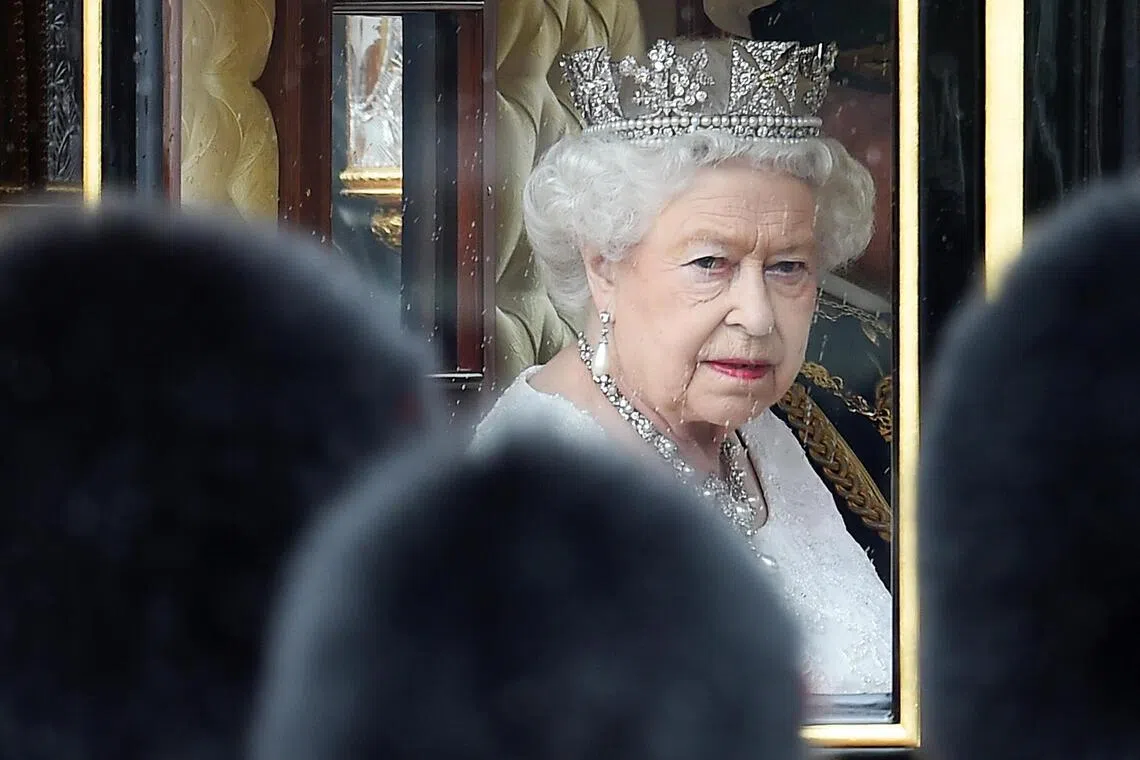
The British royal family has appointed historian Dr. Anna Keay to write an official biography of Queen Elizabeth II, granting her unprecedented access to the late monarch’s personal and official papers. The announcement, confirmed by Buckingham Palace in early 2024, marks a significant step in the ongoing effort to document the Queen’s 70-year reign with scholarly rigor and archival depth. Dr. Keay, a respected authority on Stuart and Georgian history, will draw from materials held in the Royal Archives at Windsor Castle, including private correspondence, diaries, and state records not previously available to researchers.
This project represents one of the most anticipated royal biographies in recent memory, aiming to provide a nuanced portrait of Elizabeth II beyond public ceremonies and televised addresses. By working directly with primary sources, Dr. Keay seeks to illuminate the Queen’s role in navigating postwar Britain, the decline of empire, constitutional evolution, and the monarchy’s adaptation to modern media scrutiny. The biography is expected to examine how Elizabeth balanced duty with personal life, managed relationships with 15 British prime ministers, and maintained the institution’s relevance through decades of social change.
Dr. Keay’s appointment follows a careful selection process involving royal advisors and academic peers. Known for her works such as The Magnificent Monarch: Charles II and the Ceremonies of Power and The Crown Jewels, she brings both narrative flair and archival expertise to the project. Her prior experience curating exhibitions at Historic Royal Palaces and serving as Director of the Attingham Summer School for the Study of Historic Houses equips her to interpret complex historical materials with sensitivity and insight.
The Queen’s personal papers, which include letters to family members, reflections on state affairs, and notes from weekly audiences with prime ministers, are considered among the most valuable private collections in British history. Access to these materials is tightly controlled, typically reserved for senior royal officials or scholars with specific clearance. Dr. Keay’s granted access underscores the trust placed in her scholarly judgment and discretion by the royal household.
Official records to be consulted include documents from the Privy Council Office, Foreign Office correspondence related to Commonwealth engagements, and internal memos detailing the monarchy’s response to major national events — from the Aberfan disaster to the turn of the millennium. While some materials may remain restricted due to privacy or sensitivity, the breadth of access promised suggests a comprehensive examination of both public duties and private reflections.
Why This Biography Matters Now
The decision to commission an official biography comes at a pivotal moment for the British monarchy. Following Queen Elizabeth II’s passing in September 2022 and the subsequent accession of King Charles III, public interest in the late Queen’s legacy has intensified. Surveys conducted by YouGov in late 2023 showed that 68% of Britons held a favorable view of Elizabeth II’s reign, with particular admiration for her sense of duty and longevity [YouGov, November 2023]. This biography aims to contribute to that understanding by offering deeper context to her decisions and temperament.
the project arrives amid ongoing debates about the monarchy’s role in contemporary society. Discussions about reparations for colonial history, the cost of royal expenditures, and the institution’s relevance to younger generations have gained traction in recent years. By grounding the narrative in verifiable archives, Dr. Keay’s function could provide a factual foundation for these conversations, moving beyond speculation or partisan commentary.
Royal biographies have historically shaped public perception — from official accounts like Sir John Wheeler-Bennett’s King George VI: His Life and Reign to more critical modern works such as Andrew Morton’s Diana: Her True Story. What distinguishes this effort is its reliance on direct access to the Queen’s own writings, potentially offering insights into her private reflections on moments like the 1992 “annus horribilis,” the death of Diana, Princess of Wales, or her views on Brexit — topics she never addressed publicly.
Who Is Dr. Anna Keay?
Dr. Anna Keay is a British historian specializing in early modern monarchy and material culture. She earned her doctorate from the University of London and has held fellowships at institutions including the National Maritime Museum and the Victoria and Albert Museum. Prior to her current role, she served as Curator of Historic Royal Palaces, where she oversaw exhibitions at the Tower of London, Hampton Court Palace, and Kensington Palace.
Her scholarly approach emphasizes the interplay between ritual, architecture, and political power — a lens well-suited to examining Elizabeth II’s reign, which blended ancient tradition with televised modernity. In The Magnificent Monarch, Keay explored how Charles II used ceremony to restore authority after the English Civil War; similar themes of legitimacy and adaptation are expected to resonate in her portrayal of the late Queen.
Beyond academia, Dr. Keay has contributed to historical documentaries for the BBC and Channel 4, bringing her expertise to broader audiences. Her ability to balance academic rigor with accessible storytelling makes her a fitting choice for a biography intended not only for scholars but also for general readers interested in royal history and 20th-century Britain.
Access to the Royal Archives: What It Means
The Royal Archives, housed in the Round Tower at Windsor Castle, contain centuries of royal correspondence, household records, and personal documents spanning from the Stuart era to the present day. Unlike the National Archives, which hold government records, the Royal Archives are private and administered under the authority of the Sovereign. Access is granted only by permission of the monarch or their designated representatives.
For this project, Dr. Keay will work under supervised conditions, likely within the archive’s reading room, with restrictions on copying or removing materials. While she will be able to examine original manuscripts, any quotations or reproductions in the published biography will require approval from the Royal Household to ensure compliance with privacy agreements and copyright.
This level of access is rare. Previous biographers of Elizabeth II, such as Ben Pimlott (The Queen: A Biography of Elizabeth II) and Robert Lacey (Monarch: The Life and Reign of Elizabeth II), relied heavily on interviews, public records, and secondary sources due to limitations on private papers. Dr. Keay’s opportunity to engage directly with the Queen’s own words represents a significant advancement in royal biographical scholarship.
Officials at Buckingham Palace have stated that the biography will be produced independently, with Dr. Keay retaining editorial control over content and interpretation. But, the final manuscript will undergo review by the Royal Household before publication — a standard procedure for works involving sensitive royal material to ensure accuracy and appropriateness.
What Readers Can Expect
The biography is expected to cover the full scope of Elizabeth II’s life, from her birth in 1926 as Princess Elizabeth of York to her death at Balmoral Castle in 2022. Key themes likely to emerge include her early wartime service in the Auxiliary Territorial Service, the sudden accession following her father’s death in 1952, and the challenges of raising a family while fulfilling constitutional duties.
Dr. Keay may also explore the Queen’s relationships with world leaders — from Winston Churchill and Dwight D. Eisenhower to Nelson Mandela and Barack Obama — offering insight into how soft power and personal diplomacy complemented Britain’s foreign policy. Her noted interest in material culture could lead to detailed discussions of the Queen’s wardrobe, jewels, and residences as expressions of identity and continuity.
While the exact publication date has not been announced, industry sources suggest a release window in late 2025 or early 2026, allowing time for thorough research, writing, and editorial review. The book will likely be published by a major imprint specializing in history or biography, though no official publisher has been confirmed as of mid-2024.
For readers seeking updates, Buckingham Palace occasionally shares information about royal publications through its official website and press office. The Royal Collection Trust, which manages public access to royal residences and exhibitions, may also host related events or lectures upon the book’s release.
Next Steps and Official Timelines
As of June 2024, Dr. Keay has begun preliminary work in the Royal Archives, according to a statement released by her academic affiliation. No further public updates on her progress have been issued, which is customary for projects of this nature to maintain scholarly integrity and avoid premature speculation.
The next confirmed milestone will be the submission of the completed manuscript to the Royal Household for review, expected no earlier than late 2025. Following approval, the publisher will announce a formal release date, accompanied by potential promotional activities such as interviews, literary festival appearances, or exhibition tie-ins.
Readers interested in following the project’s development are encouraged to monitor official channels, including the websites of Historic Royal Palaces and the University of London’s Institute of Historical Research, where Dr. Keay has previously collaborated. Until then, the biography remains a promising addition to the literature on one of the longest-reigning and most scrutinized monarchs in British history.
What aspects of Queen Elizabeth II’s life would you most like to see explored in this latest biography? Share your thoughts in the comments below, and consider sharing this article with others interested in royal history and historical scholarship.