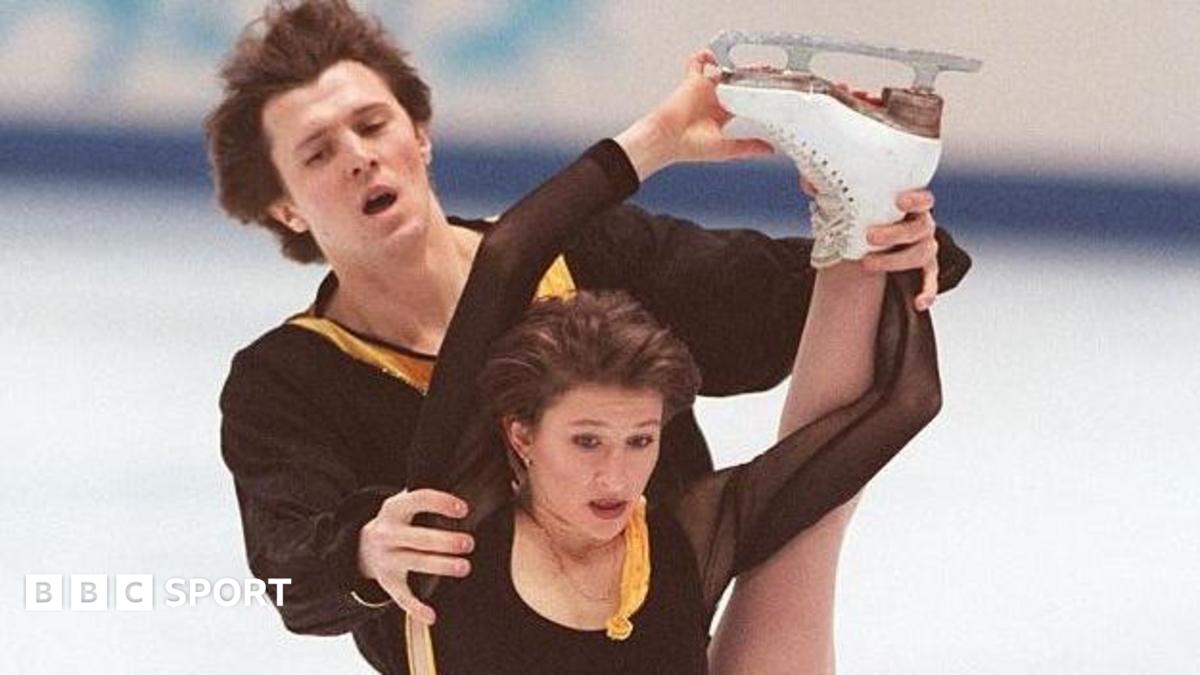
Artur Dmitriev, the pioneering Russian figure skater who became the first in the sport’s history to win Olympic gold medals with two different partners, has died at the age of 58. His passing was confirmed by the Russian Figure Skating Federation, marking the end of a career that redefined the standards of pair skating in the 1990s.
Dmitriev’s legacy is rooted in his technical versatility and his ability to excel under the pressure of the world’s most prestigious stages. Throughout his competitive career, he demonstrated a rare capacity to adapt to different skating styles, securing back-to-back Olympic titles with two distinct partners—a feat that remains a benchmark for excellence in international figure skating. According to official Olympic records, his influence on the sport extended well beyond his medal count, as he later transitioned into a successful coaching career that shaped the next generation of Russian skaters.
A Career Defined by Historic Olympic Success
Dmitriev first rose to international prominence alongside partner Natalia Mishkutenok. The pair achieved their first major breakthrough at the 1992 Winter Olympics in Albertville, where they secured the gold medal with a performance that was widely praised for its artistic fluidity and technical precision. Their partnership continued to dominate the global circuit, leading to a silver medal at the 1994 Winter Olympics in Lillehammer.
Following a hiatus from competition, Dmitriev returned to the ice with a new partner, Oksana Kazakova. This transition proved historic at the 1998 Winter Olympics in Nagano, where the duo captured the gold medal. By achieving this, Dmitriev became the first pair skater to win Olympic gold with two different partners, a milestone that solidified his status as an icon of the sport. His ability to maintain a world-class level of performance across nearly a decade of international competition is documented in the International Skating Union (ISU) archives, which detail his transition from a young competitor to a veteran champion.
Transition to Coaching and Lasting Impact
After retiring from active competition, Dmitriev turned his focus toward the development of young talent. He became a prominent coach, working with several notable skaters and contributing to the rigorous training environment that has characterized Russian figure skating for decades. His work behind the boards was characterized by the same technical intensity that defined his own skating career.

Beyond his technical contributions, Dmitriev was a frequent figure at major championships and developmental camps. His death has prompted an outpouring of tributes from the skating community, with many former competitors and officials noting his impact on the evolution of pair skating. The Russian Figure Skating Federation stated that his contributions to the sport were “invaluable,” noting that his approach to training and his understanding of the nuances of the sport helped maintain Russia’s competitive edge in the international arena.
Historical Context and Comparisons
The achievement of winning Olympic gold with different partners is a rare distinction. In the history of pair skating, only a few athletes have managed to reach the podium with multiple partners, but Dmitriev’s status as a double-gold winner remains a unique point of reference. His career spanned a period of significant change in figure skating, moving from the artistic-heavy era of the late 80s to the more athletic, jump-focused routines of the late 90s.
Analysts often compare the technical evolution of the sport during the 1990s to the current era, where the complexity of throw jumps and lifts has reached unprecedented levels. Dmitriev’s ability to bridge these eras, while maintaining the grace required for international judging standards, is frequently cited by sport historians as a key reason for his longevity. His career serves as a case study for future athletes on the importance of adaptability and the psychological resilience required to sustain success at the highest levels of Olympic sport.
As the international skating community continues to mourn, fans and colleagues are expected to honor his memory during upcoming ISU Grand Prix events. While no public memorial services have been finalized by his family as of this writing, updates regarding tributes or commemorative events will be provided through official federation channels. Readers interested in the history of his accomplishments can find detailed performance reviews and biographies on the official Olympic athlete database.
Share your thoughts on the legacy of Artur Dmitriev in the comments below, or join the conversation on our social media channels.