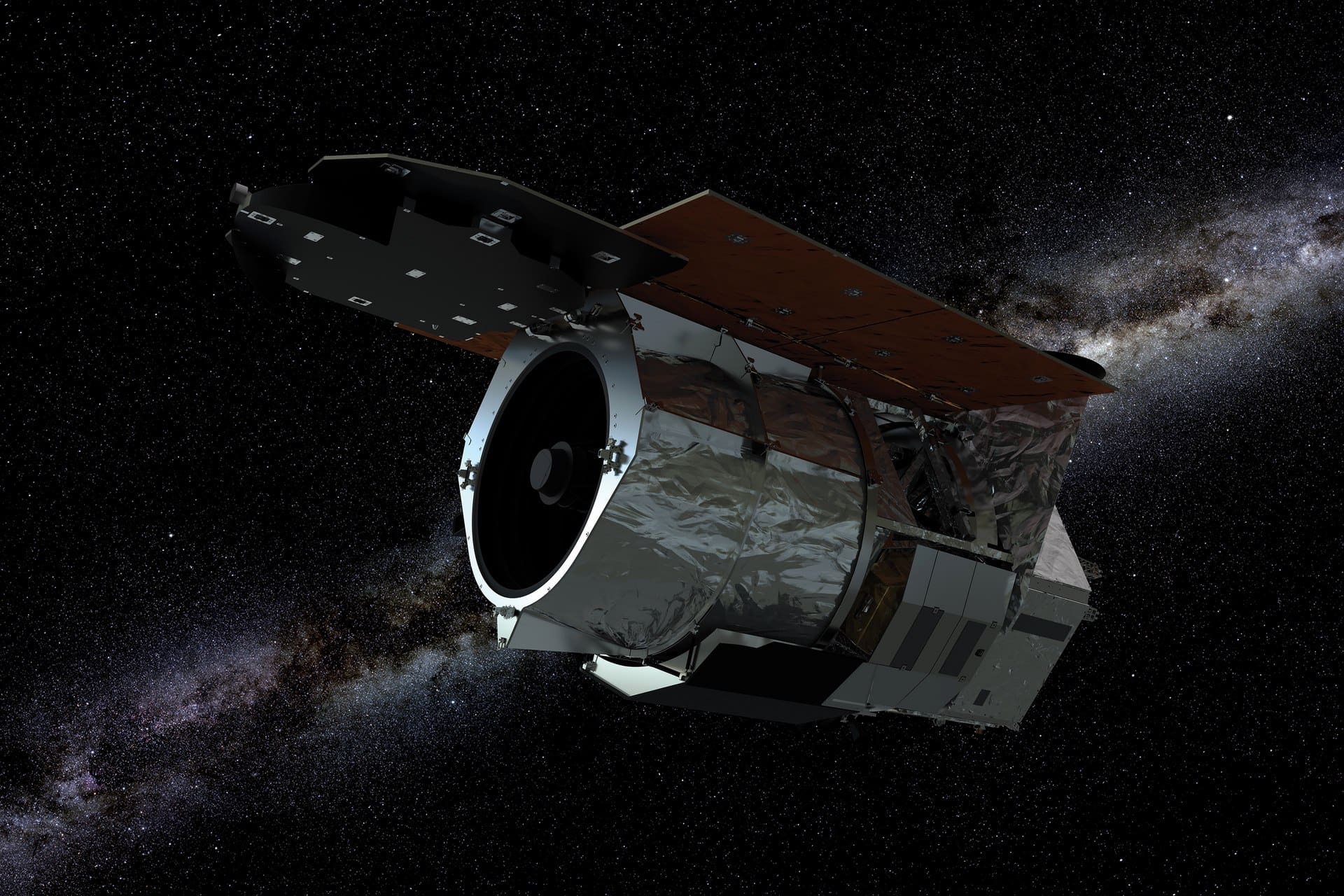
NASA’s Nancy Grace Roman Space Telescope, currently scheduled for launch by May 2027, is engineered to capture images with a field of view 100 times larger than that of the Hubble Space Telescope. By utilizing a 2.4-meter primary mirror—the same size as Hubble’s—the observatory will combine high-resolution imaging with an unprecedented survey speed, enabling astronomers to map the cosmos in ways previously unattainable. According to official NASA mission documentation, the telescope is designed to address fundamental questions regarding dark energy, exoplanets, and infrared astrophysics.
The Roman Space Telescope serves as a wide-field successor to both Hubble and the James Webb Space Telescope (JWST). While Hubble excels at deep, high-resolution snapshots of specific targets, and JWST provides unparalleled sensitivity in the infrared spectrum for narrow fields, Roman is optimized for large-scale surveys. Its primary instrument, the Wide Field Instrument (WFI), will allow scientists to observe vast swaths of the sky simultaneously, effectively accelerating the pace of discovery for wide-area astronomical surveys.
Unprecedented Survey Efficiency
The core of the Roman Space Telescope’s capability lies in its ability to conduct rapid, wide-angle observations. Because the WFI covers a field of view 100 times greater than Hubble’s Wide Field Camera 3, researchers expect to map the structure and evolution of the universe with significantly greater efficiency. This capacity is essential for identifying rare cosmic events and observing the distribution of dark matter across large cosmic structures.

According to the NASA mission profile, the telescope will operate in the near-infrared spectrum, which allows it to peer through interstellar dust clouds that otherwise obscure stars and planetary systems in the galactic plane. This spectral range is critical for conducting a comprehensive census of exoplanets using a technique known as gravitational microlensing. Unlike transit methods that favor planets close to their host stars, microlensing is sensitive to planets located at greater distances, including those similar to our own solar system’s outer planets.
Advancing Dark Energy and Exoplanet Research
A primary scientific goal for the Roman mission is to investigate the influence of dark energy on the expansion of the universe. By measuring the expansion rate of the cosmos and the growth of large-scale structures over billions of years, the telescope aims to provide data that could clarify the nature of the mysterious force driving the universe’s accelerated expansion. These measurements are expected to build upon the foundational work established by the Planck mission and the Dark Energy Survey.
In addition to cosmology, the mission is poised to significantly expand the known catalog of exoplanets. As detailed by the NASA Science Mission Directorate, the telescope will monitor hundreds of millions of stars toward the center of our galaxy. This statistical approach will help astronomers determine how common Earth-like planets are throughout the Milky Way, providing a clearer understanding of planetary formation and the distribution of habitable environments in the galaxy.
Technical Architecture and Development
The Roman Space Telescope represents a major engineering collaboration led by NASA’s Goddard Space Flight Center, with contributions from the Jet Propulsion Laboratory, the Space Telescope Science Institute, and various international partners. The spacecraft is currently undergoing integration and testing at the Goddard facility in Greenbelt, Maryland. The telescope’s design incorporates a coronagraph instrument—a technological demonstration intended to block the intense glare of host stars, allowing for the direct imaging of exoplanets.
According to NASA project status updates, the observatory recently cleared critical assembly milestones, including the integration of the telescope’s main optical assembly. The mission’s timeline remains focused on the May 2027 launch window, which will see the observatory placed into a stable orbit at the second Lagrange point (L2), approximately 1.5 million kilometers from Earth. This location provides a thermally stable environment, which is vital for the precise infrared measurements required by the mission’s science objectives.
Next Steps for the Mission
Following the completion of the structural and optical assembly, the project will transition into rigorous environmental testing to ensure the hardware can withstand the stresses of launch and the extreme conditions of space. NASA is expected to provide periodic updates on these tests through their official mission portal as the 2027 launch date approaches. As the observatory prepares for deployment, the global astronomical community continues to finalize the survey strategies that will define the first years of the telescope’s operational life. Readers are encouraged to monitor the official NASA website for upcoming milestones and future public data releases from the mission.
