
In a medical development described by clinicians as “winning the lottery twice,” a 63-year-old Norwegian man has entered remission from both HIV and a fatal blood cancer. The patient, now known in medical circles as the “patient d’Oslo,” achieved this double remission following a bone marrow transplant from his older brother, a procedure originally intended only to treat his malignancy.
The case, detailed in a report published on April 13, 2026, in the journal Nature Microbiology, highlights a rare intersection of genetic luck and medical intervention. The patient had been living with HIV since 2006 and was later diagnosed in 2017 with myelodysplastic syndrome, a life-threatening form of blood cancer characterized by the bone marrow’s inability to produce sufficient healthy blood cells according to Santé Magazine.
Whereas bone marrow transplants are high-risk procedures, they have historically provided a pathway to HIV remission for a small number of patients—approximately ten people worldwide—who required the treatment for aggressive blood cancers. The “patient d’Oslo” is the latest individual to join this exclusive group, though his case is particularly notable due to the familial nature of the donation.
The success of the treatment hinged on a specific genetic anomaly. Because doctors could not locate a compatible donor who carried the CCR5 mutation—a genetic variation that prevents HIV from entering immune cells—they turned to the patient’s own brother. It was only after the transplant in 2020 that medical professionals discovered the brother was, in fact, a carrier of this rare mutation as reported by Pourquoi Docteur.
The Role of the CCR5 Mutation in HIV Remission
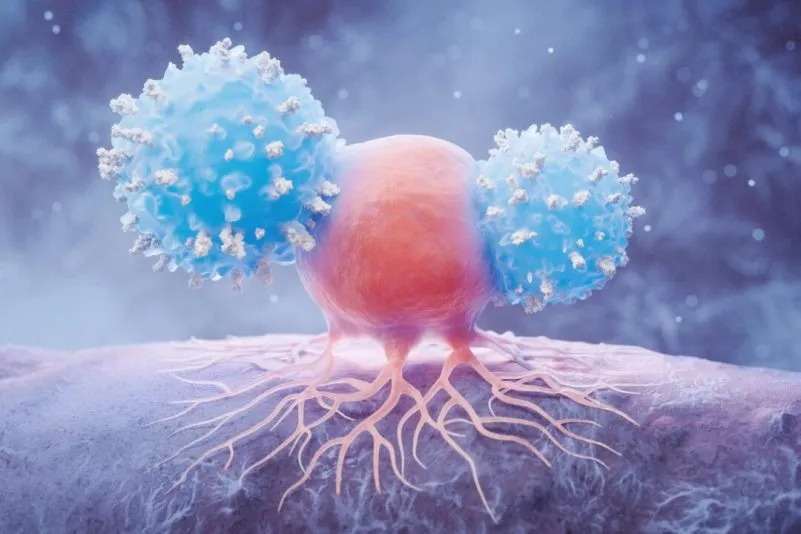
To understand how a bone marrow transplant can eliminate HIV, one must seem at the CCR5 gene. In most people, the CCR5 protein acts as a doorway that allows the HIV virus to enter and infect T-cells, which are critical components of the immune system. However, individuals with a specific mutation in this gene lack these “doorways,” rendering their immune cells resistant to the virus.
In the case of the patient d’Oslo, the transplant effectively “completely replaced” his own immune system with that of his brother. Because the brother’s stem cells carried the CCR5 mutation, the new immune system developed by the patient was naturally resistant to HIV. This prevented the virus from replicating and eventually led to a state where there is no detectable trace of the virus in his system per Pourquoi Docteur.
Dr. Anders Eivind Myhre of Oslo University Hospital, the lead author of the case report, emphasized the unexpected nature of the discovery. “We had no idea… It was incredible. It was like winning the lottery twice,” Myhre stated, referring to the dual success of curing the blood cancer and achieving HIV remission via AFP/Pourquoi Docteur.
Treatment Timeline and Patient Outcome
The journey to remission was a multi-year process involving severe illness and high-risk medical intervention. The patient’s clinical timeline illustrates the precarious nature of his condition prior to the transplant:
- 2006: The patient is first infected with HIV.
- 2017: Diagnosis of myelodysplastic syndrome, a fatal blood cancer.
- 2020: Receipt of a bone marrow/stem cell transplant from his older brother.
- Post-2020: Discovery that the donor possessed the CCR5 mutation.
- Two years post-operation: The patient was able to stop taking his HIV medications according to BFMTV.
The result of this process is a double remission. The myelodysplastic syndrome is no longer active, and the HIV virus is undetectable without the leverage of antiretroviral therapy. This places him among a exceptionally small group of individuals globally who have achieved long-term HIV remission following allogeneic hematopoietic stem cell transplants used to treat blood cancers per Santé Magazine.
Why This Is Not a Universal Cure for HIV
Despite the optimism surrounding the “patient d’Oslo,” medical experts caution that this procedure is not a viable general treatment for the millions of people living with HIV. The transplant process is described as “heavy and risky,” and it is exclusively utilized to treat aggressive blood cancers where no other cure exists according to BFMTV.
The risks associated with a full bone marrow transplant—including graft-versus-host disease and the total suppression of the patient’s original immune system—far outweigh the benefits for a patient who is otherwise stable on modern antiretroviral therapy (ART). The requirement for a donor who is not only a perfect biological match but as well a carrier of the rare CCR5 mutation makes the likelihood of success extremely low for the general population.
However, these rare cases provide invaluable data for researchers. By studying how the CCR5 mutation interacts with the virus in a living patient, scientists can gain insights that may eventually lead to safer, more targeted gene therapies or “functional cures” that do not require the risks of a full transplant.
Key Takeaways: The “Patient d’Oslo” Case
- The Patient: A 63-year-old Norwegian man with HIV (since 2006) and myelodysplastic syndrome (since 2017).
- The Intervention: A 2020 bone marrow transplant from his older brother.
- The Mechanism: The donor possessed a CCR5 gene mutation that prevents HIV from entering cells.
- The Outcome: Remission from both blood cancer, and HIV. the patient stopped HIV medication two years after the transplant.
- The Limitation: The procedure is too dangerous and specific to be used as a standard HIV treatment.
The medical community continues to monitor the patient’s status to ensure the remission remains permanent. The publication of this case in Nature Microbiology on April 13, 2026, serves as a critical update in the ongoing global effort to understand and eventually eliminate HIV.
We invite our readers to share their thoughts on these medical advancements in the comments below. For more updates on infectious disease research and medical innovation, follow World Today Journal.