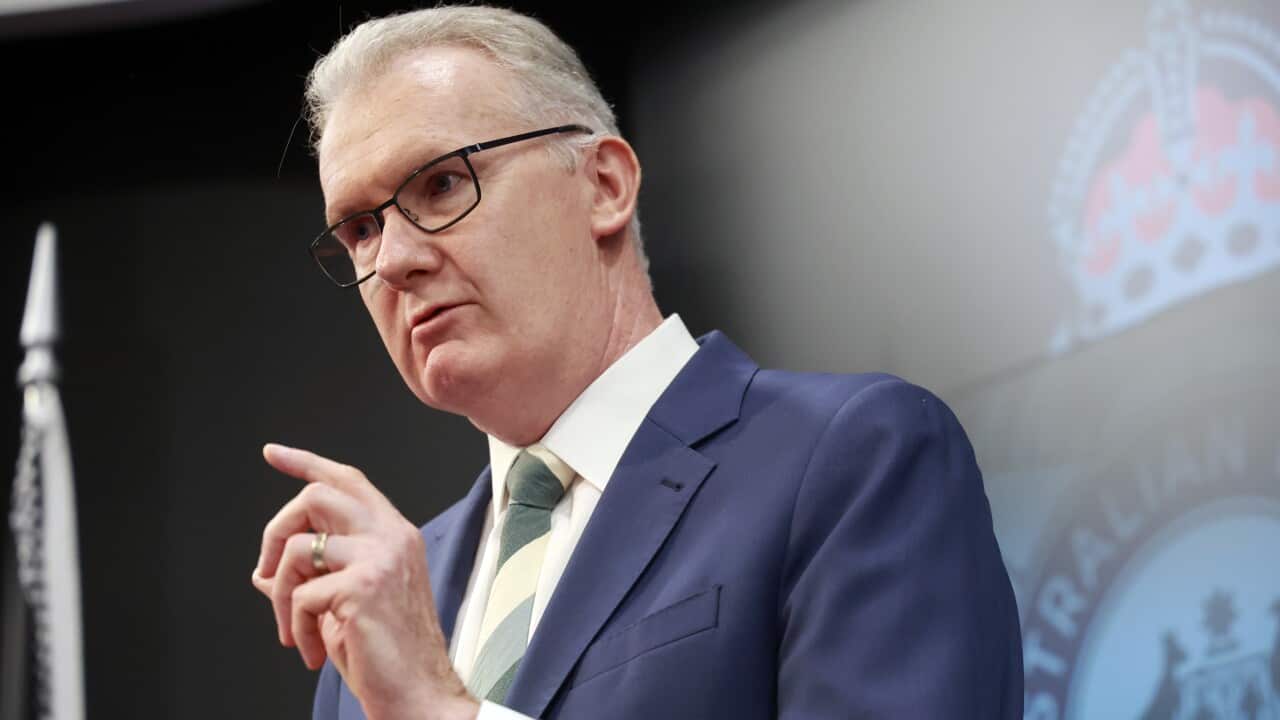
London, United Kingdom – February 22, 2026 – The Australian government has initiated the process to ban Hizb ut-Tahrir, an Islamist group, under newly enacted hate speech legislation. The move, announced by Home Affairs Minister Tony Burke, follows advice from the Australian Security Intelligence Organisation (ASIO) that the organization meets the legal threshold for proscription. This development marks a significant escalation in Australia’s response to perceived extremist ideologies and comes in the wake of the Bondi Beach terror attack, which prompted the introduction of the new legal framework.
Speaking on ABC’s Insiders program on Sunday, Burke explained that his department received counsel from ASIO confirming Hizb ut-Tahrir’s activities align with the criteria for a ban. The new laws, designed to address hate crimes motivated by race, nationality, or ethnic origin, empower the Home Affairs Minister to prohibit groups deemed to be inciting or promoting such offenses. This action represents the first instance where a group may be banned despite not being formally designated as a terrorist organization, highlighting the broadened scope of Australia’s national security measures.
The process now involves preparing a detailed briefing for Minister Burke to substantiate the claim that Hizb ut-Tahrir increases the risk of violence fueled by hatred. Following this, the opposition leader will be briefed and the Attorney-General will need to approve the legislation. Burke emphasized that the standard for banning doesn’t require direct calls for violence, but rather evidence of actions that elevate the risk of communal or politically motivated violence. “This is the first time we have been able to ban, potentially, a group which falls short of a terrorist listing,” Burke stated, as reported by SBS Australia.
Understanding Hizb ut-Tahrir: History and Ideology
Established in 1953, Hizb ut-Tahrir – whose name translates to “Party of Liberation” – is an international Islamic political organization advocating for the re-establishment of an Islamic caliphate. The group operates globally, with chapters in numerous countries, and promotes a specific interpretation of Islamic law and governance. Its ideology centers on the belief that secular states are inherently flawed and that a caliphate offers the only viable solution for societal problems. SBS News provides a detailed explainer on the organization’s history and beliefs.
While Hizb ut-Tahrir publicly disavows violence and claims to pursue its goals through peaceful means, concerns have been raised about its potential to radicalize individuals and inspire extremist activity. Critics argue that the group’s rhetoric fosters an environment conducive to intolerance and hatred, even if it doesn’t directly advocate for violence. The Australian government’s decision to pursue a ban reflects a growing concern about the group’s influence and its potential impact on social cohesion.
The New Hate Speech Laws and Their Context
The legislation enabling the potential ban of Hizb ut-Tahrir was introduced in December 2025, following the tragic Bondi Beach terror attack. The attack prompted a national conversation about the need to strengthen laws addressing hate speech and extremist ideologies. The new laws specifically target “hate preachers” and organizations that promote hatred and incite violence. The National Socialist Network, a neo-Nazi group, was also identified as a target for potential banning under the new legislation, though it disbanded in January 2026.
The legal framework established by these laws allows for the proscription of groups based on their actions and advocacy, even if they do not meet the traditional criteria for terrorist designation. This broadened scope is intended to address the evolving nature of extremism and the increasing prevalence of online radicalization. The government argues that the laws are necessary to protect communities from hate-motivated violence and to safeguard social harmony.
International Precedents: Bans in Other Countries
Australia is not the first country to take action against Hizb ut-Tahrir. The organization is already banned in several nations, including the United Kingdom, Germany, Egypt, Turkey, China, and various countries in Central Asia. The reasons for these bans vary, but generally center on concerns about the group’s extremist ideology, its potential to incite violence, and its perceived threat to national security.
In the United Kingdom, for example, Hizb ut-Tahrir was proscribed in 2006 following concerns about its support for terrorism and its promotion of extremist views. Germany has also taken a firm stance against the group, citing its anti-constitutional objectives and its potential to undermine democratic values. The differing approaches to Hizb ut-Tahrir across various countries highlight the complex challenges involved in balancing freedom of speech with the need to protect national security.
Implications and Potential Challenges
The potential ban on Hizb ut-Tahrir raises several important questions about its implications for freedom of speech and the broader political landscape in Australia. Critics argue that the laws could be used to suppress legitimate dissent and to target groups with unpopular or controversial views. They also raise concerns about the potential for the ban to drive the organization underground, making it more difficult to monitor and counter its activities.
However, proponents of the ban argue that it is a necessary step to protect communities from hate-motivated violence and to uphold the values of tolerance and inclusivity. They contend that Hizb ut-Tahrir’s ideology is inherently harmful and that its activities pose a genuine threat to social cohesion. The legal process surrounding the ban is expected to be closely scrutinized, and any challenges to the legislation are likely to raise important questions about the balance between security and civil liberties.
The Australian government’s decision to pursue this ban reflects a broader global trend towards stricter measures to combat extremism and hate speech. As the threat landscape continues to evolve, governments around the world are grappling with the challenge of finding effective ways to protect their citizens while upholding fundamental rights and freedoms. The outcome of this case in Australia will likely be watched closely by other nations facing similar challenges.
The next step in the process involves the preparation of a comprehensive briefing by the Home Affairs Department, outlining the evidence supporting the claim that Hizb ut-Tahrir increases the risk of hate-motivated violence. This briefing will be presented to Minister Burke for review, and subsequently shared with the opposition leader before the Attorney-General makes a final decision on the proposed ban. Readers are encouraged to share their perspectives and engage in constructive dialogue on this important issue in the comments section below.