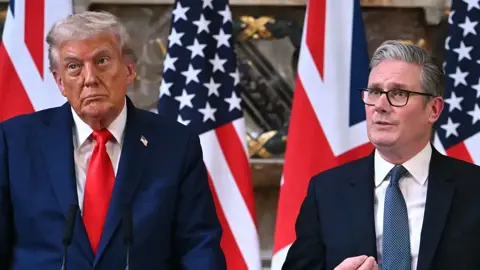
The longstanding “special relationship” between the United Kingdom and the United States is facing a significant test as Prime Minister Keir Starmer’s government has reportedly refused a request from the Trump administration to utilize British military bases for potential strikes against Iran. This decision, echoing the divisions that preceded the 2003 Iraq War, has ignited political debate in both countries and raised questions about the future of Anglo-American security cooperation. The core of the dispute centers on access to strategically significant facilities, namely RAF Fairford in Gloucestershire and the British Indian Ocean Territory of Diego Garcia, and the legal and political ramifications of participating in preemptive military action.
The refusal to grant access to these bases represents a notable departure from historical precedent, particularly during periods of close alignment between London and Washington. While the UK and US share a deep intelligence and military partnership, the Starmer government has signaled a willingness to assert greater independence in foreign policy decision-making. This stance is rooted in a careful assessment of international law and a desire to avoid entanglement in conflicts that do not directly threaten British national security. The situation is further complicated by the ongoing negotiations surrounding Iran’s nuclear program and the potential for escalation in the Middle East. The implications of this disagreement extend beyond the immediate issue of military basing, potentially reshaping the dynamics of the transatlantic alliance.
The request from Washington reportedly sought to leverage the geographical advantages offered by these bases. Diego Garcia, a remote atoll in the Indian Ocean, provides a crucial logistical hub and a launchpad for long-range bomber aircraft, such as the B-2 Spirit and B-52 Stratofortress, significantly reducing flight times to potential targets in Iran. As reported by The Times, the US views these bases as critical assets in a potential contingency plan. RAF Fairford, located in the English countryside, similarly offers strategic depth and rapid response capabilities.
Legal and Political Considerations
The British government’s decision is reportedly based on a legal assessment that a preemptive strike against Iran, outside the framework of a United Nations Security Council resolution or in self-defense, would likely violate international law. This position reflects a growing reluctance within the UK to engage in military interventions without a clear legal justification, a sentiment shaped by the controversial experiences in Iraq and Libya. The principle of anticipatory self-defense, as enshrined in Article 51 of the UN Charter, requires an imminent threat to justify the use of force, a condition London does not believe currently exists in relation to Iran. This cautious approach underscores a shift in British foreign policy, prioritizing adherence to international legal norms and multilateral cooperation.
the decision is inextricably linked to the sensitive issue of the Chagos Islands, including Diego Garcia. As highlighted by Time Magazine, former US President Donald Trump has repeatedly criticized the UK’s administration of the Chagos Islands, particularly its refusal to relinquish control of Diego Garcia, which the US maintains as a vital military facility. Trump’s public rebuke of London’s stance on the islands adds another layer of complexity to the current dispute, suggesting a broader dissatisfaction with British foreign policy decisions.
Domestic and International Reactions
The refusal to grant access to the bases has drawn sharp criticism from within the UK political establishment. Former Prime Minister Boris Johnson accused the Starmer government of sending a “message of weakness” to allies, arguing that such a decision could undermine Britain’s credibility as a reliable partner. Conservative MPs have echoed these concerns, warning that the move could damage the “special relationship” with the United States. However, supporters of the government’s position maintain that This proves a necessary assertion of British sovereignty and a responsible attempt to avoid being drawn into a potentially destabilizing conflict in the Middle East.
Internationally, the situation has prompted a reassessment of the UK’s role in global security affairs. Some analysts suggest that the decision signals a broader trend of European nations seeking greater strategic autonomy from the United States, particularly in the wake of shifting geopolitical dynamics and the perceived unreliability of American foreign policy under successive administrations. The incident similarly raises questions about the future of military cooperation between the UK and the US, and whether the longstanding alliance will be able to withstand such significant disagreements. The ongoing negotiations with Iran over its nuclear program remain a critical factor, with the potential for escalation looming if diplomatic efforts fail. Reuters reported that the issue was discussed during recent talks between Prime Minister Starmer and Donald Trump in Geneva.
Historical Parallels and the “Special Relationship”
The current dispute evokes historical precedents, notably the decision by Prime Minister Margaret Thatcher in 1986 to allow the United States to use British bases to launch air strikes against Libya in response to the La Belle discotheque bombing in West Berlin. However, the context surrounding the current situation is markedly different. The Cold War framework of the 1980s provided a clear ideological alignment between London and Washington, whereas today’s geopolitical landscape is far more complex and multi-polar. The experience of the Iraq War, with its subsequent destabilizing consequences, has also left a lasting imprint on British public opinion and political discourse, fostering a greater degree of skepticism towards military interventions led by the United States.
The term “special relationship” itself has been subject to increasing scrutiny in recent years, with some observers questioning whether it accurately reflects the current realities of Anglo-American relations. While the UK and the US continue to cooperate closely on a wide range of issues, including intelligence sharing, counterterrorism, and defense, the divergence in foreign policy priorities and strategic outlooks is becoming increasingly apparent. The current dispute over access to military bases serves as a stark reminder that the “special relationship” is not without its limits and that the UK is prepared to assert its own national interests, even when they diverge from those of its closest ally.
Key Takeaways
- The UK has refused a US request to use British bases for potential strikes against Iran, citing legal concerns and a desire to avoid entanglement in a wider conflict.
- The decision has sparked political debate in both the UK and the US, raising questions about the future of the “special relationship.”
- The dispute is linked to the ongoing negotiations over Iran’s nuclear program and the broader geopolitical tensions in the Middle East.
- Historical precedents, such as the 1986 bombing of Libya, offer a contrasting perspective on Anglo-American military cooperation.
- The incident highlights a growing trend of European nations seeking greater strategic autonomy from the United States.
Looking ahead, the coming months will be crucial in determining the long-term implications of this disagreement. The outcome of the negotiations with Iran, as well as the broader evolution of US foreign policy, will undoubtedly shape the future of Anglo-American relations. The next key development to watch will be the response from the US administration and any potential adjustments to its military planning in the region. Readers are encouraged to share their thoughts and perspectives on this evolving situation in the comments section below.
Keep reading
- Jacquees on Fatherhood, New Album ‘Mood 2,’ and Why He’s the King of R&B | WBLS Interview
- Saudi Oil Tankers Divert Red Sea Routes Amid Houthi Threats and Yanbu Port Surge
- Russia and Ukraine Trade Deadly Strikes as Casualties Mount (newsdirectory3.com)
- PA School Bus Aide Arrested for Assaulting Special Needs Student (archyde.com)