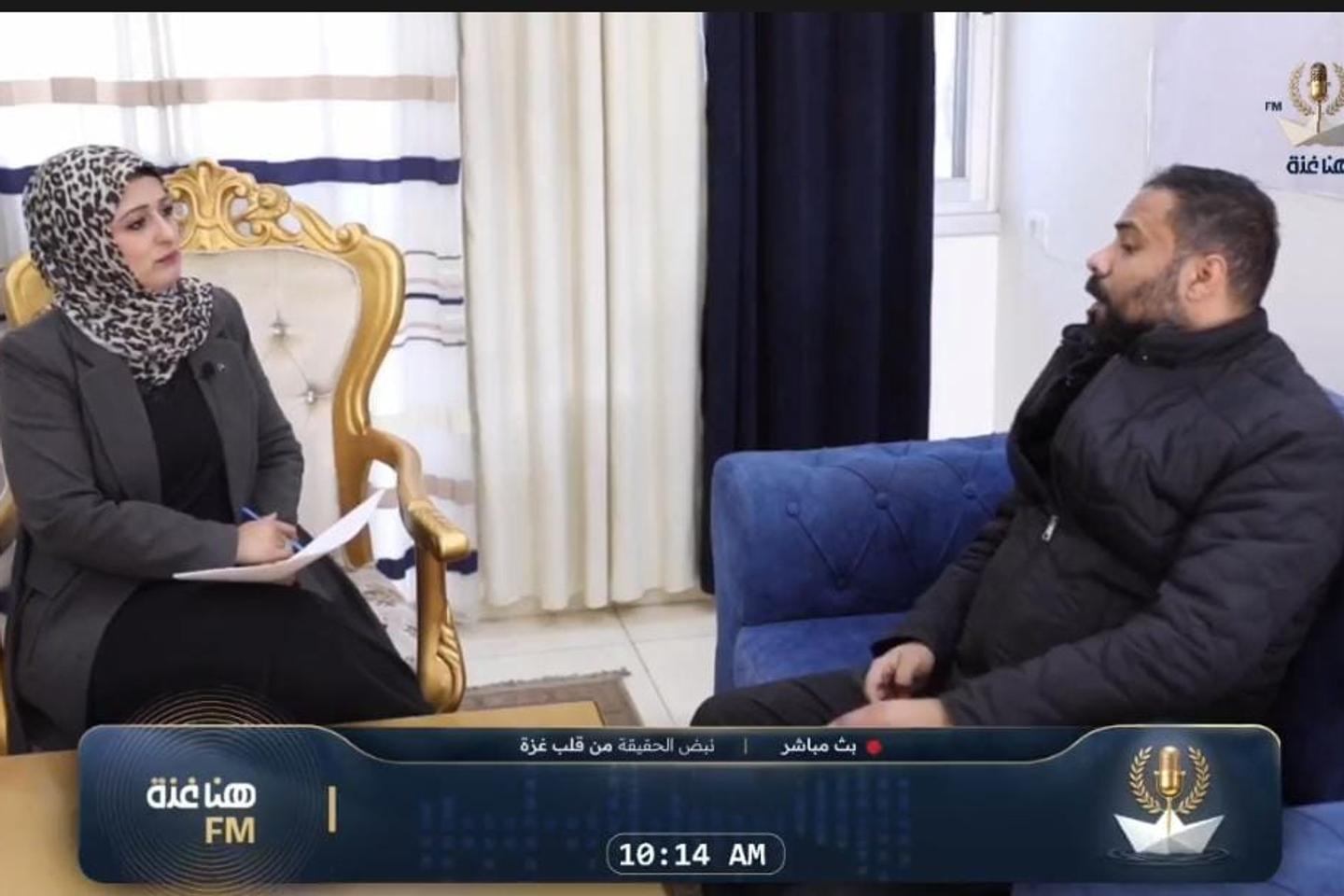
Deir Al-Balah, Gaza – In a minor studio resembling an intimate living room, journalist Sylvia Hassan prepares to proceed live. Following the destruction of 23 radio stations in the Gaza Strip during the conflict that began with the October 7, 2023, attacks by Hamas, Hona Ghazza (“Here is Gaza”) has become the first radio station to broadcast from the territory in over two years. The launch, captured by Al-Jazira cameras on February 11, 2026, represents a significant moment for Palestinians seeking to reclaim their voice amidst ongoing turmoil.
For many Palestinians, the re-establishment of a local radio presence is more than just a media event. It’s a defiant act of resilience in the face of widespread devastation. The station aims to provide a platform for Palestinian narratives and to document the realities of life in Gaza, offering a crucial counterpoint to external reporting. Hona Ghazza broadcasts on the frequency 102 FM, positioning itself as a direct connection to the pulse of the Gazan community.
The Silence Broken: Rebuilding Media Infrastructure in Gaza
The October 7, 2023, attacks by Hamas and the subsequent Israeli military response resulted in widespread destruction of infrastructure across Gaza, including vital media facilities. According to reports from the authorities in Gaza, approximately 125,000 tons of explosives were dropped on the territory. This devastation effectively silenced the local media landscape, leaving a critical information vacuum. The Committee to Protect Journalists (CPJ) has documented the deaths of numerous journalists and media workers during the conflict, highlighting the immense risks faced by those attempting to report from the region. The CPJ’s reporting details the challenges to press freedom and the safety of journalists in the region.
The destruction of media infrastructure isn’t simply a logistical issue. it’s a direct threat to the ability of Palestinians to share their stories and hold power accountable. Without local media, the narrative is often dictated by external sources, potentially leading to misrepresentation or a lack of nuanced understanding. Hona Ghazza’s emergence is therefore seen as a vital step towards restoring Palestinian agency and self-representation.
Hona Ghazza: A Voice for the Community
The initiative behind Hona Ghazza is rooted in a desire to fill the information void and provide a space for local voices. The station’s programming focuses on local news, cultural programming, and discussions relevant to the daily lives of Gazans. It aims to be a platform for community dialogue, addressing issues ranging from humanitarian concerns to the challenges of rebuilding lives in the aftermath of conflict. The station is supported by the Generation Association, as highlighted in footage shared by Al-Jazira, with Abdullah Sharsha serving as the president of the association’s board of directors.
The launch of Hona Ghazza comes at a particularly sensitive time, as international discussions regarding the future of Gaza continue. The station’s founders emphasize their commitment to independent journalism and their determination to provide a platform for diverse perspectives within the community. They aim to avoid becoming a mouthpiece for any particular political faction, instead prioritizing the needs and concerns of the Gazan people.
Challenges and Obstacles
Despite the initial success of Hona Ghazza, the station faces significant challenges. The ongoing conflict and the precarious security situation in Gaza pose constant threats to the safety of journalists and the sustainability of the operation. Access to resources, including funding and equipment, remains limited. The station must navigate complex political sensitivities and potential interference from various actors.
The station’s ability to operate effectively also depends on access to reliable electricity and internet connectivity, both of which are frequently disrupted in Gaza. The reliance on external aid and support is another vulnerability, as the station’s long-term viability is contingent on continued funding from international organizations and donors. The station is actively seeking ways to diversify its funding sources and build a sustainable business model.
The Wider Context: Media Freedom in Palestine
The situation faced by Hona Ghazza is emblematic of the broader challenges to media freedom in Palestine. For years, Palestinian journalists have faced harassment, intimidation, and violence from both Israeli and Palestinian authorities. Restrictions on access to information, censorship, and the targeting of media infrastructure have all contributed to a climate of fear and self-censorship. The International Federation of Journalists (IFJ) has consistently raised concerns about the deteriorating conditions for journalists in the region.
The establishment of Hona Ghazza represents a small but significant step towards reclaiming media independence and providing a platform for Palestinian voices. However, sustained efforts are needed to address the systemic challenges to media freedom and ensure the safety and security of journalists working in the region. This includes advocating for greater protection under international law, promoting media literacy, and supporting the development of independent media organizations.
The Role of International Support
International organizations and governments have a crucial role to play in supporting the rebuilding of media infrastructure in Gaza and protecting the rights of journalists. This includes providing financial assistance, advocating for greater access to information, and condemning attacks on media workers. It also involves supporting initiatives that promote media literacy and empower local communities to access and share information.
However, This proves essential that any international support is provided in a way that respects the independence of the media and avoids imposing external agendas. The focus should be on empowering Palestinian journalists to tell their own stories and hold power accountable, rather than dictating the narrative.
The launch of Hona Ghazza is a testament to the resilience and determination of Palestinian journalists to continue reporting from the ground, despite the immense challenges they face. As the station continues to grow and develop, it has the potential to become a vital source of information and a powerful voice for the community. The coming months will be critical in determining whether Hona Ghazza can overcome the obstacles it faces and establish itself as a sustainable and independent media outlet.
Looking ahead, the focus will be on securing long-term funding, expanding the station’s programming, and ensuring the safety of its journalists. The international community’s continued support will be essential in helping Hona Ghazza fulfill its mission of providing a voice for the people of Gaza. We will continue to monitor the station’s progress and report on any significant developments.
Key Takeaways:
- Hona Ghazza is the first radio station to broadcast from Gaza after over two years of silence following widespread destruction of media infrastructure.
- The station aims to provide a platform for Palestinian voices and report on the realities of life in Gaza.
- Significant challenges remain, including security concerns, limited resources, and political sensitivities.
- International support is crucial for the station’s long-term sustainability and the protection of its journalists.
Do you have thoughts on the importance of independent media in conflict zones? Share your comments below, and please share this article with your networks to help raise awareness about the challenges faced by journalists in Gaza.
Keep reading