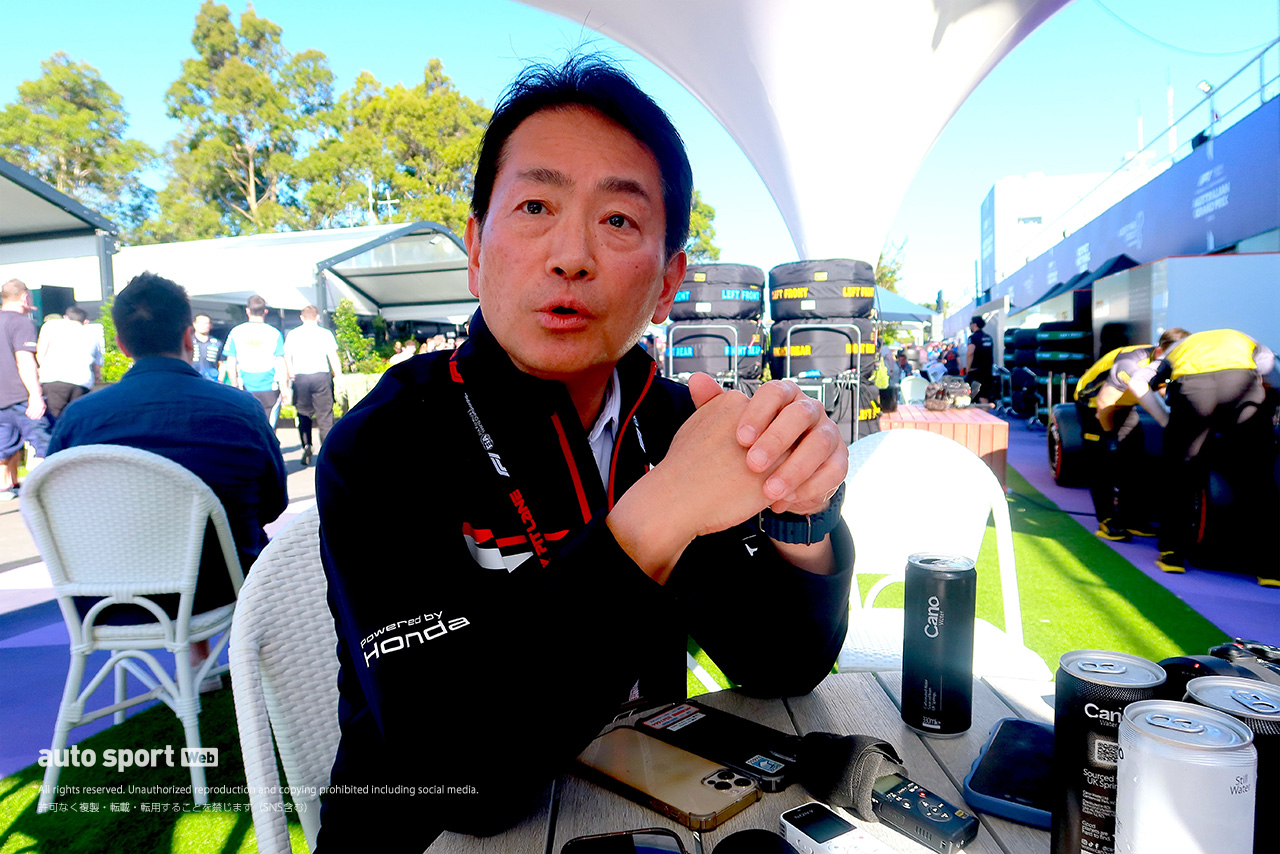
The world of Formula 1 racing is a crucible of innovation, demanding relentless refinement and pushing the boundaries of engineering. Honda, a name synonymous with motorsport excellence, is currently navigating a complex challenge with its power units, specifically addressing vibration issues that arose during testing. Recent statements from Honda Racing Corporation (HRC) President Koji Watanabe reveal the progress made in mitigating these concerns, alongside cautious assessments regarding the longevity of the battery components.
Watanabe’s comments, initially reported by autosport web and circulating widely, underscore Honda’s commitment to a successful return as a full works partner with the Aston Martin Aramco Formula One Team. This partnership represents a significant shift for Honda, moving away from its previous role as an engine supplier to Red Bull Racing. The decision to become a full constructor again is driven not by marketing aspirations, but by a deep-seated desire to utilize F1 as a “laboratory on wheels,” a space for technological development and engineering prowess, as highlighted in a 2025 interview with Honda Stories. This approach aligns with Honda’s historical engagement with the sport, dating back to its entry in 1964, just two years after beginning car sales, and culminating in its first Grand Prix victory in Mexico in 1965 with the RA272.
Addressing Vibration Concerns
The initial testing phases of the latest power unit revealed unexpected vibrations, prompting a collaborative effort between HRC in Sakura, Japan, and Honda Performance Development (HPD), now operating as Honda Racing Corporation USA (HRC US) since 2024. According to Watanabe, the issue stemmed from a resonance within the power unit’s components. “Through close consultation with HRC Sakura, we were able to identify the source of the vibration and implement effective countermeasures,” he stated. This collaborative approach is a direct result of the integration of HPD into HRC, formalized in September 2023, aiming to strengthen Honda’s global motorsports competitiveness by combining expertise and resources. Honda Racing Corporation announced the change, emphasizing the integral role HRC US would play in Honda’s global motorsports programs, including F1.
The successful resolution of the vibration issue is a testament to Honda’s engineering capabilities and the effectiveness of the newly streamlined organizational structure. Watanabe emphasized the importance of this collaboration, noting that the rapid identification and correction of the problem would not have been possible without the combined expertise of the Japanese and American teams. Here’s particularly crucial given the increasing complexity of F1 operations, with a growing number of races and the need for robust global operations, as noted in the Honda Stories interview.
Battery Life and Potential Restrictions
Even as the vibration issue appears to be resolved, concerns remain regarding the durability of the battery components within the power unit. Watanabe acknowledged that the remaining batteries may be subject to usage restrictions to ensure reliability throughout the season. “We are closely monitoring the performance and degradation of the batteries,” he explained. “Depending on the data we collect, we may need to implement strategies to limit their usage in certain situations.”
This cautious approach reflects the inherent risks associated with introducing new technology in a demanding environment like Formula 1. The new power unit regulations present a “golden opportunity” for Honda, allowing them to push the boundaries of development and test their mettle. But, this also means navigating unforeseen challenges and making difficult decisions to prioritize reliability and performance. The battery issue is particularly sensitive, as it directly impacts the power output and overall competitiveness of the car.
Honda’s Long-Term Commitment to F1
Despite the challenges, Honda remains firmly committed to its long-term participation in Formula 1. The sport serves as a vital platform for developing engineers and fostering innovation, contributing to advancements not only in motorsport but also in Honda’s broader automotive technologies. As Watanabe stated in a recent interview with Aston Martin’s UNDERCUT series, F1 is not merely a marketing exercise for Honda. it’s a proving ground for its technological prowess. Aston Martin F1 highlighted Watanabe’s perspective on the importance of F1 as a developmental tool.
The partnership with Aston Martin is a key component of Honda’s strategy. The team provides a strong platform for showcasing the capabilities of the new power unit and competing at the highest level of the sport. Watanabe’s frequent communication with Aston Martin Executive Chairman Lawrence Stroll and technical figures like Adrian Newey demonstrates the close collaboration between the two organizations. These “intense calls,” as Watanabe described them, are indicative of the dedication and focus required to succeed in Formula 1.
The Role of HRC and HPD
The integration of Honda Performance Development (HPD) into Honda Racing Corporation (HRC) as HRC US has been instrumental in strengthening Honda’s global motorsports capabilities. HPD, established in 1993, brought 30 years of experience in various racing series, including IndyCar and IMSA, to the table. HRC, with its established presence in motorcycle racing and more recently in auto racing, provides a comprehensive framework for managing Honda’s motorsport activities worldwide. This unified structure allows for a more efficient allocation of resources and a more coordinated approach to development.
The Sakura Center in Japan is now dedicated to auto racing, including the F1 program, while the Asaka Center remains focused on motorcycle racing. This specialization allows each center to concentrate on its respective area of expertise, maximizing efficiency and innovation. The collaboration between the two centers, facilitated by the integration of HPD, is crucial for Honda’s success in both disciplines.
Looking Ahead
As the 2026 Formula 1 season progresses, Honda will continue to monitor the performance of its power unit and address any challenges that arise. The battery issue remains a key area of focus, and the team will likely implement strategies to optimize usage and ensure reliability. The success of the partnership with Aston Martin will depend on the ability of both organizations to work together effectively and overcome these hurdles.
Watanabe’s leadership and the collaborative spirit within HRC and HRC US will be critical to Honda’s success. The company’s long-term commitment to F1, driven by a desire for technological innovation and engineering excellence, positions it for continued success in the years to come. The 60th anniversary of Honda’s first F1 victory in 1965 serves as a reminder of the company’s rich history in the sport and its unwavering pursuit of excellence. Honda’s official stories detail the company’s passion and meaning in F1 participation.
The next key checkpoint will be the data analysis following the initial races of the season, which will inform Honda’s strategy regarding battery usage and potential modifications to the power unit. Readers interested in following Honda’s progress in Formula 1 can uncover updates on the official Honda Racing Corporation website and through Aston Martin Aramco Formula One Team communications.
What are your thoughts on Honda’s return to Formula 1? Share your comments below and let us grasp what you expect from the Honda-Aston Martin partnership this season.
Related reading