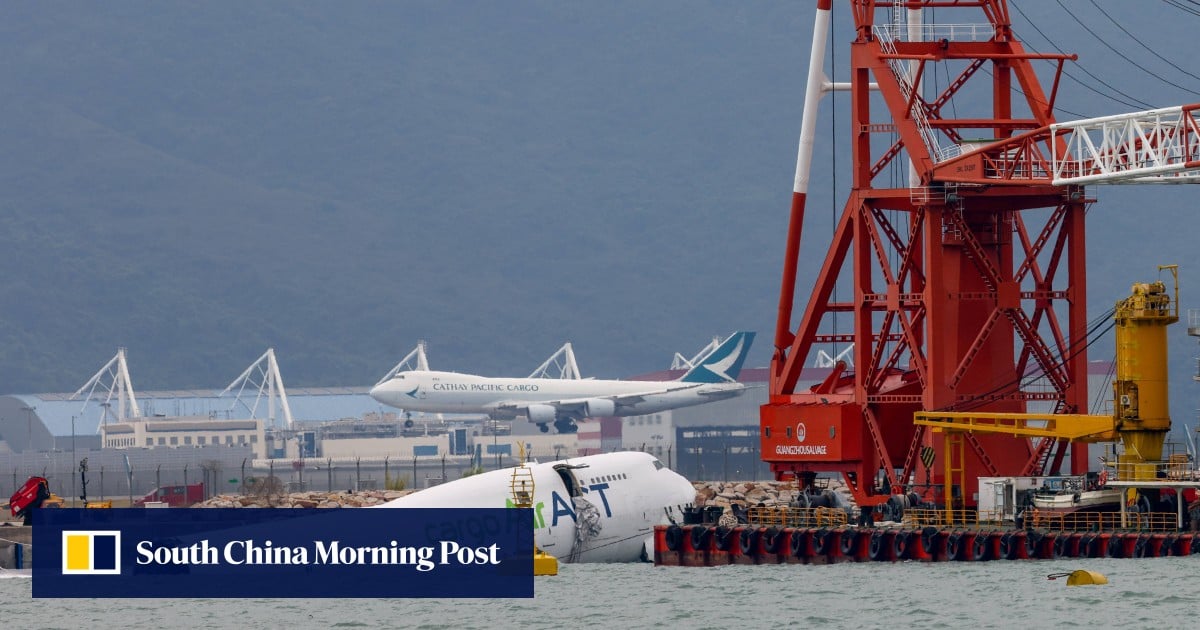
hong Kong Airport Plane Crash: Salvage Operation, Examination timeline & Environmental concerns
The recent crash of a cargo plane at Hong Kong International Airport, tragically claiming the lives of two security workers, has prompted a complex salvage operation and a thorough investigation. Recovery and removal of the wreckage are estimated to take at least two days, while the full investigation could extend up to a year. This article delves into the intricacies of the situation, outlining the steps involved in securing the aircraft, the investigative process, and potential environmental impacts. Understanding the challenges of aircraft recovery is crucial for anyone following this developing story.
What immediate concerns do you think authorities are prioritizing in a situation like this?
The Immediate Challenge: Securing the Wreckage
The initial phase focuses on stabilizing the situation and preventing further damage. According to Louis Szeto Ka-sing, a specialist in vessel design and maintenance, a critical first step is assessing the structural integrity of the plane.
Specifically, authorities need to determine if the two halves of the aircraft remain connected. This assessment will dictate the salvage strategy. Divers are being deployed to conduct a thorough risk assessment, documenting the wreckage with photos and videos.
* Damage Assessment: Identifying fractures, wear and tear, and potential instability.
* Slings & Securement Points: Determining optimal locations for lifting slings, avoiding areas near critical damage.
* Fuel Status: A paramount concern is verifying complete fuel depletion to prevent leaks and environmental contamination.
the Investigative Process: Unraveling the Cause
The investigation into the crash is expected to be extensive, potentially lasting up to a year. Authorities will be meticulously examining all possible contributing factors. This includes:
* Flight Data Recorder (FDR) Analysis: Retrieving and analyzing the FDR will provide crucial insights into the aircraft’s final moments.
* Cockpit Voice Recorder (CVR) Analysis: The CVR will offer a record of communications between the pilots, potentially revealing critical information.
* Maintenance Records Review: A thorough review of the aircraft’s maintenance history will identify any potential mechanical issues.
* Air Traffic Control (ATC) Communications: Analyzing ATC communications will help establish the sequence of events leading up to the crash.
* Weather Conditions: Assessing weather conditions at the time of the incident.
Recent data from the Aviation Safety Network shows that runway incursions - events where an aircraft, vehicle, or person is incorrectly on a runway – have been increasing globally.While not directly linked to this incident,it highlights the ongoing challenges in maintaining airport safety. https://aviation-safety.net/
What aspects of the investigation do you believe will be most critical in determining the cause of the crash?
Environmental Considerations: Preventing Pollution
The potential for fuel leaks poses a meaningful environmental threat. Even small amounts of jet fuel can cause substantial water pollution. Authorities are prioritizing:
* Containment Booms: deploying containment booms to prevent the spread of any leaked fuel.
* Skimming Operations: Utilizing skimmers to remove any fuel that reaches the water’s surface.
* Water Quality Monitoring: Regularly monitoring water quality to assess the extent of any contamination.
* Sediment Sampling: Analyzing sediment samples to detect any fuel that may have settled on the seabed.
The Hong Kong Environmental Protection Department (EPD) is likely to be heavily involved in overseeing these efforts, ensuring compliance with environmental regulations. they will also assess the potential impact on marine life and implement mitigation measures as needed. Understanding maritime pollution control is key to minimizing the environmental damage.
Beyond the Immediate: Long-Term Implications
This incident raises critically important questions about airport safety protocols and emergency response procedures. A comprehensive review of these procedures may be necessary to prevent