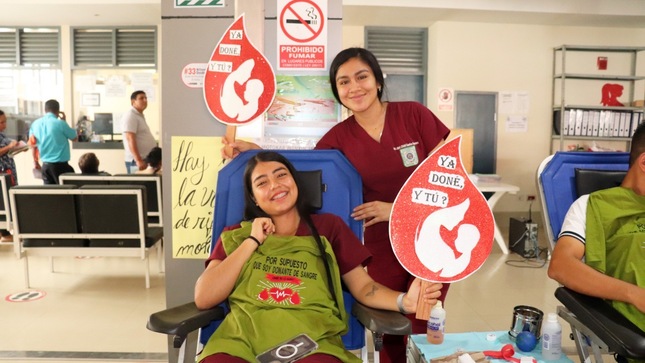
In the San Martín region of Peru, the availability of life-saving blood products is often the thin line between recovery and tragedy during medical emergencies. To address this critical need, the Hospital II-2 Tarapoto has announced a voluntary blood donation campaign in Tarapoto, marking the tenth iteration of this essential community initiative. Scheduled for Wednesday, May 20, the drive aims to stabilize the regional stock of blood and hemoderivatives, ensuring that healthcare providers can respond effectively to urgent surgical and obstetric needs.
This campaign is not merely a routine collection effort but is strategically timed to coincide with the “Semana de la Maternidad Saludable, Segura y Voluntaria” (Healthy, Safe, and Voluntary Maternity Week). By aligning the drive with maternal health awareness, the hospital is highlighting one of the most acute areas of blood demand: the management of hemorrhagic complications that can arise during pregnancy, childbirth, and the postpartum period.
For the residents of Tarapoto and the surrounding San Martín region, the drive represents a vital opportunity to contribute to a public health infrastructure that frequently faces fluctuations in donor participation. The initiative, led by the hospital’s Obstetrics service, underscores the systemic reliance on voluntary altruism to maintain the operational capacity of regional blood banks.
Strengthening Regional Health Reserves
The Hospital II-2 Tarapoto serves as a primary healthcare hub for a region where demand for blood products is driven by a diverse array of medical crises. While maternal health is the current focus, the hospital’s need for blood is constant, spanning from emergency trauma care—often resulting from traffic accidents—to the long-term treatment of patients suffering from chronic renal insufficiency and diabetes.
According to official communications from the Regional Health Directorate of San Martín, the primary goal of the tenth campaign is to guarantee a sufficient stock of blood and its derivatives to meet the demands of both the hospital and the wider region. This regional approach is critical because blood shortages in one facility often place undue pressure on neighboring clinics and hospitals, creating a precarious healthcare environment for the entire population.
The logistics for the upcoming drive are designed for maximum accessibility. The event will take place on Wednesday, May 20, from 7:00 a.m. To 3:00 p.m., with donor entry designated through Gate No. 2 of the hospital. The process is overseen by a multidisciplinary team of physicians, medical technologists, technicians, obstetricians, and gynecologists to ensure the highest safety standards for both the donor and the eventual recipient.
Focus on Maternal Health and Obstetric Safety
The integration of this blood drive into the Healthy, Safe, and Voluntary Maternity Week brings a necessary spotlight to the risks associated with childbirth. Obstetric hemorrhage is a leading cause of maternal mortality globally, and having immediate access to blood transfusions is the gold standard for preventing fatal outcomes during delivery.
Víctor Andrés Cotrina Ochante, an obstetrician at Hospital II-2 Tarapoto, has emphasized the urgency of this call to action. He noted that the campaign specifically seeks to maintain blood availability to treat hemorrhagic complications that can occur during pregnancy, labor, or the postpartum phase. By securing these units in advance, the hospital reduces the reliance on “replacement donation”—where families are forced to find donors in the midst of a crisis—which can delay life-saving treatment.
This proactive strategy is essential for reducing maternal mortality rates in the San Martín region. When blood is readily available in the bank, medical teams can act instantly to stabilize a patient, rather than waiting for family members to mobilize donors, a delay that can be catastrophic in the case of severe postpartum hemorrhage.
Donor Eligibility and Safety Standards
To maintain the integrity of the blood supply and ensure donor safety, Hospital II-2 Tarapoto adheres to strict eligibility criteria. Potential donors must meet specific health and physical benchmarks before they can contribute.
According to the official requirements, donors must be between 18 and 60 years of age and weigh more than 55 kilograms. To protect both the donor and the recipient, individuals with the following conditions are ineligible to donate:
- Diabetes
- Hypertension
- Renal diseases
- Recent surgical procedures
The hospital has also clarified common misconceptions regarding tattoos and piercings. Individuals with these modifications are permitted to donate, provided that at least one year has passed since the procedure was performed. This waiting period is a standard medical precaution to ensure that no blood-borne infections were contracted during the process.
Safety is further guaranteed through the use of new, sterile, and disposable equipment for every single donor. This protocol eliminates the risk of cross-contamination or infection during the collection process, ensuring that the act of giving remains safe for the volunteer.
The Critical Need for Rare Blood Types
While all blood donations are valuable, certain blood types are consistently in higher demand than others. In the San Martín region, the need for O-positive (O+) and O-negative (O-) blood is particularly acute. Because O-negative blood is the universal donor type, it is frequently used in emergency situations where there is no time to cross-match a patient’s blood type, making it a critical asset for trauma centers.

The challenge for Hospital II-2 Tarapoto is that donor participation often fluctuates seasonally. Data from the Office of Specialized Health Services indicates that blood donations often decrease significantly during the year-end holiday season, exactly when demand spikes due to an increase in traffic accidents. This cyclical shortage highlights the need for consistent, voluntary donation drives throughout the year to maintain a stable baseline.
The impact of a single donation is substantial. Medical professionals note that one single unit of blood can be processed into different components—red blood cells, plasma, and platelets—meaning a single donor can potentially save up to three different lives. This multiplier effect makes voluntary blood donation one of the most efficient ways for a citizen to contribute to the regional healthcare system.
Summary of Donation Event Details
| Detail | Information |
|---|---|
| Date | Wednesday, May 20, 2026 |
| Time | 7:00 a.m. To 3:00 p.m. |
| Location | Hospital II-2 Tarapoto, Entrance No. 2 |
| Age Requirement | 18 to 60 years old |
| Weight Requirement | Over 55 kilograms |
| High Demand Types | O+ and O- |
The voluntary blood donation campaign in Tarapoto serves as a reminder of the fragile balance of regional healthcare. The success of such initiatives depends entirely on community solidarity and the willingness of healthy individuals to dedicate a small amount of time to a cause that provides an immediate, tangible benefit to their neighbors.
The next confirmed checkpoint for this initiative is the campaign event itself on Wednesday, May 20. Residents of the San Martín region are encouraged to review the eligibility requirements and prepare for the drive to help ensure that no patient, particularly expectant mothers, faces a shortage of life-saving blood.
Do you have experience with voluntary blood donation or thoughts on improving regional healthcare access? Share your insights in the comments below or share this article to help spread the word.