The bitter Irony of Healthcare Price Transparency: Why Insured Patients Often Pay More
For years, the healthcare industry and policymakers have championed price transparency as a key strategy to curb escalating costs. Hospitals are now mandated to publish both their discounted cash prices and the rates they’ve negotiated with insurance companies. The intention is laudable: empower consumers with information, foster competition, and ultimately, bend the healthcare cost curve. Though, a recent analysis of public data from Texas hospitals reveals a deeply unsettling reality – one that fundamentally undermines the promise of transparency and leaves many insured patients paying more than their uninsured counterparts.
This isn’t a theoretical problem; it’s a systemic flaw impacting millions, and understanding its roots is crucial for employers, patients, and anyone concerned about the future of affordable healthcare.
the Paradox Unveiled: Cash Prices Frequently enough Beat Negotiated rates
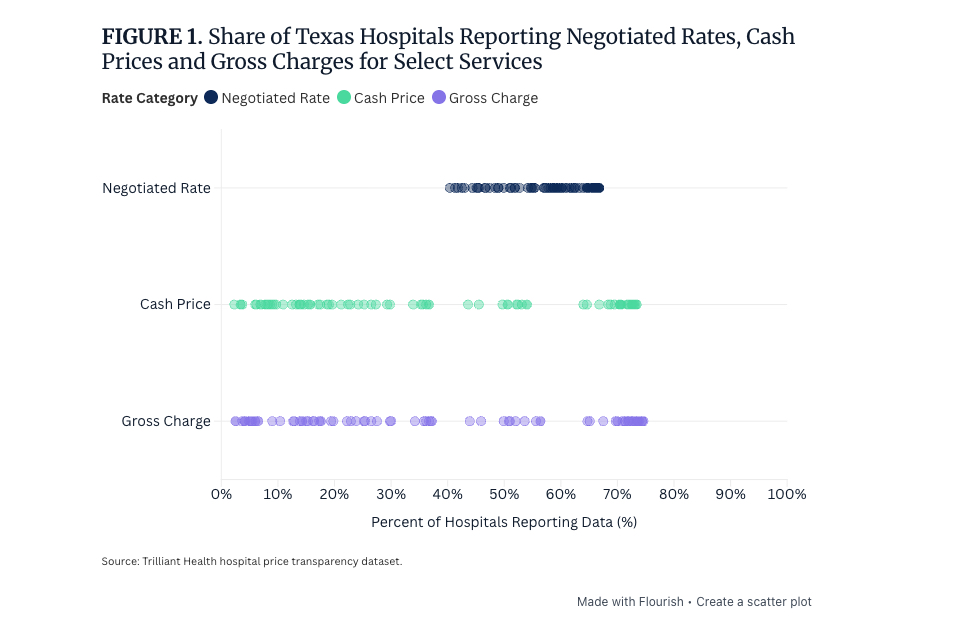
Our analysis of data from 327 Texas hospitals, focusing on four common services, revealed a striking trend: in four out of five cases, the discounted cash price was lower than the negotiated rate secured by commercial insurers. This isn’t a minor discrepancy. For a diagnostic colonoscopy (CPT 45378), the median cash price clocked in at $1,554, a full 32% below the median negotiated rate of $2,275.
This creates a perverse incentive structure,notably for individuals enrolled in High Deductible Health Plans (HDHPs). Until the annual deductible is met, patients are responsible for the full cost of care. When the cash price is lower than the negotiated rate – as is often the case – the insured patient effectively subsidizes the healthcare system,paying a premium for insurance that doesn’t translate into cost savings. They are,quite literally,penalized for being insured.
The sole exception to this trend was the sleep study (CPT 95810),where negotiated rates were lower. However, this anomaly doesn’t negate the broader, concerning pattern.
Why Transparency Isn’t Translating to savings: Barriers to Decision Utility
The availability of price data is only half the battle. The current system suffers from a critical disconnect between data existence and decision utility – the ability for patients and employers to actually use this information to make informed choices. Several systemic issues contribute to this problem:
* lack of Patient Incentive: Most commercially insured individuals rarely face the full negotiated rate,shielded by copays,coinsurance,and out-of-pocket maximums. This diminishes their motivation to actively seek out the lowest possible price. Why shop around when the financial impact is obscured?
* The Emergency department Bottleneck: Approximately 50% of hospital admissions originate in the Emergency Department (ED). Due to the Emergency Medical Treatment and Labor Act (EMTALA), hospitals are legally prohibited from inquiring about a patient’s ability to pay during an emergency. This reinforces a revenue-maximizing mindset focused on billing insurers, rather than offering cash alternatives.
* Complexity Overload: Navigating the intricacies of deductibles,copays,coinsurance,and out-of-pocket maximums,in conjunction with both cash and negotiated rates,is a daunting task. This cognitive burden prevents many patients from making truly informed decisions. It’s simply too complex for the average person to decipher.
* hospital Reluctance: Hospitals rarely proactively offer cash alternatives. This isn’t malicious, but a reflection of ingrained revenue cycle management practices that prioritize insurance billing.
The Ripple Effect: Implications for Employers and the Health Economy
The consequences of this price disconnect extend far beyond the individual patient. Employers, who shoulder a meaningful portion of healthcare costs, are also bearing the brunt of inflated negotiated rates.
* Employer Subsidies of Inefficiency: Employers sponsoring group health plans continue to pay the inflated negotiated rates even after an employee meets their deductible. This means employers are effectively subsidizing unneeded healthcare costs – paying more for the same service than an uninsured individual would. The promise of “group negotiating power” is often illusory.
* Erosion of Value & Wild Price Variation: Our study revealed extreme price variation for the same service, even within the same hospital. Negotiated rates for a diagnostic colonoscopy varied by a staggering 24x across different health plans. This creates a highly erratic value proposition for commercial insurance benefits. A hospital can offer excellent value to one network and poor value to another.
* Entrenched Revenue Cycle Practices: Hospitals’ revenue cycle management systems are overwhelmingly geared towards insurance utilization, as uninsured patients represent a relatively small percentage of overall revenue. This deeply ingrained mindset hinders the proactive disclosure of beneficial cash alternatives at the point of care.
Moving Beyond Transparency: Towards True Price Sensitivity
Simply