
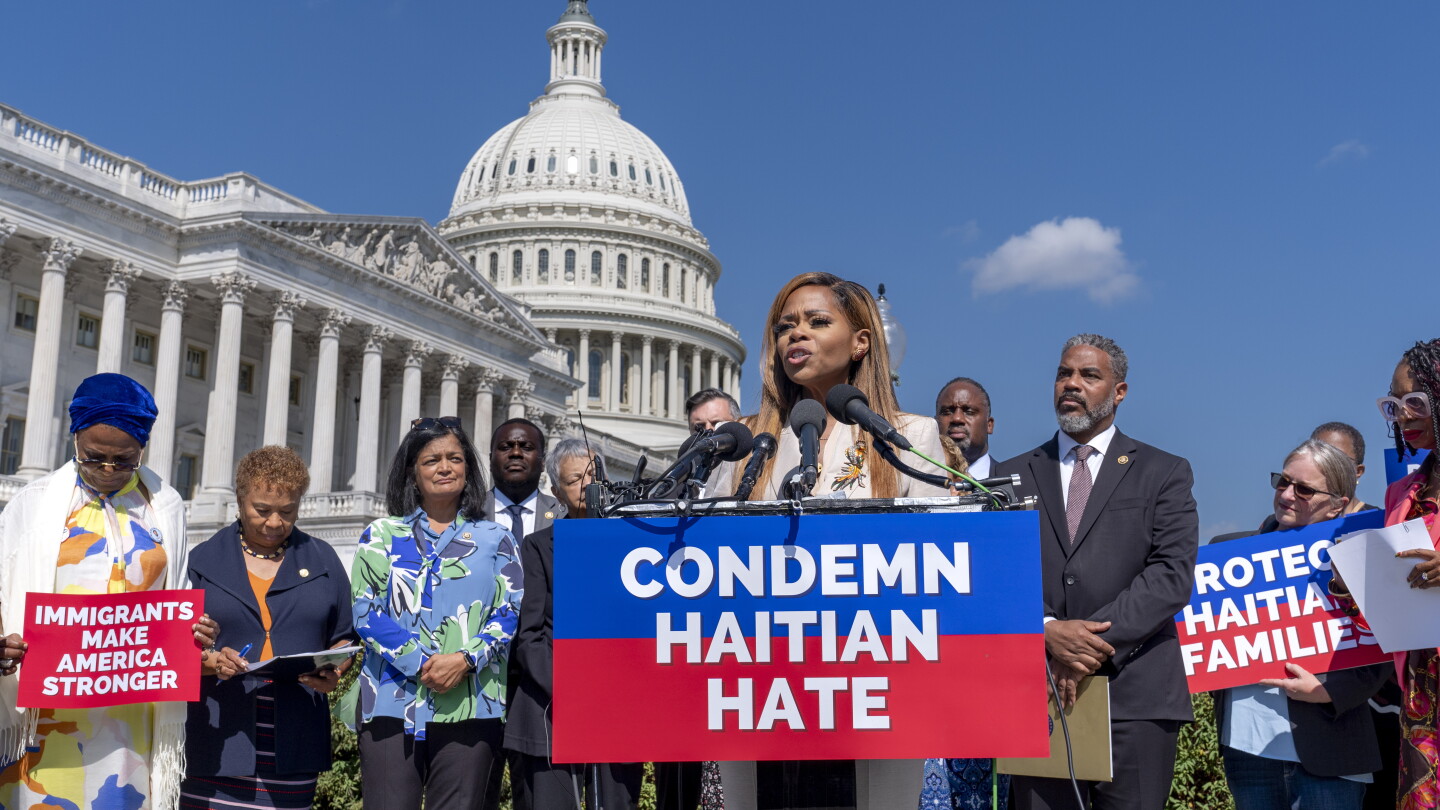
In a significant legislative challenge to the Trump administration’s immigration agenda, the U.S. House of Representatives has moved forward a bill to extend Temporary Protected Status (TPS) for Haitian immigrants. The measure advanced following a 219–209 vote, marking a rare instance of House Republicans breaking ranks to side with Democrats on a high-stakes immigration issue.
The vote was made possible through the apply of a discharge petition, a parliamentary maneuver that allowed the minority party to bring the bill to the floor and circumvent the leadership of House Speaker Mike Johnson and the preferences of President Donald Trump. The move signals a growing tension between the legislative branch and the executive administration over the legal status of hundreds of thousands of foreign nationals currently residing in the United States.
Temporary Protected Status is a designation granted by the Department of Homeland Security (DHS) to individuals who are unable to return to their home countries due to ongoing armed conflict, environmental disasters, or other extraordinary and temporary conditions. While the Trump administration has sought to tighten the legal immigration system and terminate these protections, the House’s recent action underscores a divide over the economic and humanitarian implications of such a move.
Bipartisan Support and the Healthcare Workforce
The push to extend protections was not solely a Democratic effort. Six House Republicans and independent Representative Kevin Kiley joined all Democrats to advance the legislation in a 219–209 vote. The Republicans who voted in favor of the extension include Don Bacon of Nebraska, Brian Fitzpatrick of Pennsylvania, Mike Lawler of New York, María Elvira Salazar of Florida, Carlos Giménez of Florida, and Nicole Malliotakis of New York.
A primary driver for the Republican support was the potential impact on the U.S. Healthcare system. Representative Nicole Malliotakis told Newsweek that nursing homes in her district would lose skilled staff if TPS is not renewed, describing the deportation of these working taxpayers to a country in peril as “uncompassionate, and misguided.” Similarly, Representative Don Bacon stated that removing TPS status could cost 350,000 healthcare workers their ability to work during a period of serious workforce shortages.
Representative Mike Lawler emphasized the local impact in his district, which holds one of the largest Haitian populations in the country. Lawler noted that ending protections without addressing work authorization would trigger a crisis in the healthcare system, particularly for those serving as nurses.
The Administration’s Stance and Legal Deadlines
The Trump administration and the Department of Homeland Security have consistently opposed the extension. DHS has argued that the TPS program has been abused through unnecessary extensions and has maintained that conditions in Haiti have improved sufficiently that the country no longer meets the criteria for temporary legal protections according to the agency.
The administration previously set an effective complete date for Haiti’s TPS of September 2, 2025. This decision is expected to impact a significant population; reports vary on the exact number, with some sources citing more than 348,000 people and others stating the termination applies to approximately 500,000 Haitians already in the U.S.
The effort to end these protections has faced immediate legal hurdles. Lower courts stepped in to prevent the suspension of the status, leading the administration to appeal the matter. The legal battle is now heading to the highest court in the land, with the Supreme Court scheduled to hear the government’s arguments on April 29.
Broader Implications for Global Protections
The controversy surrounding Haitian immigrants is part of a larger series of measures implemented by the Trump administration to curb immigration since taking office for a second term in January. Prior to this, the administration revoked legal protections for thousands of Haitians who had entered the country under a humanitarian parole program, a move upheld after the Supreme Court overturned a federal judge’s order according to AP News.
Haiti is one of 17 countries that were receiving TPS protections before the current administration took office, alongside nations such as Afghanistan, Sudan, and Lebanon. Advocates for the immigrants argue that returning to these volatile regions remains dangerous, contradicting claims made by the State Department.
Key Summary of the TPS Dispute
| Stakeholder | Position | Primary Argument |
|---|---|---|
| House Proponents | Support Extension | Prevents healthcare worker shortages and protects families from volatile conditions. |
| Trump Administration/DHS | Oppose Extension | Argue the program is abused and conditions in Haiti have improved. |
| Judiciary (Lower Courts) | Intervened | Prevented the immediate suspension of TPS protections. |
As the House advances this measure, the focus now shifts to the judicial system. The outcome of the Supreme Court hearing on April 29 will likely determine the immediate fate of hundreds of thousands of Haitian nationals and the viability of the administration’s broader strategy to dismantle existing TPS frameworks.
We will continue to monitor the Supreme Court’s proceedings and the legislative progress of the TPS bill. Please share your thoughts in the comments below or share this report with your network to stay informed on global immigration developments.
Keep reading