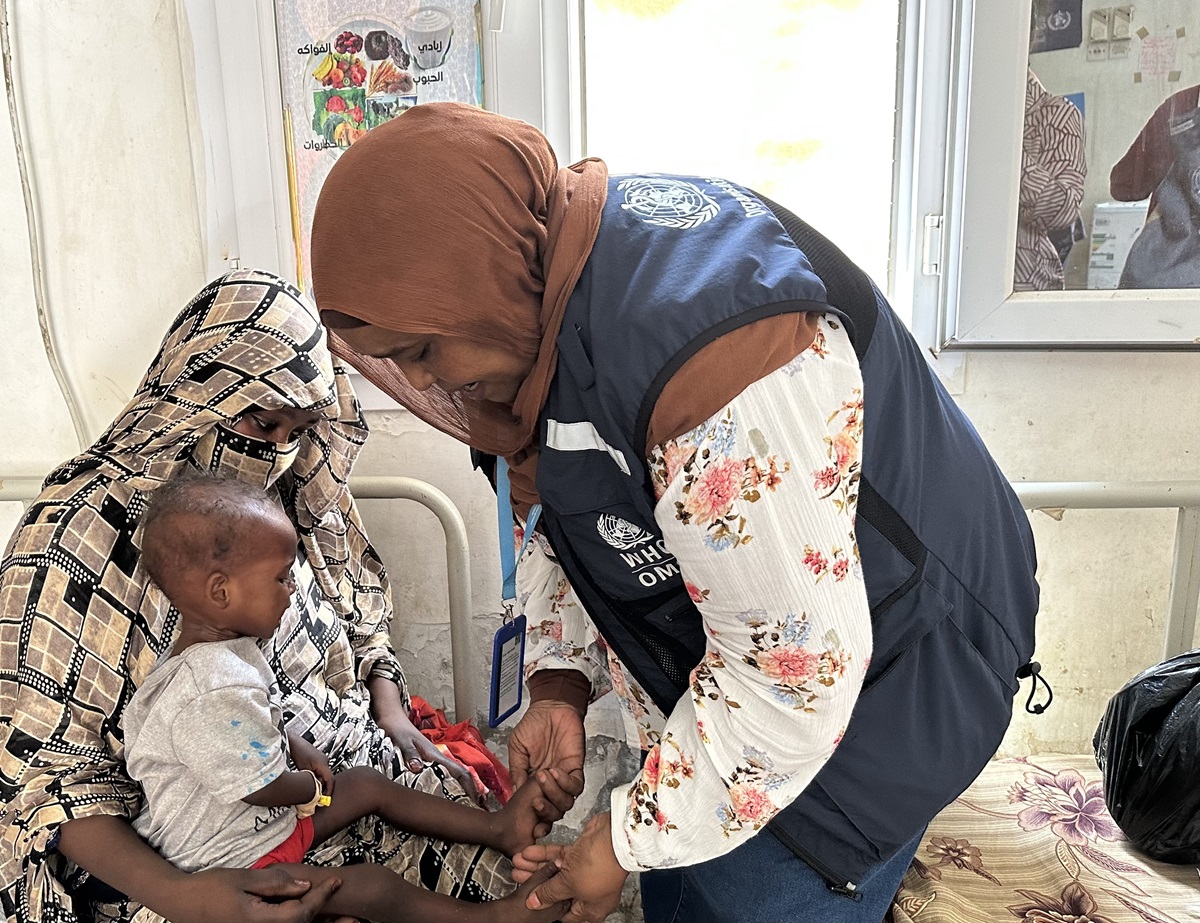
Three years of relentless conflict have pushed Sudan into what international agencies now describe as the world’s largest humanitarian and displacement crisis. The protracted war, which began in April 2023 as a power struggle between the Sudanese Armed Forces (SAF) and the paramilitary Rapid Support Forces (RSF), has systematically dismantled the nation’s infrastructure, leaving millions of civilians without the most basic requirements for survival: food, water, and medical care.
As of early 2026, the scale of the emergency is staggering. An estimated 34 million people currently require humanitarian aid, with 21 million specifically lacking access to essential health services according to the World Health Organization (WHO). While some states have seen marginal improvements, the health crisis is deepening in active combat zones where fighting continues to restrict the movement of life-saving supplies.
The collapse of the medical system is not merely a byproduct of the war but a direct result of targeted violence. Health facilities, ambulances, and medical personnel have been repeatedly attacked, turning hospitals from sanctuaries of healing into sites of casualty. This systemic destruction has left a void in primary care, forcing patients to undertake perilous journeys across conflict lines to find functioning clinics.
For those trapped in the crossfire, the lack of medical intervention is compounded by a severe hunger crisis. Approximately 4 million people are estimated to be acutely malnourished in 2026, a figure that increases vulnerability to infectious diseases and medical complications per an IPC Alert dated February 5, 2026. This intersection of famine and disease has created a perfect storm for a public health catastrophe on a global scale.
A Healthcare System on the Brink of Collapse
The physical infrastructure of Sudan’s healthcare system has been crippled. Across the country’s 18 states, 37% of health facilities are currently non-functional as verified by the WHO. This dysfunction is driven by a combination of direct military attacks, the destruction of essential equipment, and a critical shortage of medicines and supplies.
The human cost of these attacks is documented and devastating. Since the conflict erupted on April 15, 2023, the WHO has verified 217 attacks on healthcare services, resulting in 2,052 deaths and 810 injuries per official reports. One of the most severe examples occurred at the El Daein Teaching Hospital in East Darfur, where a recent attack resulted in at least 64 deaths, including children and health workers. The loss of this facility is particularly acute as it served as a critical referral hospital for hundreds of thousands of people across the region.
Dr. Tedros Adhanom Ghebreyesus, WHO Director-General, has emphasized that the war is denying people their most basic rights. He noted that while doctors and health workers possess the skills to save lives, they cannot do so without safe environments and the necessary medical supplies. He concluded that “the best medicine is peace.”
The Surge of Preventable Disease and Outbreaks
With the collapse of routine immunization and sanitary services, Sudan is facing a resurgence of infectious diseases. Outbreaks are now widespread across several states, including Al Jazirah, Darfur, Gedaref, Khartoum, Kordofan, River Nile, and White Nile. The reported diseases include:

- Malaria and Dengue
- Measles and Polio (cVDPV2)
- Hepatitis E and Meningitis
- Diphtheria
The risk is heightened by the mass displacement of people into overcrowded areas with poor sanitation. The WHO has worked to contain two cholera outbreaks, the most recent of which was declared over in March 2026 after a year-long response that included oral vaccination campaigns reaching 24.5 million people according to WHO data.
Humanitarian Response and Critical Interventions
Despite the insecurity and bureaucratic constraints, international agencies have attempted to stabilize the remaining fragments of the health system. Since April 2023, the WHO has delivered over 3,300 metric tons of medical supplies, including trauma care and nutrition supplies per WHO records.
These efforts have provided essential care to more than 4.1 million people through a network of mobile clinics, primary health care centers, and hospitals. Specific interventions have focused on the most vulnerable populations, including the treatment of over 118,000 children suffering from complicated severe acute malnutrition.
In a significant public health milestone amidst the chaos, Sudan became the first country in the region to include malaria vaccines in its routine immunization programme. Vaccination campaigns have reached more than 46 million children and adults, providing protection against cholera, polio, diphtheria, measles, and rubella.
Challenges in the Greater Darfur and Kordofan Regions
The humanitarian situation is most dire in the Greater Darfur and Kordofan regions. In these areas, active fighting has not only forced millions from their homes but has severely restricted the movement of humanitarian supplies. The destruction of facilities in the Kordofans has led to significant casualties among patients, including children, as those in urgent need of care are forced to travel long, dangerous distances to reach the few remaining functional clinics.
Dr. Hanan Balkhy, WHO Regional Director for the Eastern Mediterranean, has described the situation as the world’s largest ongoing health crisis. She highlighted that the rapid decline in healthcare access, combined with rising hunger and disease, emphasizes the urgent need for both immediate humanitarian support and long-term structural solutions.
Key Takeaways of the Sudan Health Crisis
- Scale of Need: 34 million people require humanitarian aid; 21 million lack basic health services.
- Systemic Collapse: 37% of health facilities across 18 states are non-functional.
- Targeted Violence: 217 verified attacks on healthcare since April 2023, causing over 2,000 deaths.
- Nutritional Crisis: Over 4 million people are acutely malnourished as of 2026.
- Disease Burden: Widespread outbreaks of malaria, measles, and polio; recent cholera containment in March 2026.
The WHO continues to call for unrestricted and safe access to all areas of Sudan to protect healthcare workers and ensure the delivery of medicines. Without a sustained commitment to funding and, most importantly, a cessation of hostilities, the health of the Sudanese population will continue to deteriorate.
The international community awaits further updates on ceasefire efforts and humanitarian corridor agreements to alleviate the suffering in the Kordofan and Darfur regions. We encourage readers to share this report to bring attention to this deepening crisis and leave their thoughts in the comments below.
Keep reading
- How the Tailfer Plant Transforms River Water into Drinking Water
- How to Do Pincha Mayurasana (Feathered Peacock Pose): Step-by-Step Guide
- New Study Links GLP-1 Medications Like Wegovy and Ozempic to Health Risks (archyde.com)
- Google AI Overviews: Impact on Publishers and the AI Opt-Out Dilemma (archynewsy.com)