
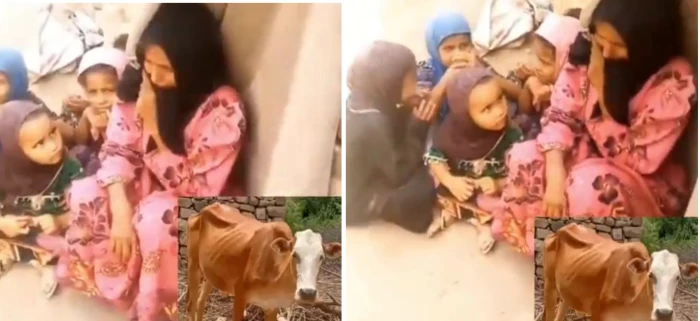
Reports and social media footage emerging from Yemen’s Taiz governorate have highlighted the acute humanitarian distress facing rural populations under the control of the Houthi militia. A widely circulated video depicts a Yemeni woman in a state of emotional collapse, sobbing uncontrollably after Houthi fighters reportedly confiscated her cow, a primary source of livelihood and nutrition for her family.
The incident underscores a broader pattern of economic hardship and resource seizure in the region. For many families in the highlands of Taiz, livestock—particularly cattle—represent not only a source of food security through milk and meat but also a critical financial asset in a country where the formal economy has largely disintegrated due to years of conflict.
Human rights monitors have frequently documented the impact of such seizures on vulnerable populations, particularly women and displaced persons. In rural Yemen, the loss of a single animal can push a household from precarious stability into absolute poverty, exacerbating the risk of malnutrition and food insecurity in a region already described as one of the world’s most severe humanitarian crises.
The Economic Impact of Livestock Seizures in Taiz
In the agrarian communities of Taiz, livestock are often the only remaining form of capital for impoverished families. The confiscation of animals by armed groups is rarely an isolated event; it is often part of a systemic pressure on local populations to provide resources or funding to the Houthi administration. When a cow is taken, the immediate loss is the daily production of milk, which is vital for children and the elderly, while the long-term loss is the ability to sell the animal during times of emergency.
The psychological toll is equally devastating. The video of the woman’s breakdown reflects a deeper sense of helplessness and desperation. For many rural Yemenis, these animals are not merely commodities but survival tools. The emotional reaction captured in the footage is a manifestation of the cumulative trauma experienced by civilians living under militia rule, where the threat of sudden loss—of property, livelihood, or life—is a constant reality.
Systemic Humanitarian Crisis in Yemen
The situation in Taiz is indicative of the wider struggle across Yemen. The Houthi-controlled areas have seen repeated reports of restrictive policies that hinder the delivery of aid and the movement of goods. According to reporting from the BBC, some aid groups have faced extreme challenges, with reports that the Houthi rebels have seized essential resources and driven humanitarian organizations to the brink of operational failure.
These institutional actions create a vacuum of support for the most marginalized. When the state or international aid cannot protect a citizen’s basic assets, the result is a total reliance on the whims of the controlling militia. The seizure of a cow may seem tiny in a global geopolitical context, but for a mother in Taiz, it represents the theft of her children’s nutrition and her family’s future.
Who is Affected and What it Means for Rural Yemen
The primary victims of these seizures are often women-led households and the rural poor. In many Yemeni villages, women manage the livestock and are responsible for the domestic economy. When militia forces target these assets, they strike the most fragile link in the community’s survival chain.
This trend of confiscation contributes to several critical issues:
- Increased Malnutrition: The loss of dairy products leads to immediate nutritional deficits, particularly in children under five.
- Forced Migration: Families who lose their means of production are more likely to migrate to overcrowded urban centers or displacement camps, increasing the burden on already strained humanitarian hubs.
- Erosion of Local Markets: The arbitrary removal of livestock disrupts local trade and agricultural productivity.
The Role of Documentation in Human Rights Reporting
The emergence of this video serves as a critical piece of evidence in the ongoing documentation of human rights abuses in Yemen. As many Houthi-controlled areas are restricted for international journalists and monitors, citizen-led documentation—such as the recording of this woman’s distress—becomes the primary way the world learns about the daily realities of the population.
These videos provide a visceral counter-narrative to official statements, showing the human cost of the conflict beyond the front lines of military engagement. They highlight the “invisible” war fought against the livelihoods of civilians through taxation, confiscation and intimidation.
Conclusion and Next Steps
The image of a woman weeping over a stolen cow is a microcosm of the Yemeni tragedy: a collision of extreme poverty, political instability, and the cruelty of armed conflict. As the international community continues to navigate the complexities of the Yemeni peace process, the plight of rural civilians in Taiz remains a stark reminder that stability cannot be achieved without the protection of basic human rights and the security of personal property.
There are currently no confirmed official responses from the Houthi leadership regarding this specific incident. International observers continue to call for increased monitoring of civilian rights in militia-held territories to prevent further systemic abuses.
We invite our readers to share their perspectives on the humanitarian situation in Yemen in the comments below. Please share this report to bring attention to the struggles of rural communities in Taiz.