
For decades, medical professionals have viewed sleep as a period of restoration—a necessary pause for the body to recharge. However, novel research suggests that the electrical activity of our brains whereas we slumber holds a far more critical secret: a biological clock that may predict the onset of dementia years before the first flicker of memory loss appears.
A breakthrough study utilizing artificial intelligence has introduced the “Brain Age Index” (BAI), a metric that can identify when a brain is aging faster than the body it inhabits. By analyzing the microstructures of sleep electroencephalography (EEG), researchers can now identify neurological patterns that signal a heightened risk of cognitive decline, offering a potential window for early intervention in an area of medicine where time is the most precious commodity.
This discovery shifts the focus from how long we sleep to how our brains behave during those hours. While sleep duration has long been linked to general health, the Brain Age Index looks deeper, examining the specific architecture of brain waves to determine if the neurological age of a patient exceeds their chronological age. When this gap widens, the risk of developing dementia increases significantly.
Decoding the Brain Age Index: Neurological vs. Chronological Age
The concept of the Brain Age Index is rooted in the difference between a person’s actual age (chronological) and the age suggested by their brain’s electrical activity during sleep (neurological). In a healthy aging process, these two numbers remain relatively aligned. However, in individuals predisposed to dementia, the sleep EEG often reveals patterns typical of a much older brain.
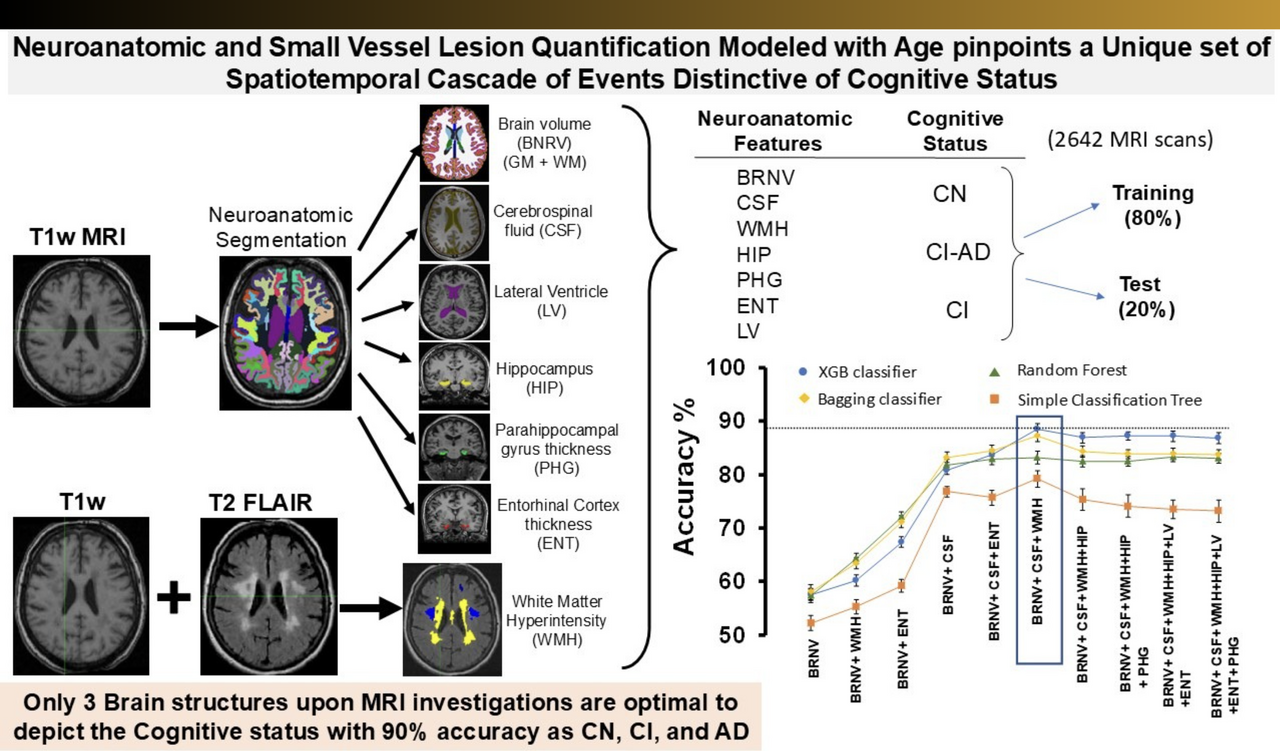
According to research published in JAMA Network Open, the BAI quantifies deviations in sleep EEG microstructures from normative patterns. If a person is 60 years old but their sleep patterns mirror those of an 80-year-old, they possess a high BAI, which serves as an alarm signal for future cognitive impairment.
The precision of this tool is driven by machine learning. Rather than relying on a physician’s manual interpretation of EEG charts—which can be subjective and time-consuming—an AI algorithm analyzes 13 specific microstructural features of nightly brain activity extracted from central EEG channels. These features are too subtle for the human eye to categorize consistently but are easily identified by AI as markers of premature brain aging.
The Data: A Massive Multi-Cohort Analysis
To ensure the validity of the Brain Age Index, a US-based research team—including scientists from the University of California, San Francisco (UCSF) and the Beth Israel Deaconess Medical Center—conducted a massive individual participant data meta-analysis. This was not a small-scale trial but a comprehensive appear at community-dwelling adults across five distinct longitudinal cohorts: MESA, ARIC, FHS-OS, MrOS, and SOF as detailed in PubMed.
The scale of the study provides a high level of statistical confidence. The researchers analyzed data from 7,071 participants who were free of dementia at the time of their initial polysomnography recorded via home-based sleep studies. The participants spanned a wide age range, from as young as 40 in the FHS-OS cohort to as old as 96 in the MrOS cohort.
Over a median follow-up period ranging from 3.5 to 17.0 years, the incidence of dementia among these participants ranged from 6.6% to 34.3% across the five cohorts. By tracking these individuals, the team could directly correlate the initial “brain age” measured by the AI with the eventual development of dementia.
Quantifying the Risk: The 40 Percent Connection
The most striking finding of the study is the direct mathematical relationship between the Brain Age Index and the likelihood of developing dementia. The data indicates that for every ten years that a person’s sleep profile is “older” than their actual chronological age, their risk of developing dementia in the following years increases by approximately 40 percent according to the findings published in JAMA Network Open.
What makes this finding particularly significant for clinicians is that the association remained stable even after controlling for other major risk factors. The increased risk persisted regardless of the patient’s genetic predisposition or the presence of other pre-existing health conditions as reported in the study data. This suggests that the BAI is an independent predictor of dementia, capturing a biological signal that other tests might miss.
This ability to predict risk years before the onset of clinical symptoms—such as significant memory loss or disorientation—could revolutionize how we approach cognitive health. Currently, many dementia diagnoses occur only after substantial neurological damage has already taken place. A sleep-based AI screening could identify “at-risk” individuals while their cognitive function is still intact.
Why This Matters: From Detection to Prevention
The shift toward AI-driven early detection is not merely about knowing the future; It’s about changing it. While many forms of dementia are currently irreversible, early identification allows for aggressive management of modifiable risk factors. This includes optimizing cardiovascular health, managing blood pressure, and implementing cognitive exercises to build “cognitive reserve.”
this research highlights the critical role of sleep as a biomarker. Sleep EEG microstructures are closely tied to cognition and undergo predictable age-dependent changes. When these changes accelerate, they serve as a proxy for the overall health of the brain’s neural networks as noted in the research objectives.
For the general public, this underscores the importance of sleep hygiene. While the Brain Age Index is a diagnostic tool for researchers and clinicians, the underlying principle—that the quality of our brain’s activity during sleep is linked to its long-term health—is a powerful reminder that sleep is not passive downtime, but an active period of neurological maintenance.
Key Takeaways on the Brain Age Index (BAI)
- What it is: A machine learning tool that calculates the difference between a person’s chronological age and their “neurological age” based on sleep EEG patterns.
- The Risk: Every 10-year gap between chronological and neurological age is associated with a roughly 40% increase in dementia risk per the study’s findings.
- The Method: AI analyzes 13 microstructural features of brain waves during home-based sleep polysomnography.
- The Scope: Verified across five longitudinal cohorts involving 7,071 participants via meta-analysis.
- Clinical Value: Predicts dementia risk years before symptoms appear, independent of genetics or other pre-existing conditions.
As these AI tools move from research settings into clinical practice, the goal will be to integrate them into routine health screenings. The ability to predict dementia risk through sleep could transform the landscape of geriatric medicine, moving the needle from reactive treatment to proactive prevention.
Medical communities are now looking toward further validation of these results in more diverse populations to refine the accuracy of the Brain Age Index. Future updates on the clinical implementation of these AI screenings are expected as the research moves through further peer-review and practical application phases.
Do you believe AI-driven health screenings should become part of routine annual check-ups? Share your thoughts in the comments below or share this article with your network to start a conversation about the future of brain health.
Keep reading