The landscape of oncology is shifting toward a future where the most aggressive cancers may be treated without a single incision. Recent breakthroughs in immunotherapy for cancer are demonstrating that stimulating the body’s own immune system can, in specific cases, lead to the complete disappearance of tumors, potentially eliminating the need for invasive surgeries or traditional chemotherapy.
While these therapies do not function for every patient, they represent a pivotal shift toward less invasive medical interventions. By leveraging the natural ability of the human body to recognize and destroy abnormal cells, researchers are finding ways to overcome the “cloaking” mechanisms that cancer cells use to evade detection.
A significant focal point of this progress involves patients with Mismatch Repair Deficiency (MMRd), a genetic anomaly that impairs a cell’s ability to correct errors during DNA replication. When this biological mechanism fails, mutations accumulate, significantly increasing the risk of developing colorectal, stomach, endometrial, and ovarian cancers.
New clinical data suggests that for those with these specific genetic markers, immunotherapy is not just a supplementary treatment but a potential replacement for standard invasive procedures. In a study coordinated by the Memorial Sloan Kettering Cancer Center (MSKCC), results indicated that 80% of patients with MMRd cancers did not require surgery, radiotherapy, or chemotherapy after six months of immunotherapy reported by 360medical.ro.
Understanding the Mechanism: How Immunotherapy Works
To understand why this is a breakthrough, one must first understand how cancer survives. Normally, the immune system identifies “foreign” or abnormal cells and eliminates them. However, some cancer cells develop the ability to bypass this natural defense, allowing them to grow unchecked.
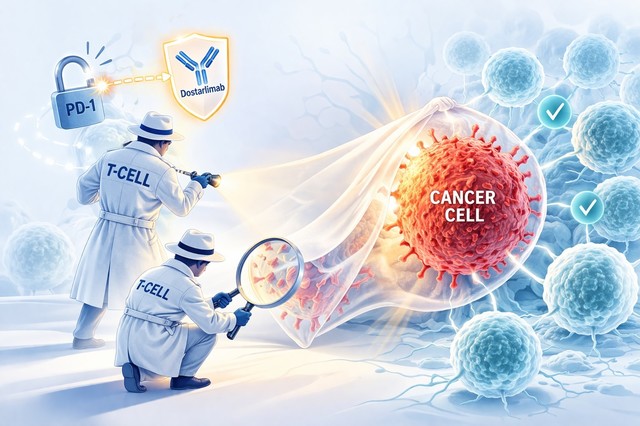
Immunotherapy works by removing the “brakes” from the immune system. A primary example is the use of monoclonal antibodies like dostarlimab. This medication targets a specific protein called PD-1 (Programmed Cell Death Protein 1), which is found on the surface of T-lymphocytes.
In a healthy system, PD-1 acts as a checkpoint to prevent the immune system from attacking the body’s own healthy tissues. However, cancer cells often exploit this checkpoint to hide. By blocking the PD-1 protein, drugs like dostarlimab allow the immune system to recognize and destroy the malignant cells.
Case Study: The Impact of Dostarlimab
The real-world application of this technology is illustrated by the case of a 71-year-old patient from New York. Having previously been treated for colon cancer in 2008, the patient was later diagnosed with esophageal cancer. Participating in a clinical trial at Memorial Sloan Kettering Cancer Center, the patient received dostarlimab via 45-minute infusions every three weeks reported by 360medical.ro.
The Role of MMRd and Genomic Instability
The success of these non-invasive treatments is closely tied to the genetic profile of the tumor. The Mismatch Repair (MMR) system is responsible for identifying and correcting minor errors that occur during cell division. When this system is deficient (MMRd), the resulting genomic instability makes the tumor more “visible” to the immune system once the PD-1 brakes are removed.
This discovery was highlighted during the annual congress of the American Association of Cancer Research (AACR 2025) and published in the New England Journal of Medicine (NEJM). The findings emphasize that for the 80% of MMRd patients who avoided surgery after six months of treatment, the quality of life was significantly improved by preserving affected organs reported by 360medical.ro.
Key Takeaways for Patients and Caregivers
- Targeted Approach: Immunotherapy is most effective in patients with specific genetic markers, such as Mismatch Repair Deficiency (MMRd).
- Reduced Invasiveness: In certain clinical trials, a vast majority of patients avoided surgery, chemotherapy, and radiation.
- Mechanism: Drugs like dostarlimab block the PD-1 protein, preventing cancer cells from “hiding” from T-cells.
- Organ Preservation: By avoiding surgery, patients can maintain the function of the affected organs.
What This Means for the Future of Oncology
The transition toward immunotherapy for cancer signals a move toward personalized medicine. Rather than a “one size fits all” approach involving aggressive surgery and systemic toxicity from chemotherapy, doctors can now look at the genetic makeup of a tumor to determine if the immune system can be recruited to do the work.
While these results are promising, medical professionals emphasize that immunotherapy is not yet a universal cure. Its efficacy depends heavily on the biological characteristics of the tumor and the patient’s individual immune response. The goal for researchers is to expand the range of cancers that can be treated this way and to identify new biomarkers that predict which patients will respond best to checkpoint inhibitors.
As these therapies move from clinical trials to standard care, the focus remains on improving patient quality of life and reducing the physical and psychological trauma associated with invasive oncological interventions.
Further updates on these protocols are expected as more data from the AACR and NEJM studies are analyzed and integrated into global clinical guidelines.
We encourage readers to share this article with those who may benefit from information on modern oncology and to abandon their thoughts or questions in the comments section below.
Worth a look