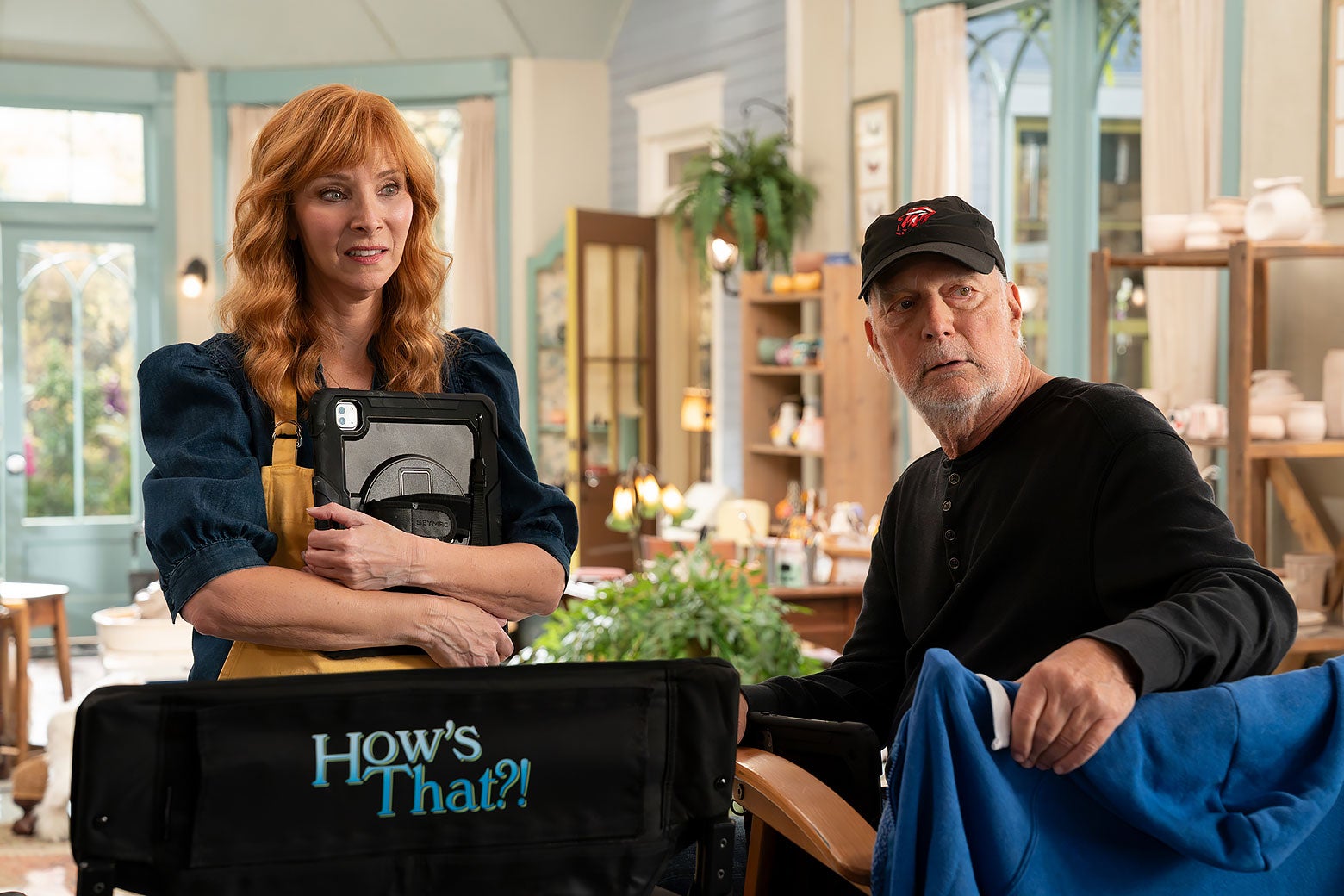
In the volatile landscape of the television industry, few figures command as much respect as James Burrows. A seasoned veteran of the multicamera sitcom, Burrows has spent decades shaping the comedic timing and structural integrity of some of the most influential shows in history. While his legacy is primarily built behind the camera, his recent contribution to Lisa Kudrow’s HBO sitcom, The Comeback, highlights a different facet of his expertise: the ability to embody the remarkably industry he helped build.
The role of a TV legend in The Comeback serves as more than just a celebrity cameo; it provides a vital, grounding element to a series defined by satire and the precarious nature of fame. By playing a thinly veiled version of himself, Burrows brings an authenticity to the production that bridges the gap between the show’s fictional struggles and the real-world mechanics of Hollywood. This intersection of reality and fiction is central to the show’s appeal, offering viewers a rare glimpse into the “truth” of the business.
For those following the series, the timing of this contribution is particularly poignant. The third and final season of The Comeback premiered on March 22, 2026, marking the conclusion of a narrative arc that has spanned over two decades. The show, created by Lisa Kudrow and Michael Patrick King, follows the journey of Valerie Cherish, an aging actress attempting to navigate the whims of network executives and the cruelty of public perception.
The Influence of James Burrows on the Sitcom Medium
To understand why Burrows’ presence is so critical to The Comeback, one must first acknowledge his standing in the industry. Burrows is a craftsman whose credits extend back to The Mary Tyler Moore Show. His influence on the American sitcom is nearly unparalleled; between 1980 and 2005, he was nominated for an Emmy nearly every single year, with only one exception. This period of dominance included directing 237 episodes of Cheers and shooting the pilots for cultural touchstones such as Friends, Frasier, and Will & Grace.
Burrows’ approach to the medium is documented in his 2022 memoir, Directed by James Burrows, which serves as a guide to the multicamera format. In the same way that Sidney Lumet’s Making Movies dissected the art of cinema, Burrows’ writing reveals a thoughtful, disciplined approach to television production. This deep knowledge of the “craft” is exactly what he brings to his role in The Comeback, allowing him to represent the institutional memory of the television industry.
A Critical Function: “Jimmy Represents the Truth”
Despite his stature, Burrows’ appearances in The Comeback are relatively sparse. Across the show’s three seasons, he has appeared in only eight episodes, sometimes for a single scene. However, the impact of these appearances is outsized. Co-creator Michael Patrick King has noted that the character, referred to as “Jimmy,” represents the truth within the narrative. In a show where the protagonist, Valerie Cherish, is often delusional or manipulated by those around her, Burrows provides a necessary point of reality.
The character is deeply informed by Burrows’ real-life history, not only as a director but through his professional relationship with Lisa Kudrow. This synergy allows the show to satirize the entertainment industry from the inside. Burrows has noted in an HBO podcast that while he is often recognized for his work on Cheers and Friends, he is frequently stopped on the street by fans who specifically loved his performance on The Comeback. This suggests that his ability to play a version of himself has resonated with audiences who appreciate the nuance of his industry insight.
The Evolution of The Comeback (2005–2026)
The production history of The Comeback is as unconventional as the career of its protagonist. The series has materialized once per decade since its inception, reflecting a fragmented but persistent creative vision. The first season, which aired from June 5 to September 4, 2005, consisted of 13 episodes and was presented as a mockumentary—found footage from a fictional reality show. After being canceled, the series was revived nine years later for a second season of eight episodes, which aired from November 9 to December 28, 2014.
The third and final season, which began airing on March 22, 2026, brings the story of Valerie Cherish to a close. Throughout these iterations, the show has maintained its status as a “cringe comedy” and a satire of the television industry. The collaboration between Kudrow and King—the latter a former executive producer of Sex and the City—has allowed the series to maintain a sharp, critical eye on how fame is manufactured and maintained.
Series Overview and Timeline
| Season | Original Release Window | Episode Count | Format/Style |
|---|---|---|---|
| Season 1 | June 5, 2005 – September 4, 2005 | 13 | Found footage/Mockumentary |
| Season 2 | November 9, 2014 – December 28, 2014 | 8 | Satirical Sitcom |
| Season 3 | March 22, 2026 – Present | Part of 27 total | Satirical Sitcom |
Why This Matters for the Industry
The inclusion of James Burrows in The Comeback is a meta-commentary on the nature of the sitcom itself. By bringing in the man who literally wrote the book on multicamera directing, the show validates its own satire. It acknowledges that the “industry” isn’t just a set of tropes, but is composed of real people with specific methodologies and histories. When Burrows appears on screen, he isn’t just playing a character; he is bringing the weight of decades of television history into the room.
:max_bytes(150000):strip_icc()/Lisa-Kudrow-Damian-Young-1-121525-aad8928a93b24826a80af99b2c733719.jpg)
For the global audience, this highlights the transition of the television medium. From the traditional multicamera setups of the 1980s and 90s—which Burrows perfected—to the modern era of prestige cable and streaming, the core struggle for visibility and relevance remains the same. The Comeback uses Burrows as a bridge between these two eras, reminding viewers that while the technology and formats change, the human element of the “comeback” remains a timeless narrative.
As the final season continues to air, the industry will likely look back at the series as a definitive study of the entertainment business. The collaboration between Kudrow, King, and Burrows represents a rare alignment of talent, where the creators and the subjects of the satire are the same people, leading to a level of authenticity that is rarely achieved in scripted comedy.
The series continues its final run following its March 22 premiere. Viewers can follow official HBO updates for further episode schedules and series wrap-up announcements.
Do you think the “truth” of the industry is best captured through satire, or through direct memoir? Share your thoughts in the comments below and share this analysis with other television enthusiasts.