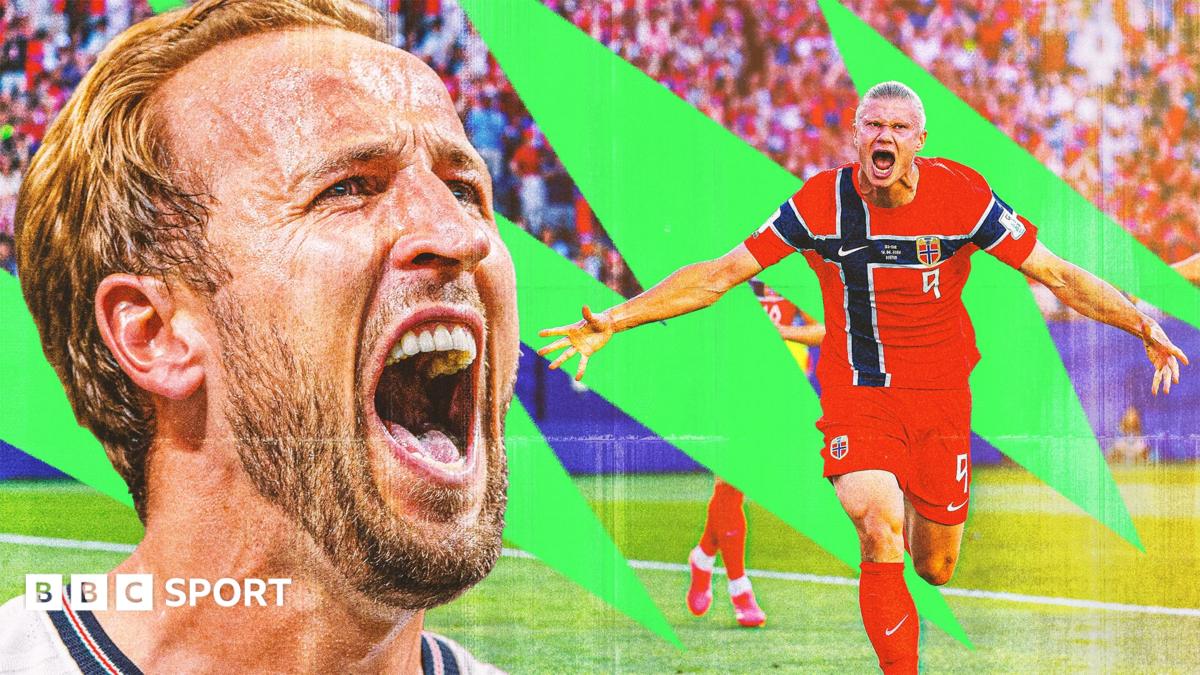
A comparison of Harry Kane and Erling Haaland reveals a fundamental divide between a versatile, playmaking forward and a specialized, high-efficiency goal-scorer. While Haaland maintains a higher goals-per-game ratio and holds Premier League scoring records, Kane provides superior creative distribution and build-up play, making the ideal choice dependent on a team’s tactical structure.
The debate over who represents the premier striker in global football has shifted from a question of talent to a question of utility. Erling Haaland, the Manchester City powerhouse, and Harry Kane, the Bayern Munich talisman, operate as two distinct archetypes of the “number nine” role. Their divergent styles create a strategic dilemma for managers: do they prioritize the clinical finish of a specialist or the comprehensive influence of a complete forward?
Data from the 2023-24 and 2024-25 seasons show that both players remain at the summit of European football, though their contributions to their respective teams differ in nature. Haaland’s game is built on explosive pace and positioning, whereas Kane’s game relies on technical precision and tactical intelligence. This distinction is reflected in their statistical profiles, where Haaland dominates in volume of goals and Kane leads in overall involvement in the attacking phase.
Analyzing these two athletes requires looking beyond the scoresheet. It involves an examination of “Expected Goals” (xG), passing accuracy in the final third, and the economic impact these players have on their clubs’ market valuations. As the modern game evolves toward more fluid attacking systems, the value of a striker is no longer measured solely by goals, but by how their presence improves the players around them.
Goal-Scoring Efficiency and the Haaland Model
Erling Haaland operates as a pure finisher, a role he has perfected through a combination of physical dominance and elite movement. According to Premier League official statistics, Haaland broke the record for the most goals scored in a single 38-game Premier League season during the 2022-23 campaign, netting 36 goals. His efficiency is rooted in his ability to occupy defenders and find space in the penalty area, often requiring fewer touches than any other forward to find the back of the net.

Haaland’s approach is characterized by verticality. He rarely drops deep into the midfield to facilitate play, preferring to remain on the shoulder of the last defender. This specialization allows Manchester City to maximize their possession-based system, as Haaland provides a constant, lethal outlet for the creative midfielders behind him. His conversion rate remains among the highest in the world, often scoring from positions that other strikers would struggle to convert.
The “Haaland Model” is one of optimization. By limiting his responsibilities to finishing, he maintains a level of freshness and focus that allows for sustained bursts of scoring. This is evident in his Champions League record, where he has consistently maintained a high goal-to-game ratio across multiple clubs, including Borussia Dortmund and Red Bull Salzburg. For a team that already possesses dominant creative forces in midfield, Haaland is the most efficient tool for converting possession into goals.
Creative Distribution and the Kane Profile
Harry Kane represents the “complete forward,” a player who functions as both the primary scorer and a secondary playmaker. Since his move to Bayern Munich, Kane has demonstrated an ability to dictate the tempo of the attack from a deep position. Unlike Haaland, Kane frequently drops into the “number 10” space, turning to face the goal and spraying passes to overlapping wingers or charging midfielders.
This versatility is evidenced by Kane’s assist record. According to Bundesliga performance data, Kane consistently ranks among the top providers of goal-scoring opportunities in the league. His ability to execute long-range diagonal balls and weighted through-passes adds a layer of unpredictability to the Bayern Munich attack. When Kane drops deep, he drags center-backs out of position, creating voids for teammates to exploit.
Kane’s goal-scoring remains elite, but it is characterized by variety. While Haaland relies heavily on power and positioning, Kane is noted for his technical finishing, including curling efforts from distance and precision penalties. He is England’s all-time leading goal-scorer, a testament to his longevity and consistency across different leagues and competitions. For a team that lacks a creative engine in midfield, Kane provides a dual-threat capability that can unlock stubborn defenses.
International Standing and Leadership
The international careers of both players reflect their differing trajectories and the environments of their respective national teams. Harry Kane serves as the captain of England, a role that requires him to be the emotional and tactical heartbeat of the squad. His leadership is measured not just in goals, but in his ability to manage the pressure of a high-expectation environment.
Erling Haaland’s role with Norway is more singular. While he is the undisputed star of the team, Norway has historically struggled to match the collective depth of the England squad. Consequently, Haaland often carries a heavier burden of the scoring load, but he lacks the consistent supporting cast that allows him to thrive at Manchester City. This discrepancy highlights how a striker’s international output is often a reflection of the team’s overall infrastructure.
In terms of trophy cabinets, both players have faced challenges in securing major international silverware. However, Kane’s experience in leading a team through multiple major tournaments—including the World Cup and European Championships—gives him an edge in terms of psychological resilience and tactical leadership. Haaland’s international journey is more about individual brilliance attempting to elevate a developing national side.
Market Valuation and Commercial Impact
From a business perspective, both players are massive assets, though their valuations are driven by different market forces. According to Transfermarkt, Haaland’s valuation is often higher due to his age and the scarcity of “pure” strikers with his physical profile. In the modern transfer market, a player who can guarantee 30+ goals a season is a premium commodity that commands top-tier pricing.
Kane’s value is tied to his reliability and his multifaceted skill set. While he may not possess the same raw speed as Haaland, his ability to fit into multiple tactical systems makes him a lower-risk acquisition for any elite club. His move to Bayern Munich was a strategic investment by the German club to replace the void left by Robert Lewandowski, emphasizing the need for a player who could both score and create.
The commercial impact extends beyond the pitch. Haaland has become a global brand, appealing to a younger demographic through his “cyborg” persona and dominant physical presence. Kane represents a more traditional, steady professionalism, maintaining a strong brand image based on consistency and leadership. Both players drive significant merchandise sales and sponsorship opportunities for their clubs, contributing to the overall revenue growth of the Premier League and the Bundesliga.
Tactical Application: Choosing the Right Number 9
The question of “who to pick” is not a matter of who is better, but which system is being employed. The choice depends on the existing personnel in the squad and the desired style of play.
A manager should pick Erling Haaland if the team possesses:
- Elite creative midfielders (e.g., Kevin De Bruyne) who can provide high-quality service.
- A tactical preference for high-volume crossing and fast transitions.
- A need for a physical presence to pin back opposing center-backs.
- A system where the striker is the final destination of the attack, not the initiator.

A manager should pick Harry Kane if the team possesses:
- Fast, instinctive wingers who can run into the spaces Kane creates by dropping deep.
- A need for a striker who can contribute to the build-up play and maintain possession.
- A tactical requirement for a leader who can organize the attack on the fly.
- A system that requires a “False 9” or a hybrid striker who can operate between the lines.
In a head-to-head scenario, Haaland is more likely to score a hat-trick in a game where his team dominates possession. Kane is more likely to be the player who scores the winning goal and provides the assist for the second, controlling the rhythm of the match. The “better” player is the one who solves the specific problem a team is facing.
Comparative Performance Metrics
When placing their statistics side-by-side, the contrast becomes a data-driven reality. Haaland’s goals-per-minute ratio is typically superior, reflecting his role as a specialist. Kane’s “touches per goal” is higher, but his “successful passes per 90 minutes” is significantly higher than Haaland’s. This confirms that Kane is an active participant in the game for longer durations, while Haaland is a surgical instrument used for specific, lethal moments.
Furthermore, their impact on “Expected Assists” (xA) shows a wide gap. Kane consistently ranks in the top percentiles for xA among forwards, whereas Haaland’s xA is relatively low. This is not a failure of Haaland’s ability, but a reflection of his role. He is the target, not the provider. To judge Haaland by his assists would be as inaccurate as judging Kane solely by his raw goal count without considering his role in the build-up.
The durability of both players also warrants mention. Both have maintained impressive fitness records, though Haaland’s explosive style of play carries a different risk profile than Kane’s more methodical approach. Their ability to remain available for the majority of the season is a critical component of their value to their respective clubs.
The next confirmed checkpoint for these two athletes will be their respective league fixtures in the upcoming weekend, where their ability to influence the standings of the Premier League and Bundesliga will once again be on display. Readers can follow official match reports and updated statistics via the official league websites.
Who would you choose to lead your attack? Share your tactical reasoning in the comments below and share this analysis with other football fans.