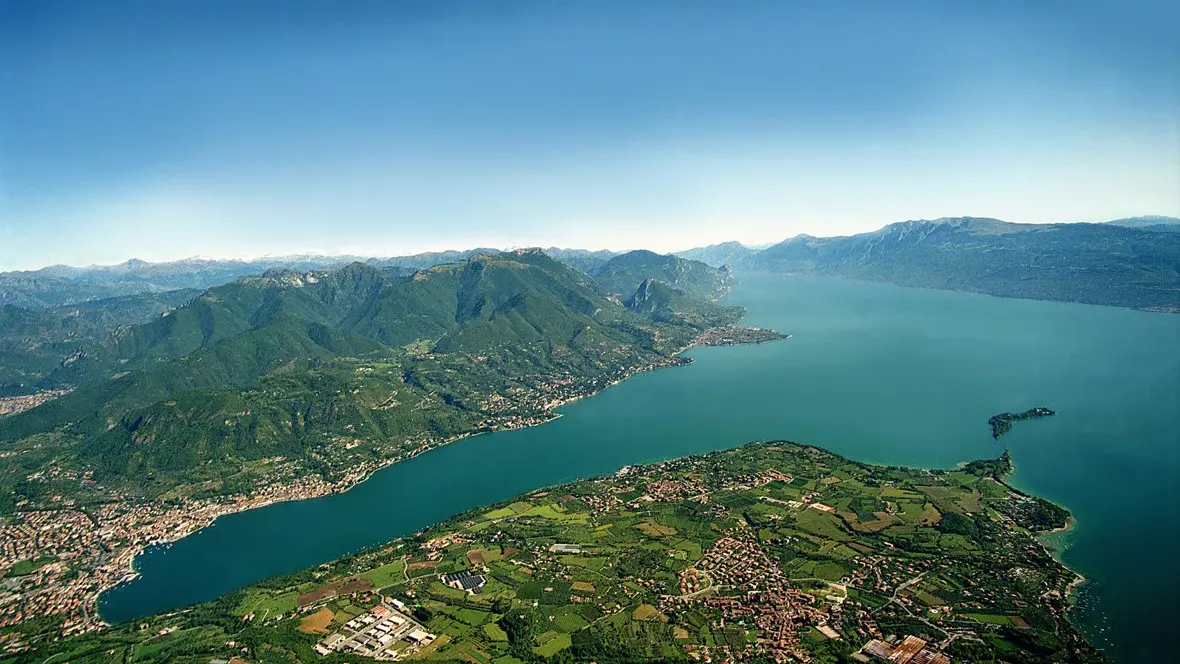
Lake Garda’s waters have undergone a dramatic and rare “complete mixing” event, with scientists confirming that powerful winds temporarily overcame the lake’s prolonged summer stratification caused by record heat. This phenomenon—known as “holomixis”—has significant ecological implications, potentially preventing oxygen depletion at deeper levels while disrupting the lake’s usual thermal layers.
In an event that caught researchers by surprise, the northern Italian lake—Europe’s largest—experienced what experts describe as an “unexpected reversal” of its usual summer conditions. While Lake Garda typically maintains distinct temperature layers during warm months, the recent wind-driven turbulence has triggered a full vertical circulation, a process that normally occurs only in autumn or winter. Climate scientists are now examining whether this early mixing event signals broader shifts in alpine lake behavior as global temperatures rise.
The phenomenon was first observed by limnologists monitoring Lake Garda’s thermocline—the boundary between warm surface water and colder depths. “This is not a regular occurrence,” said Dr. Marco Lazzari, a limnology professor at the University of Brescia, in a statement to ANSA. “The wind patterns we’ve seen in recent days were strong enough to break the thermal stratification that had persisted since early spring.”
Why This Matters: The Science Behind Lake Mixing
Most large lakes, including Lake Garda, develop seasonal stratification where warm, less dense water floats on top of colder, denser layers. This natural separation creates distinct ecological zones but can lead to problems if the deeper waters become depleted of oxygen—a condition known as hypoxia. When this occurs, toxic gases like hydrogen sulfide can form, threatening aquatic life.
However, the recent wind-driven mixing appears to have temporarily restored oxygen levels throughout the water column. “This is actually a positive development for the lake’s ecosystem,” explained Dr. Elena Maestrini, a researcher at the Italian National Research Council’s Institute of Ecosystem Study. “The sudden mixing brings nutrients from the bottom to the surface, which can stimulate phytoplankton growth and benefit fish populations.”
Yet the timing of this event—occurring in early May rather than autumn—raises questions about how climate change may be altering lake behavior. “We’re seeing more frequent and intense wind events in this region, possibly linked to shifting atmospheric patterns,” Dr. Lazzari noted. “If this becomes a recurring pattern, it could disrupt the delicate balance of lake ecosystems that have evolved over centuries.”
Historical Context: Lake Garda’s Stratification Patterns
Lake Garda’s thermal stratification has been studied for decades, with researchers documenting its seasonal cycles. Typically, the lake’s surface waters warm significantly in summer, creating a stable layer that can persist until autumn winds trigger the annual “turnover.” This process renews oxygen levels and redistributes nutrients, a critical reset for the lake’s food web.
However, recent data from the Lombardy Environmental Protection Agency indicates that Lake Garda’s surface temperatures have been consistently higher than historical averages. Satellite imagery from May 2026 shows surface temperatures reaching up to 24°C (75°F) in some areas—nearly 3°C above the 30-year average for this time of year. The recent wind event, while beneficial in the short term, may also have accelerated the mixing process beyond its natural timeline.
Ecological and Human Impacts
The mixing event has immediate effects on Lake Garda’s biodiversity. Fish species that rely on stable temperature gradients, such as certain trout populations, may experience temporary stress as their preferred habitats shift. Conversely, species adapted to cooler waters may find new opportunities as deeper, nutrient-rich waters are brought to the surface.
For humans, the phenomenon could influence recreational activities. The sudden mixing often leads to cooler surface temperatures, which may affect boating and swimming conditions. Local authorities are advising visitors to monitor water quality reports, as the mixing can also temporarily increase turbidity and alter chemical balances.
Climate Change and Lake Behavior: A Growing Concern
This event aligns with broader trends observed in alpine and pre-alpine lakes across Europe. Studies published in Nature Climate Change and Limnology and Oceanography have documented increasing instances of early or irregular mixing in lakes from the Swiss Alps to the Pyrenees. These changes are attributed to:
- Warmer surface temperatures: Prolonged heatwaves extend the stratification period, delaying the natural autumn turnover.
- Altered wind patterns: Climate models suggest shifts in regional wind regimes, including more frequent and intense storms that can trigger premature mixing.
- Reduced ice cover: In some northern lakes, earlier ice melt has disrupted the traditional winter mixing cycle.
Dr. Maestrini warns that while the recent mixing at Lake Garda may have short-term benefits, the long-term effects remain uncertain. “If we see more of these early mixing events, it could lead to unpredictable fluctuations in oxygen levels, pH, and nutrient availability,” she said. “This would challenge both the lake’s natural ecosystems and human uses like fishing and tourism.”
What Happens Next: Monitoring and Research
Scientists are now intensifying their monitoring of Lake Garda’s physical and chemical parameters. The University of Brescia’s research team, in collaboration with ARPA Lombardia, plans to deploy additional sensors to track:
- Oxygen levels at various depths over the next 30 days
- Changes in phytoplankton and zooplankton populations
- Potential shifts in fish behavior and spawning patterns
- Long-term trends in wind patterns and their correlation with lake mixing
Preliminary data suggests that the mixing event has already led to a measurable increase in chlorophyll-a concentrations—an indicator of phytoplankton activity—suggesting a potential algal bloom in the coming weeks. Researchers are advising caution, as such blooms can sometimes produce toxins harmful to both wildlife and humans.
Key Takeaways
- Rare Event: Lake Garda’s complete mixing in May is unusual, typically occurring in autumn.
- Wind-Driven: Strong winds overcame the lake’s prolonged summer stratification caused by record heat.
- Ecological Benefits: The mixing restored oxygen levels and redistributed nutrients, potentially benefiting aquatic life.
- Climate Concerns: The event may signal broader shifts in lake behavior due to climate change.
- Monitoring Intensifies: Scientists are tracking water quality and biological responses in the coming weeks.
- Tourism Impact: Visitors should expect possible changes in water temperature and clarity.
Next Steps and Official Updates
The next scheduled update from ARPA Lombardia on Lake Garda’s water quality is expected on June 1, 2026, following their monthly sampling program. For real-time monitoring, the public can access live data through the agency’s Lake Garda Water Quality Portal. Researchers from the University of Brescia will present preliminary findings at the International Symposium on Alpine Lake Research in Innsbruck, Austria, scheduled for September 2026.
Have you experienced changes in Lake Garda’s conditions this season? Share your observations in the comments below, or connect with our science team on X to discuss the latest developments.
Related reading