Every few decades, the music world encounters a guitar hero who does more than just play the instrument—they redefine what it is. From the psychedelic firestorms of Jimi Hendrix to the vocal-like precision of Jeff Beck, these artists transform the six-string into a vehicle for sounds that defy traditional categorization. Today, a new figure is capturing the imagination of musicians and critics alike: Mk.gee.
Michael Gordon, the 29-year-old New Jersey native known professionally as Mk.gee, has introduced a sonic palette that feels simultaneously extraterrestrial and nostalgic. His 2024 debut album, Two Star & the Dream Police, features guitar work that shifts fluidly between sounding like an orchestra, a snarling animal, or a radio playing from the bottom of the ocean. This innovative approach to the guitar sounds new again, sparking a global quest among gear enthusiasts to decode his specific “tone.”
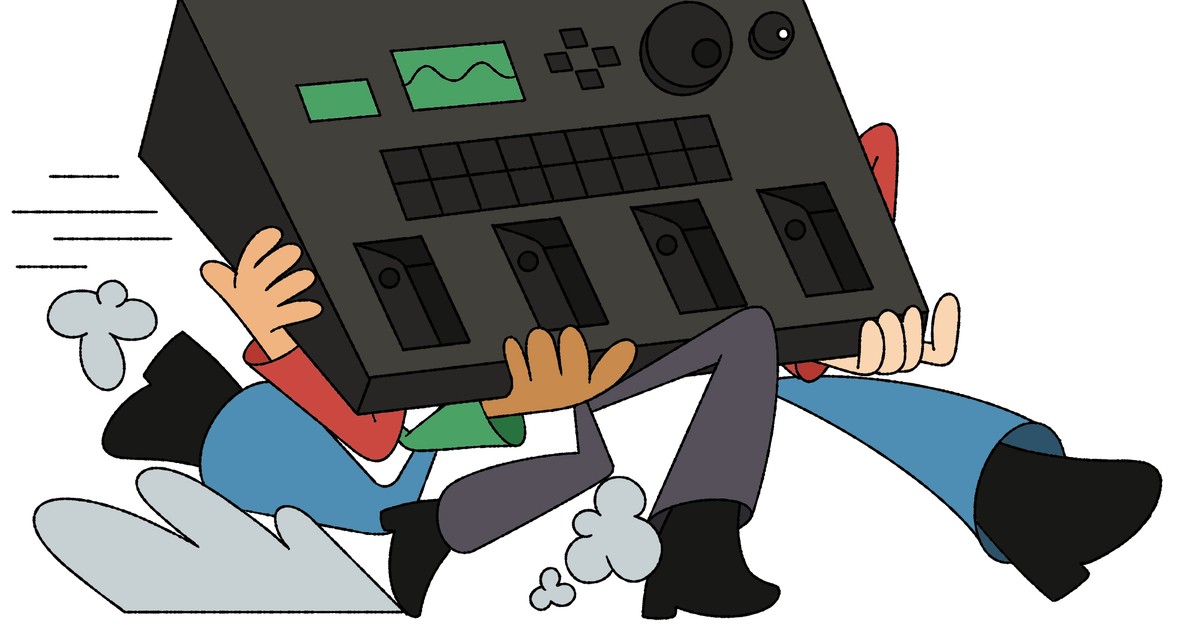
The mystery of the Mk.gee sound remained a topic of speculation on Discord servers and Reddit threads until a photograph of his stage setup revealed the secret weapon: a large black box from the mid-1990s known as the Roland VG-8. The discovery has triggered an unexpected market resurgence for a piece of digital technology that had spent nearly three decades collecting dust in home studios and pawn shops.
As a business editor and economist, I find the trajectory of the VG-8 particularly fascinating. It is not merely a story of musical taste, but a case study in the lifecycle of technology, the psychology of “lo-fi” nostalgia and how a single influential artist can pivot the market value of a legacy product almost overnight.
The Roland VG-8: From ‘Elitist’ Technology to Cult Classic
Released in 1995, the Roland VG-8 (short for “virtual guitar”) was an ambitious attempt to create a comprehensive toolbox for guitarists. According to Chris Bristol, the former chair and CEO of Roland U.S., the device was designed to allow players to electronically simulate different guitar models, amplifiers, microphones, and even the acoustic environments in which they were played. A user could switch from a Fender Stratocaster sound in a small club to a fuzz-distorted stadium sound with a few button presses.
Despite its versatility, the VG-8 faced significant barriers to mass adoption. Paul Youngblood, the former president of Roland’s U.S. BOSS division who helped develop the unit, noted that the device was an “elitist, expensive technological product” due to its retail price of approximately $3,000 (verified via Roland product history). The complexity of the machine was further highlighted by its 118-page manual, which Youngblood described as being closer to a textbook than a standard user guide.
While it didn’t achieve mainstream ubiquity, the VG-8 found a home with high-profile artists seeking to push boundaries. Joni Mitchell utilized the device in 1995 to manage her complex catalog of over 50 different tunings without having to constantly retune dozens of physical guitars on tour. Mitchell told a Billboard reporter that the VG-8 brought a “freshness and distinctiveness” to her music that was “almost orchestral.” Other adopters included Reeves Gabrels in his work with David Bowie and Sting, who used the device to write much of his 1998 album, Brand New Day.
The Economics of the ‘Mk.gee Tone’
The financial impact of Mk.gee’s rise on the second-hand market for the VG-8 has been stark. Data from the music-gear marketplace Reverb indicates that prior to the release of Two Star & the Dream Police, VG-8 units were selling only occasionally, often for around $200. Following the debut, demand surged, driving prices up to $1,200 by early 2025.
Some musicians, such as Kevin Murrell (performing as kevm), report seeing units listed for as high as $2,000 or $3,000. While these figures are high for a 30-year-old digital processor, they still represent roughly half of the original 1995 retail price when adjusted for inflation. This surge has created a competitive environment where fans set phone alerts for new listings, reflecting a desperate desire to capture the “grungy” digital artifacts associated with Mk.gee’s sound.
This market shift is an interesting inversion of typical vintage gear trends. Usually, “vintage” refers to analog equipment—a rebellion against the sterility of modern digitization. However, the VG-8’s appeal lies in “nostalgia for a time when digital was still new,” according to rock musicologist Steve Waksman of the University of Huddersfield. The device’s limitations—the way it can sound “choppy and explosive” when played too loud—provide a lo-fi character that modern, “too clean” digital plugins cannot replicate.
A Legacy of Sonic Transformation
The current obsession with the VG-8 is part of a broader historical pattern where guitarists use technology to make the instrument sound like something else entirely. Jeff Beck, for example, spent his career treating the guitar as a “second larynx.” In a 2016 interview with Total Guitar, Beck expressed admiration for Jimi Hendrix, noting that Hendrix never “screamed with his throat,” but instead let the guitar do the screaming for him (via Know Your Instrument).
Beck’s own approach involved using a standard Fender Stratocaster and basic pedals to dissolve genre lines, using the whammy bar and volume knob to mimic human vowels and consonants. Similarly, Hendrix’s “peculiar voice” on the instrument was an intensification of the psychedelic sounds Beck had explored during his time with The Yardbirds. In an interview with Guitar Player, Beck recalled the “horrible time” he felt when Hendrix “swept us all aside and put us in a bin” with his revolutionary style (via Guitar Player).
Mk.gee continues this tradition of sonic mutation. By pairing a Fender Jaguar—a model that saw its own resurgence during the 1990s grunge era due to its affordability in pawn shops—with the idiosyncratic glitches of the VG-8, he has created a sound that is now influencing other contemporary artists. This represents evident in Lorde’s 2025 song “Shapeshifter,” where the guitar track—performed by Mk.gee’s touring band member Andrew Aged on the VG-8—sounds more like a gritty string quartet than a traditional guitar.
Comparison of Digital Evolution: VG-8 vs. Modern Equivalents
| Feature | Roland VG-8 (1995) | Modernized Versions (e.g., VG-800) |
|---|---|---|
| Sound Profile | Lo-fi, choppy, “weird noises” | Clean, precise, high-fidelity |
| Market Value | Surging (up to $3,000 in 2025) | Standard retail pricing |
| User Experience | Textbook-style manual (118 pages) | Streamlined, portable, digital interface |
| Primary Appeal | Digital artifacts and character | Portability and sonic accuracy |
The current trend underscores a fundamental truth about musical tools: the value of a device is often found in its imperfections. While Roland has released modernized versions like the VG-800 for better portability and clarity, some musicians, such as Nashville-based player Marcus Hidalgo (performing as “toast”), specifically seek out the original 1995 units for the “weird noises” they produce.
For the modern musician, the VG-8 represents a promise that there are still undiscovered sounds waiting in the wreckage of old technology. As Mk.gee has demonstrated, the path to sounding “new” often involves looking backward to a time when the digital frontier was still wild and unpredictable.
With the ongoing rise of “lo-fi digital” as a recognized aesthetic in pop and indie music, the market for early digital processors is likely to remain volatile. The next checkpoint for this trend will be the continued integration of these sounds in major label releases throughout 2025 and 2026.
Do you believe the “lo-fi” digital trend is a passing fad or a permanent shift in how we perceive guitar tones? Share your thoughts in the comments below.