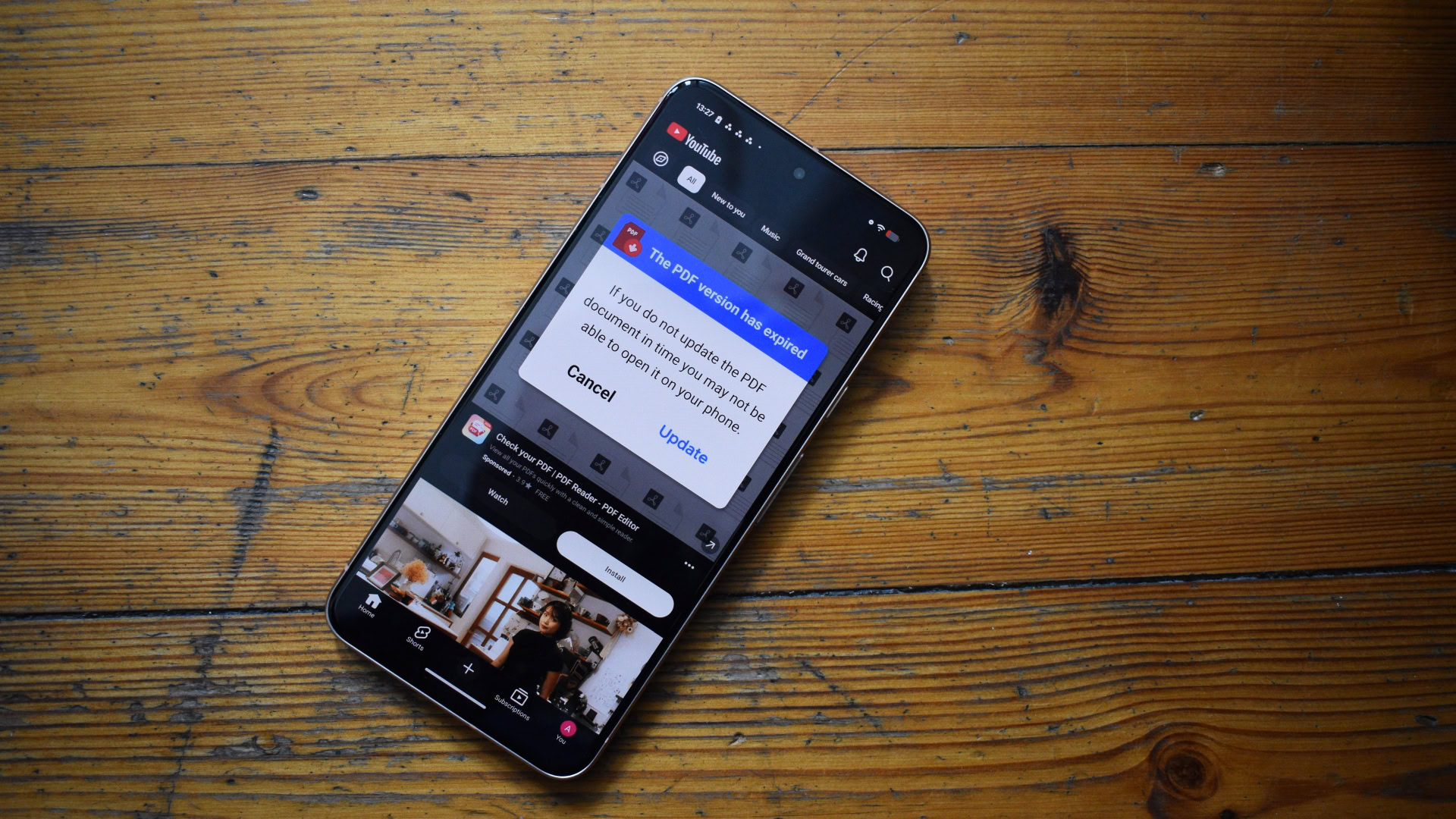
Deceptive mobile advertisements disguised as system updates and out-of-date software notices are increasingly breaching major platforms, including YouTube and preinstalled office applications on Android devices. To combat manipulative pop-ups and protect family members from predatory online scams, tech users are deploying network-wide digital content filtering solutions like NextDNS.
Andy Walker and Android Authority
Mobile advertisements on Android have shifted from simple banners to aggressive, deceptive pop-ups that mimic legitimate system alerts. A growing number of deceptive ads employ variations of the PDF app is out of date trick to lure unsuspecting users into downloading bogus software from application stores, as detailed in reports from Android Authority writer Andy Walker. These manipulative prompts frequently appear in preinstalled office tools and mainstream video platforms, with Walker noting that an ad lurked in a preinstalled office app before appearing directly on YouTube.
While digital advertisements serve as a vital revenue stream for developers, websites, and the internet at large to keep operating smoothly, bad actors are increasingly exploiting the medium to distribute predatory scams. Recent user feedback across numerous Reddit threads highlights an ongoing issue with scammy and explicit ads appearing on platforms that should be family-safe, such as YouTube. Andy Walker noted of the experience, This was the last straw for me, adding a firm line that if companies cannot ensure ads are not scammy, predatory, or borderline pornographic, blocking them entirely is preferable.
The scale of user exposure to these deceptive practices is highlighted by recent reader polling data conducted on Android Authority with 94 total votes. When surveyed about encountering deceptive advertisements on mobile devices, 38% of respondents indicated that someone they know had fallen victim, while 18% reported falling for a deceptive ad themselves (Yes, I have). An additional 13% came close, and only 5% reported never encountering deceptive ads at all, while 26% stated they block all ads on their device.
NextDNS and Blokada
Protecting vulnerable family members from predatory online threats requires careful architectural planning, particularly when managing devices remotely for parents who use their mobiles for communication, financial transactions, and storing memories. Standalone mobile ad-blocking applications like Blokada often prove insufficient because they do not allow easy access to update, change settings, or disable the tool remotely, and they cannot secure non-mobile hardware, such as an older Android streaming box used by family members to watch content on their TV.
To secure multiple user profiles across an entire household network with a simple set-it-and-forget-it setup requiring a single switch on phones, administrators turn to granular content filtering architectures. Platforms like NextDNS function as a fine-mesh digital net that allows preferred traffic through and catches undesirable content listed by user-selected blocklists. By utilizing Android’s Private DNS slot, these services ensure all Wi-Fi and mobile traffic is filtered across configured devices while offering customizability and scalability.
Michael Crider and GameHub
Beyond security and ad filtering concerns, users pushing mobile hardware into alternative entertainment ecosystems encounter distinct technical hurdles, as explored in testing by Foundry contributor Michael Crider. Attempts to run traditional desktop titles on Android via application layers yield mixed performance depending on software requirements, game engines, and developer choices.

Low-power two-dimensional titles, such as the Unity-based game 20 Minutes Till Dawn, typically download and run without any hiccups. However, testing intermediate 2D-polygon hybrids like Hades 2 revealed that GameHub repeatedly tried downloading the demo version first, ultimately running at only about 30 to 45 frames per second once combat started. Meanwhile, other titles like the 2D beat-em-up Absolum would not launch at all, while older 3D classics with similar technical requirements to Skyrim successfully launched and ran at 60 frames per second after using the phone screen as a touchpad for pre-load screens. Conversely, Just Cause 2 would not launch, and the Unreal Engine 5 title Dead as Disco failed entirely when it demanded a Visual C++ component—specifically an Arm64 one.
Worth a look