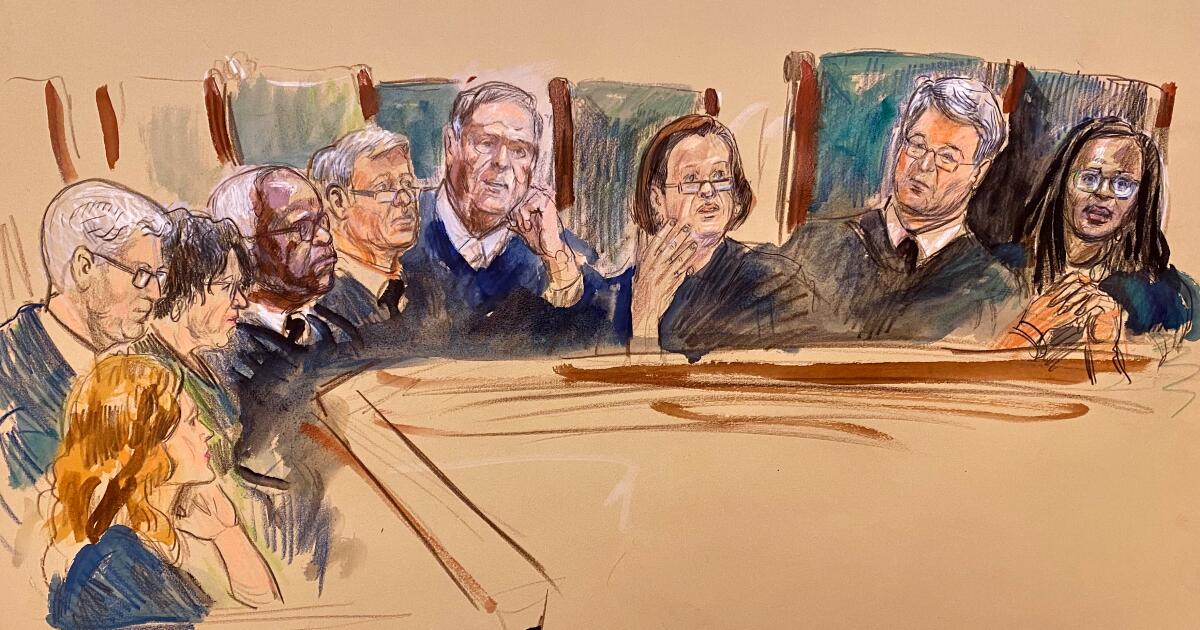
The Supreme Court of the United States, under the leadership of Chief Justice John G. Roberts Jr., has increasingly asserted its role as a check on executive authority during the second year of President Donald Trump’s second term. Through a series of rulings, the Court has limited the scope of presidential power, rejecting arguments for unchecked executive discretion in matters ranging from administrative oversight to national security protocols.
This judicial stance marks a significant shift in the Court’s internal dynamics. Despite a conservative majority, Chief Justice Roberts has frequently navigated a fractured bench to deliver opinions that constrain the executive branch. These decisions reflect a judicial philosophy that prioritizes institutional stability and the rule of law over the expansion of presidential reach, according to legal analysts monitoring the Court’s recent docket.
Judicial Checks on Executive Power
The Court’s recent history is defined by its refusal to accept the premise of “power with no limits.” In several high-profile cases, the justices have curtailed the administration’s attempts to bypass traditional regulatory processes. By enforcing strict adherence to the Administrative Procedure Act (APA), the Court has forced federal agencies to provide more robust justifications for policy shifts, as documented in the official rulings published by the Supreme Court of the United States. This approach has effectively slowed the implementation of several executive orders, requiring the administration to navigate the standard notice-and-comment procedures mandated by federal law.

Observers note that the Chief Justice has often sought narrow rulings to maintain a semblance of consensus among his colleagues. While the Court remains ideologically divided, Roberts has utilized his position to build coalitions that occasionally cross traditional partisan lines. This strategy has proven effective in cases involving the balance of power between the White House and the federal bureaucracy.
Roberts’ Leadership and the Fractured Bench
Managing a Court with deeply entrenched ideological differences requires a delicate touch. Chief Justice Roberts has prioritized the Court’s legitimacy, often steering the bench away from maximalist outcomes that could be perceived as overtly political. According to data from the SCOTUSblog case tracking database, the frequency of 6-3 or 5-4 decisions has remained high, yet the composition of the majorities has shifted depending on the specific legal questions at hand.

The internal tension is palpable. Justices appointed by different administrations hold conflicting views on the extent of the “unitary executive theory,” which posits that the President should have complete control over the executive branch. Roberts has generally avoided endorsing the most expansive versions of this theory, preferring to ground his opinions in historical precedent and statutory interpretation rather than broad constitutional assertions. This cautious approach has occasionally placed him at odds with more conservative members of the Court who advocate for a more aggressive interpretation of presidential authority.
Impact on the Trump Administration
The administration’s agenda has faced significant headwinds as a result of these judicial interventions. By rejecting expansive claims of executive privilege and immunity, the Court has signaled that the President is not above the constraints of the legal system. These rulings have had practical consequences for the day-to-day operations of the White House, forcing a recalibration of how policies are drafted and defended in court.
The legal battles are far from over. The administration continues to challenge the Court’s oversight in pending litigation, arguing that the judiciary is overstepping its constitutional bounds. However, as noted in the Department of Justice’s recent filings, the government must now contend with a judiciary that is increasingly skeptical of unilateral executive action. The ongoing friction between the White House and the Court highlights a fundamental disagreement over the separation of powers in the modern era.
What Happens Next
The Court is scheduled to hear further oral arguments regarding executive authority in the coming months. The next major test of this relationship will occur during the upcoming term, where several cases concerning agency discretion and legislative delegation are on the docket. Legal scholars emphasize that these decisions will set the precedent for how future administrations interact with the federal judiciary.

As the legal landscape evolves, the role of Chief Justice Roberts will remain central to the Court’s trajectory. Whether he can continue to lead a fractured bench toward consensus remains a subject of intense speculation among Washington insiders and constitutional law experts. Readers are encouraged to follow the official Supreme Court argument calendar for updates on the next scheduled hearings and to share their thoughts on these developments in the comments section below.