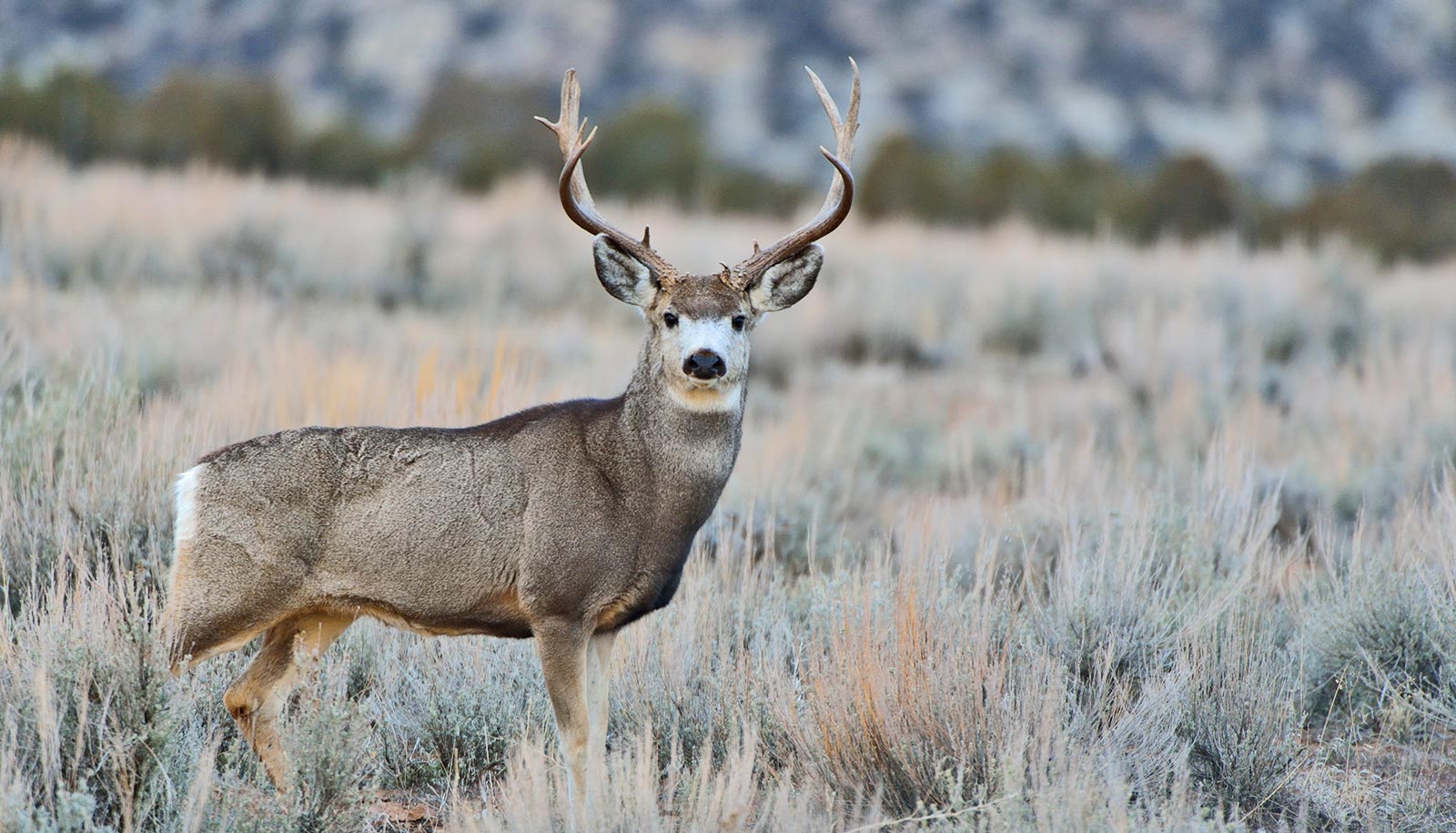
Historic drought conditions in the American Southwest are significantly shrinking wildlife habitat, forcing animals to adapt to increasingly arid landscapes. A study published in the journal Communications Earth and Environment reveals that the impact of extreme aridity is widespread, affecting herbivores, omnivores, and carnivores alike. Researchers analyzed 12 years of data from more than 3,000 animals, including mule deer, black bears, and cougars, across a nearly 200,000-square-mile range in Nevada and Utah to quantify these environmental shifts.
The findings indicate that during periods of severe drought, each of these species experienced at least a 10% reduction in their most suitable habitats. Kirby Mills, a lead author of the study who conducted the work while at the University of Michigan Institute for Global Change Biology, notes that the reach of these drought effects is substantial. According to the research, which received federal funding from NASA, the consequences extend beyond habitat loss to affect wildlife fitness; for instance, the number of new fawns per mule deer doe can drop by more than 30% during extreme drought conditions.
Amplified Impacts Across the Food Web
One of the more unexpected results of the study was the varying degree of habitat reduction as one moves up the food chain. While the researchers initially anticipated that herbivores like mule deer would face the most severe consequences due to the loss of vegetation, the data showed that predators were actually more sensitive to the shifting landscape. In times of severe drought, mule deer saw a 10% reduction in highly suitable habitat, while black bears saw a 14% reduction, and cougars faced an 18% loss.

The explanation for this amplification lies in the dietary and population constraints of predators. As Mills explains, cougars cannot rely on vegetation for sustenance and must expend more energy to secure food, making their populations more vulnerable to environmental changes. Furthermore, because population densities typically decrease higher up the food web—with the study tracking over 2,800 mule deer compared to just 105 cougars—the impact on individual predators is felt more acutely at a community level. Martin Leclerc, who co-led the study at the University of Michigan School for Environment and Sustainability (SEAS), emphasizes that this research underscores how drought affects both habitat suitability and the overall survival of these species.
Integrating Climate and Conservation Management
As climate change makes drought conditions in the Southwest more frequent and intense, the authors argue that current management strategies must evolve. The study highlights that factors such as vegetation dynamics, wildlife behavior, and resource management—often treated as separate issues—are, in fact, deeply interconnected. Neil Carter, an associate professor at SEAS and a senior author of the study, suggests that these findings demand a more unified approach to landscape planning.
Currently, wildlife management often focuses on individual species, such as deer, rather than considering the complex interactions between predators and prey simultaneously. The research team, which also included contributions from David Stoner at Utah State University, suggests that there is a significant opportunity to bridge the gap between human-focused climate adaptation planning and wildlife conservation. By bringing these strategies together, resource managers may be better equipped to mitigate the long-term risks that worsening droughts pose to regional biodiversity.
Future Outlook for Wildlife Persistence
The persistence of these species into the future remains a concern if drought conditions continue to escalate. The research team utilized data collected between 2010 and 2022, providing a long-term perspective on how wildlife adapts to changing spatial and temporal conditions. By analyzing GPS collar data from such a large geographic area, the researchers were able to confirm that drought negatively impacts life statewide for species with vastly different ecological needs.
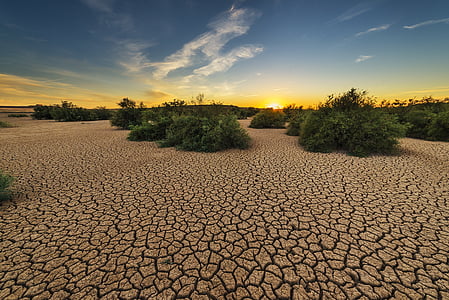
The study serves as a call for more robust planning to protect wildlife, which currently lacks the same level of mitigation strategies often afforded to human populations in the face of climate change. As the scientific community continues to explore the intersection of landscape management and climate patterns, the data gathered from this 12-year analysis provides a critical baseline for future conservation efforts. Readers interested in environmental policy and regional conservation updates are encouraged to monitor future reports from the involved academic institutions and wildlife management agencies regarding how these findings may influence upcoming land-use decisions.
Worth a look