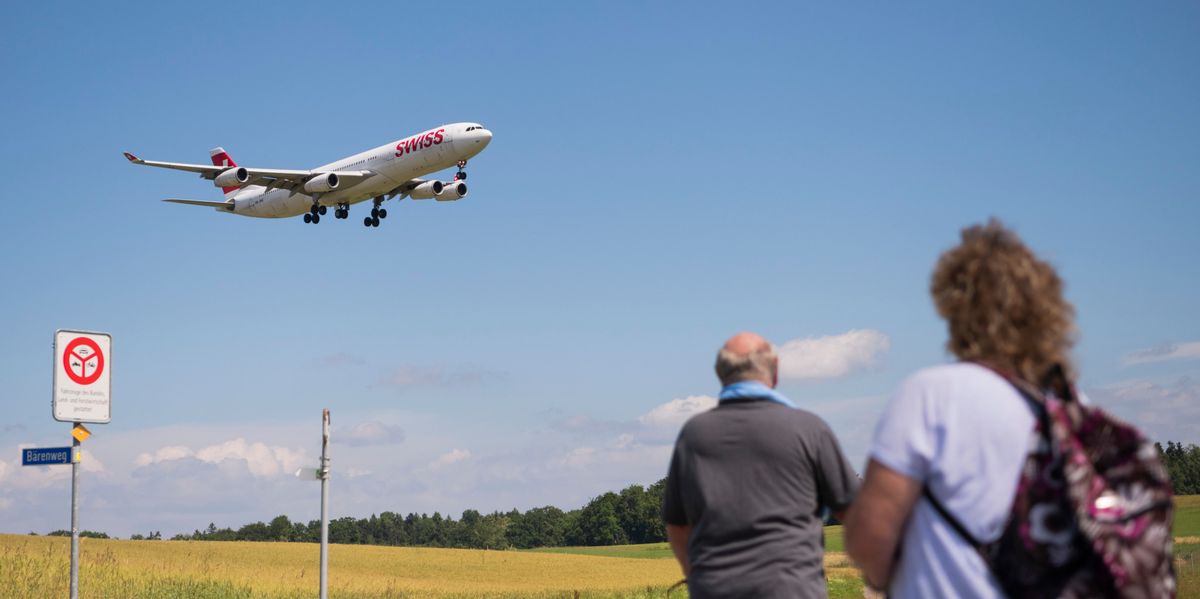
Swiss aviation technology firms are increasingly turning to unconventional feedstocks such as waste cooking oil and alcohols to produce sustainable aviation fuel (SAF), aiming to decarbonize a sector that faces significant pressure to reduce its carbon footprint. These efforts represent a shift toward circular economy principles, where post-consumer waste is refined into high-energy density hydrocarbons compatible with existing jet engines.
The development of these alternative fuels is central to the broader European strategy to reach net-zero emissions in aviation by 2050. According to the European Commission’s ReFuelEU Aviation initiative, which became law in 2023, fuel suppliers are mandated to ensure that an increasing share of jet fuel made available at EU airports is SAF, starting at 2% in 2025 and rising to 70% by 2050. While Switzerland is not a member of the European Union, its domestic industry is closely aligning with these regulatory frameworks to remain competitive and compliant with international standards.
The Technical Shift to Synthetic and Bio-based Fuels
The core challenge for Swiss innovators lies in chemical conversion efficiency. Traditional fossil-based kerosene is energy-dense and stable, qualities that bio-based alternatives must replicate exactly to ensure safety during flight. Companies are focusing on “HEFA” (Hydroprocessed Esters and Fatty Acids) technology, which utilizes fats, oils, and greases—including used frying oil—as a primary input. This process removes oxygen from the lipids and hydrotreats them to create paraffinic hydrocarbons that act as a “drop-in” fuel, requiring no modifications to aircraft engines.
Beyond waste oils, there is significant interest in “Alcohol-to-Jet” (AtJ) pathways. By fermenting agricultural residues or utilizing captured carbon dioxide combined with green hydrogen to create alcohols like ethanol or isobutanol, firms can synthesize jet fuel through catalytic dehydration and polymerization. This method is viewed as highly scalable because it is not restricted by the limited supply of waste oils, which are currently in high demand across the global transport sector.
Regulatory and Economic Hurdles
Despite the technical progress, the cost of production remains the most significant barrier to widespread adoption. Sustainable aviation fuel is currently several times more expensive to produce than conventional jet fuel, a price gap that presents a challenge for airlines operating on thin margins. The Swiss Federal Office of Civil Aviation (FOCA) monitors these developments, noting that market-based measures and international policy coordination are essential to bridge this economic divide.

Industry stakeholders emphasize that policy certainty is required to encourage private investment in large-scale production facilities. Without long-term subsidies or carbon pricing mechanisms, the transition to green fuels risks stalling at the pilot-plant stage. The Swiss government continues to evaluate how its national energy strategy, which includes a target to reduce greenhouse gas emissions to net zero by 2050, will integrate the specific needs of the aviation sector, as outlined in the Federal Council’s climate policy objectives.
What Lies Ahead for Sustainable Aviation
The next major checkpoint for the industry involves the scaling of demonstration plants to commercial-sized refineries. As of mid-2026, several Swiss-based research consortia are working to finalize feasibility studies for industrial-scale production units. These projects are expected to provide the data necessary for investors to move from laboratory-scale testing to full-scale infrastructure deployment.
Market observers expect that the next official update on European-wide SAF blending mandates will occur in early 2027, as regulators assess the initial impact of the 2025 requirements. For the Swiss industry, the ability to demonstrate consistent, high-volume production will be the definitive measure of success in the coming years.
We welcome your insights on the future of aviation fuel. Please share your thoughts or questions in the comments section below.
Related reading