The Risk Paradox: Why Belgium’s Wealthiest Investors Embrace Market Volatility
For many retail investors, the prevailing wisdom is that the wealthy are inherently conservative. The common assumption suggests that once an individual reaches a certain threshold of affluence, their primary objective shifts from wealth creation to wealth preservation, leading them to retreat into the safety of government bonds, gold, and low-yield savings accounts. However, recent analysis of investment patterns among Belgium’s high-net-worth individuals suggests a starkly different reality.
Contrary to the image of the cautious millionaire, the wealthiest investors in Belgium often maintain a significantly higher exposure to risk on the stock market than the average saver. This strategic embrace of volatility is not a result of recklessness, but rather a calculated approach to asset management that leverages a higher “risk capacity”—the financial ability to withstand significant losses without altering one’s standard of living.
Financial expert Paul D’Hoore has highlighted that this willingness to accept risk is often what separates those who maintain wealth from those who exponentially grow it. By allocating a larger portion of their portfolios to equities and growth-oriented assets, these investors are positioned to capture the long-term premiums offered by the stock market, which historically outperforms conservative instruments over extended horizons.
Understanding the distinction between calculated risk and blind speculation is the cornerstone of this approach. While the wealthy may take more risks, they do so through a rigorous framework of diversification and fundamental analysis. For the average investor, the lesson is not necessarily to increase their risk exposure blindly, but to understand how the wealthy structure their portfolios to turn volatility into an advantage.
The Distinction Between Investing and Gambling
One of the most critical warnings issued by D’Hoore regarding market participation is the thin line between strategic investing and gambling. In the context of the Belgian market, the temptation to chase “hot tips” or invest in trendy sectors without a foundational understanding of the business model is a common pitfall for novice investors.
According to financial theory, investing is the process of committing capital to an asset with the expectation of a return based on the asset’s intrinsic value and future earnings potential. Gambling, conversely, is the act of placing a bet on an outcome with an uncertain probability, often driven by emotion or a desire for rapid gains rather than empirical data. D’Hoore argues that when an investor puts money into a stock simply because they heard it might go up—without analyzing the company’s balance sheet, competitive moat, or management quality—they are no longer investing; they are gambling.
This distinction is vital because the wealthy typically avoid “gambling” even while taking “high risks.” A high-risk investment, such as a venture capital stake in a tech startup or a concentrated position in an emerging market, is still an investment if We see backed by due diligence and a clear thesis. The risk is high, but the process is disciplined. The danger for the general public lies in confusing high-risk strategies with speculative gambling, leading to losses that they lack the financial cushion to absorb.
Risk Capacity vs. Risk Appetite
To understand why the wealthiest Belgians can afford to be more aggressive, it is necessary to distinguish between risk appetite and risk capacity. Risk appetite is a psychological preference—how much volatility an individual is *willing* to tolerate. Risk capacity is a mathematical reality—how much volatility an individual *can* tolerate based on their total assets and liabilities.
High-net-worth individuals often possess an immense risk capacity. If a millionaire with a diversified portfolio of €10 million sees a 20% market correction, they lose €2 million on paper. While significant, this loss does not jeopardize their housing, healthcare, or basic quality of life. This financial buffer allows them to remain rational during market crashes, preventing the panic-selling that often devastates smaller portfolios.
For a retail investor with €50,000 in savings, a 20% drop represents a loss of €10,000. Depending on their emergency fund, this could be a catastrophic blow. The “risk” is not the same for both parties, even if they are invested in the same stock. The wealthy leverage this capacity to hold assets through periods of extreme volatility, allowing them to benefit from the eventual recovery and long-term growth. This patience is a luxury afforded by wealth, but the principle of avoiding emotional selling is a lesson applicable to all levels of investing.
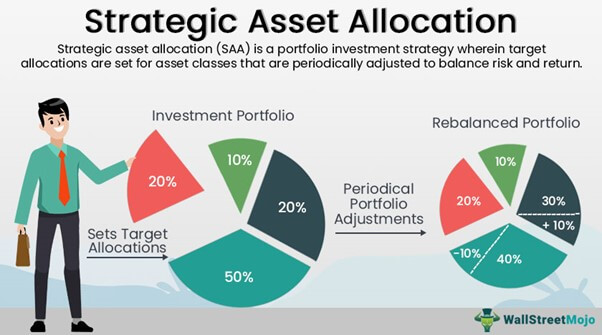
Strategic Asset Allocation in the Belgian Context
The Belgian investment landscape is characterized by a historical preference for real estate and traditional savings accounts. However, the shift toward more aggressive equity allocations among the elite reflects a global trend toward diversifying away from stagnant local assets toward global growth engines.
Wealthy Belgian investors often employ a “core-satellite” strategy. The “core” consists of broad, low-cost index funds or blue-chip stocks that provide steady growth and dividends. The “satellite” portion consists of higher-risk, higher-reward investments, such as individual growth stocks, private equity, or specialized sector funds. This allows them to capture the stability of the broader market while maintaining the ability to achieve “alpha”—returns that exceed the market average.
the use of tax-efficient vehicles and professional wealth management services allows these investors to optimize their returns. By focusing on total return (capital gains plus dividends) rather than just immediate income, they compound their wealth more effectively over time. For those looking to emulate this, the Financial Services and Markets Authority (FSMA) provides essential guidance on understanding the risks associated with different financial products and the importance of diversification.
Practical Lessons for the Everyday Investor
While most people do not have the multi-million euro cushion of Belgium’s wealthiest, there are several principles from the high-net-worth playbook that can be integrated into a modest portfolio:
- Prioritize Research Over Tips: Move away from speculative “tips” found on social media or in casual conversation. Instead, focus on learning how to read basic financial statements and understanding the business models of the companies you invest in.
- Build a Robust Emergency Fund: To increase your own “risk capacity,” ensure you have three to six months of living expenses in a liquid, low-risk account. This prevents you from being forced to sell your investments during a market downturn.
- Adopt a Long-Term Horizon: The wealthy do not obsess over daily price fluctuations. They view their investments in terms of decades, not days. Shifting your mindset to a long-term perspective reduces the emotional impact of short-term volatility.
- Diversify Globally: Avoid the “home bias” of investing only in local or familiar companies. Diversifying across different geographies and sectors reduces the impact of a downturn in any single economy.
The goal is not to mimic the exact percentage of risk taken by a millionaire, but to optimize your risk based on your own specific capacity. By treating the stock market as a tool for long-term growth rather than a place for quick wins, investors can move closer to the disciplined approach used by the most successful financial actors.
Key Takeaways for Wealth Building
- Risk is a Tool: Wealthy investors use risk strategically to grow their capital, rather than avoiding it entirely.
- Capacity is Key: The ability to take risk is driven more by total net worth (risk capacity) than by a desire for excitement (risk appetite).
- Avoid Speculation: Investing without fundamental analysis is equivalent to gambling and is generally avoided by professional wealth builders.
- Patience Pays: The ability to hold assets through volatility is one of the greatest advantages of high-net-worth investing.
As market conditions evolve and interest rates shift, the strategies of Belgium’s wealthiest investors will likely continue to adapt. The next critical checkpoint for investors will be the upcoming quarterly earnings reports from major European indices, which will provide fresh data on the health of the growth sectors currently favored by high-net-worth portfolios.
Do you believe the average investor is too conservative with their savings, or is the risk associated with today’s markets too high? Share your thoughts in the comments below or share this analysis with your network.
Worth a look
- BAG: Rechtliche Fallstricke bei der Zustellung von Kündigungen
- Sudan Conflict: El Obeid Women Face Deadly Choice for Water Between Drone Strikes and Sexual Violence
- China’s AI Surge: Market Growth, Tech Distillation, and US Tension (archynewsy.com)
- Global Fidget Market Boom Driven by NeeDoh Squishy Toys (time.news)