
For over a decade, the Commercial Aircraft Corporation of China (Comac) has pursued a singular, ambitious goal: breaking the global duopoly of Boeing and Airbus in the narrow-body aircraft market. The C919, a medium-range jet designed to compete directly with the Airbus A320neo and the Boeing 737 MAX, represents more than just a commercial venture; it is a symbol of China’s industrial sovereignty and technological aspiration.
However, as the aircraft moves from the celebratory phase of its maiden commercial flights into the grueling reality of mass production, a critical vulnerability has emerged. Despite a massive backlog of orders from China’s “Big Three” airlines—China Eastern, Air China, and China Southern—the ramp-up of deliveries has faced significant headwinds. At the heart of these Comac C919 production challenges is a paradoxical dependency on Western technology that threatens to stall the program’s momentum.
The primary obstacle is not a lack of demand or airframe assembly capacity, but the propulsion system. The C919 relies exclusively on the LEAP-1C engine, produced by CFM International, a joint venture between the American giant GE Aerospace and the French firm Safran Aircraft Engines. While this partnership provided Comac with a mature, efficient, and internationally certified engine to accelerate the C919’s entry into service, it has simultaneously created a strategic “choke point” subject to the volatility of US-China geopolitical relations.
The Engine Bottleneck and Export Dependencies
The LEAP-1C is a sophisticated piece of aerospace engineering, and because it contains significant American intellectual property and components, its export is governed by the US government. Under current trade regulations, every shipment of these engines requires an export license approved by the US Department of Commerce. This administrative layer transforms a commercial supply chain into a geopolitical lever.
Industry analysts have noted that the delivery pace of the C919 is inextricably linked to the speed and consistency of these approvals. When diplomatic tensions rise or trade frictions intensify, the process of securing export licenses can become subject to increased scrutiny or delays. For Comac, So that even if the airframes are ready to roll off the assembly line in Shanghai, they cannot be delivered to customers without the requisite power plants.
This dependency highlights a fundamental tension in China’s aviation strategy. By choosing an imported engine, Comac successfully bypassed the immense technical hurdle of developing a high-bypass turbofan from scratch—a process that typically takes decades. This pragmatic choice allowed the C919 to achieve CAAC type certification and enter commercial service far sooner than if it had waited for a domestic engine. Yet, this pragmatism has come at the cost of autonomy.
Production Realities vs. Strategic Ambitions
The gap between Comac’s delivery targets and its actual output has become a focal point for observers of the global aerospace industry. While the order books are full, the actual number of aircraft delivered to airlines has remained modest compared to the thousands of units produced annually by Boeing and Airbus. This leisurely ramp-up is attributed to a combination of supply chain immaturity and the aforementioned engine delivery constraints.
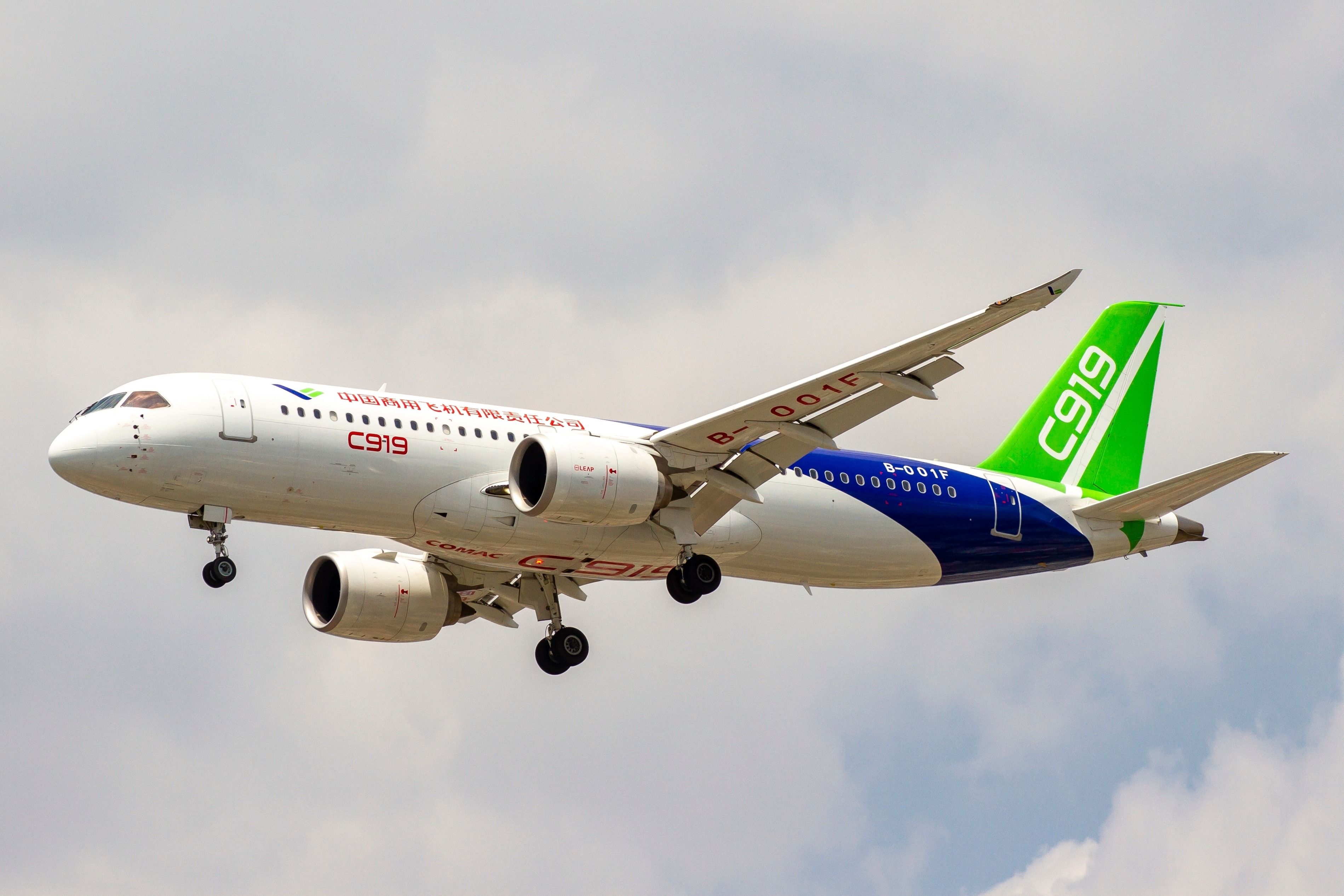
For the airlines involved, the delay is more than a logistical nuisance; it is a financial calculation. Chinese carriers are eager to diversify their fleets and reduce reliance on Western airframes, but the slow delivery rhythm forces them to continue ordering from Boeing and Airbus to meet their immediate capacity needs. This effectively limits the C919’s ability to capture a meaningful share of the domestic market in the short term.
the C919’s aspirations for international expansion are hampered by the lack of Western certifications, such as those from the European Union Aviation Safety Agency (EASA) or the US Federal Aviation Administration (FAA). Without these, the aircraft is largely confined to Chinese airspace, further intensifying the pressure to resolve production bottlenecks and prove the platform’s reliability through high-volume operation.
The Quest for the CJ-1000A: A Path to Sovereignty
To mitigate the risk of being “held hostage” by foreign export licenses, China is investing heavily in the development of the CJ-1000A, a domestic turbofan engine designed specifically for the C919. The goal is to replace the LEAP-1C with a homegrown alternative, thereby granting Comac full control over its production timeline.

Developing a modern commercial jet engine is widely considered one of the most difficult engineering feats in existence. The CJ-1000A must not only match the fuel efficiency and thrust of the LEAP-1C but must also meet rigorous safety and noise standards to be viable for commercial use. While the CJ-1000A has undergone various stages of testing, the transition from experimental flights to certified commercial service is a steep climb.
The transition to a domestic engine is not merely a technical upgrade but a strategic imperative. Until the CJ-1000A is fully certified and mass-produced, the C919 remains vulnerable to external political pressures. The “dual-engine” strategy—using the LEAP-1C for immediate market entry while developing the CJ-1000A for long-term security—is a calculated risk that Comac is currently navigating.
Geopolitical Implications for the Global Aerospace Market
The struggle to scale the C919 program reflects the broader “de-risking” and “de-coupling” trends defining US-China relations. The aerospace sector, characterized by long lifecycles and extreme capital intensity, is particularly sensitive to these shifts. The C919 is no longer just an airplane; it is a case study in how industrial policy intersects with national security.

For the United States, the ability to control the flow of critical aerospace components provides significant leverage in broader diplomatic negotiations. For China, the C919’s struggles serve as a stark reminder that true industrial independence requires mastery of the most complex components of the value chain, not just the final assembly.
Despite these challenges, the C919 remains a formidable project. The aircraft’s design is modern, and the backing of the Chinese state ensures that it will not be abandoned. The current “birth pains” of the program are typical of any new aircraft entrant, but they are magnified by the unique geopolitical environment of the 2020s.
Key Takeaways: The C919 Production Crisis
- Engine Dependency: The C919 relies on the CFM LEAP-1C, making production subject to US export licenses.
- Delivery Gap: High order volume from Chinese carriers is not being matched by delivery rates due to supply chain and regulatory bottlenecks.
- Strategic Vulnerability: US-China trade tensions can directly impact the speed of aircraft deliveries.
- Domestic Solution: The CJ-1000A engine is under development to provide a sovereign alternative to Western propulsion.
- Market Limitation: Lack of international certification (EASA/FAA) currently limits the C919 to the domestic Chinese market.
The trajectory of the C919 will likely be determined by two factors: the stability of US-China trade relations and the technical success of the CJ-1000A engine. If China can successfully transition to a domestic power plant, the C919 could evolve from a state-supported project into a genuine global competitor. Until then, it remains a high-tech marvel tethered to the political whims of a foreign power.
The next critical checkpoint for the program will be the upcoming series of certification flight tests for the domestic CJ-1000A engine, which will determine if and when Comac can finally break its reliance on the LEAP-1C.
Do you think China can successfully develop a commercial engine that competes with GE and Safran? Share your thoughts in the comments below.
Worth a look