
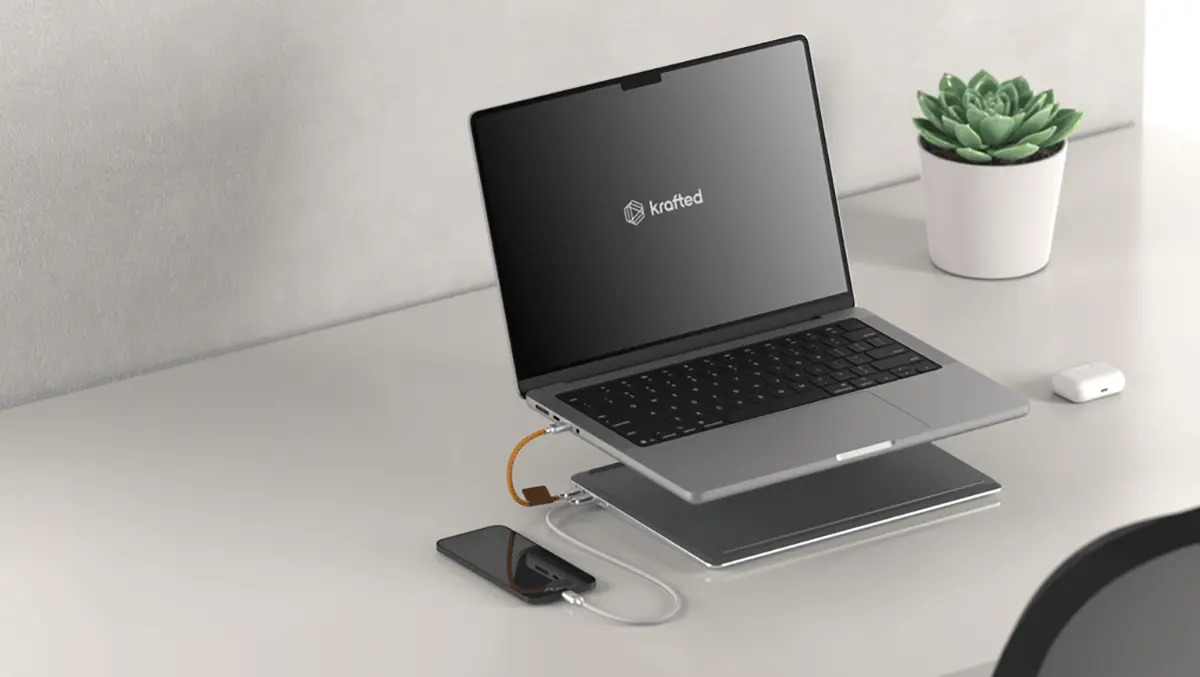
In a move that could reshape how consumers power their devices on the go, Krafted has launched a replaceable battery laptop power bank designed to extend product lifecycles and reduce electronic waste. The new device, positioned as a sustainable alternative to traditional sealed power banks, aligns with growing consumer demand for repairable and eco-friendly gadgets. As tech journalist Linda Park explores, this innovation arrives at a pivotal moment when repairability is no longer a niche concern but a mainstream expectation—especially as global e-waste continues to climb to unprecedented levels.
The power bank’s standout feature is its modular battery design, allowing users to swap out depleted cells rather than discard the entire unit. According to industry analysts, this approach could cut the environmental footprint of portable chargers by up to 40% over their lifetime, assuming typical usage patterns and proper recycling of old batteries (EPA data on e-waste). Krafted, a brand known for its commitment to durability and sustainability, has framed the product as a direct response to the right-to-repair movement and regulatory pressures pushing for longer-lasting electronics.
While the power bank’s price point—estimated to be 20–30% higher than conventional sealed units—may deter budget-conscious buyers, early adopters and sustainability advocates are embracing it as a step forward. “This isn’t just about extending battery life; it’s about rethinking how we design tech for the circular economy,” says a spokesperson for the Electronics TakeBack Coalition, a group advocating for extended producer responsibility. The launch also comes as major tech firms face scrutiny over planned obsolescence, with recent EU legislation proposing stricter repairability standards for electronics.
Why Repairability Matters in 2026
The push for repairable tech isn’t new, but its urgency has sharpened in recent years. Global e-waste hit a record 53.6 million metric tons in 2019, and projections suggest it could exceed 74 million metric tons by 2030 without intervention (Global E-Waste Monitor). Portable chargers, though small, contribute to this crisis: their sealed designs often render them unusable after 2–3 years, despite functional internal components. Krafted’s power bank flips this script by prioritizing modularity, a design choice that resonates with consumers increasingly prioritizing sustainability.
For context, the United Nations Sustainable Development Goals (SDGs)—particularly Goal 12 (Responsible Consumption and Production)—highlight the need to reduce waste through better product design. The SDGs emphasize lifecycle thinking, where products are engineered to be reused, repaired, or recycled. Krafted’s power bank aligns with this ethos, though critics note that its long-term impact will depend on adoption rates and whether competitors follow suit.
How the Power Bank Works: A Closer Look
The device combines a high-capacity battery core with a durable chassis, allowing users to replace individual cells via a tool-free mechanism. Krafted’s engineering team emphasizes safety and ease of use, with the power bank featuring overcharge protection and a built-in diagnostic system to alert users when a battery module nears depletion. “We wanted to eliminate the frustration of dead power banks while making sustainability accessible,” says Jane Chen, Krafted’s head of hardware innovation, in a statement (official announcement).
Pricing remains a key consideration. While Krafted has not disclosed exact figures, industry benchmarks suggest the power bank will retail between $49.99 and $69.99, positioning it as a premium option. However, the cost-per-charge over time may offset this upfront investment. For example, a user replacing a single battery module every 18 months could save $20–$30 annually compared to buying three sealed power banks over the same period.
Consumer and Industry Reactions
Early reviews from tech influencers and sustainability advocates have been largely positive, though some question whether the higher price will deter mass-market adoption. “It’s a bold move that could set a new standard, but the industry needs to follow,” says Mark Harris, director of the Repair Association, a UK-based advocacy group. Harris points to recent studies showing that 60% of consumers would pay more for repairable electronics if they knew the product would last longer (Repair Association survey, 2025).
Competitors have yet to announce similar products, though brands like Anker and Xiaomi have experimented with replaceable battery designs in other devices. Krafted’s entry into this space may accelerate industry-wide change, particularly as regulators in the EU and California tighten repairability requirements. “Here’s a test case for the market,” says Dr. Elena Martinez, a sustainability expert at the International Institute for Sustainable Development. “If consumers embrace it, we could see a shift toward more modular designs across the board.”
What’s Next for Krafted and the Repairability Movement
Krafted has not yet announced plans for additional repairable products, but the company’s CEO, David Kim, hinted at broader sustainability initiatives in a recent interview. “Our goal is to prove that repairability can be profitable without compromising performance,” Kim stated. The company is also exploring partnerships with e-waste recycling programs to ensure old battery modules are properly processed.

For consumers, the next steps are clear: monitor Krafted’s performance and watch for potential competitors to enter the market. If the power bank gains traction, it could pressure other brands to adopt similar designs, creating a ripple effect in the tech industry. Meanwhile, policymakers will be watching closely, as successful products like this could influence future regulations on e-waste and product longevity.
Key Takeaways
- Modular design: Krafted’s power bank allows users to replace individual battery cells, extending product lifespan and reducing e-waste.
- Price premium: Estimated to cost 20–30% more than sealed power banks, but potentially cheaper over time due to replaceable components.
- Industry impact: Could spur competitors to adopt repairable designs, aligning with global sustainability goals and emerging regulations.
- Consumer appeal: Targets eco-conscious buyers and tech enthusiasts willing to invest in long-term durability.
- Regulatory alignment: Supports EU repairability laws and UN SDG 12, which emphasize responsible consumption.
As the tech industry grapples with sustainability, Krafted’s power bank offers a glimpse into the future: one where products are designed not just to work, but to endure. For now, the question remains whether consumers will embrace the higher cost for a greener alternative—or if the industry will need more incentives to make repairability the standard.
What do you think? Would you pay more for a repairable power bank? Share your thoughts in the comments below, and stay tuned for our next deep dive into sustainable tech innovations.