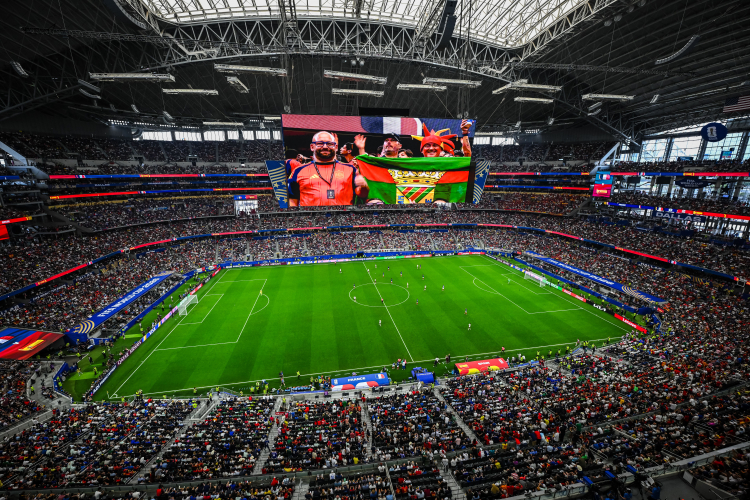
The United States’ bid to host the 2027 FIFA Women’s World Cup was withdrawn in late 2023, yet the American approach to global sports diplomacy has arguably reached a new zenith. While the U.S. Soccer Federation shifted its focus toward the 2031 tournament, the nation’s capacity to leverage major sporting events as an instrument of soft power remains a central pillar of its international economic strategy. By pivoting away from the 2027 cycle, the U.S. has effectively consolidated its resources for a more unified North American sporting footprint, aligning with the upcoming 2026 FIFA Men’s World Cup, which the U.S. is co-hosting alongside Canada and Mexico, according to official statements from the U.S. Soccer Federation.
This strategic realignment is not merely a logistical choice; it represents a calculated maneuver in the global marketplace. By concentrating on 2031, the United States aims to maximize the commercial and cultural impact of its hosting duties, ensuring the infrastructure and investment are not diluted by back-to-back international cycles. The decision to withdraw from the 2027 process was framed by federation leadership as an opportunity to “take the next step” in growing the women’s game while building on the momentum generated by the 2026 men’s tournament, as reported by Reuters.
The Economic Architecture of American Soft Power
The concept of “soft power”—a term coined by Joseph Nye to describe a nation’s ability to influence others through attraction rather than coercion—is frequently observed in how the U.S. manages its sports assets. Hosting a tournament of the scale of a FIFA World Cup involves multi-billion dollar investments in stadium infrastructure, transportation, and tourism, which serve as long-term economic catalysts. According to data from the FIFA 2026 organizing framework, the U.S. is leveraging its existing, world-class stadium capacity to minimize the construction risks often associated with international events.
From an economic policy perspective, this allows the U.S. to focus on the “post-event” legacy. By delaying the women’s bid until 2031, the federation intends to capitalize on the financial gains and cultural interest expected from the 2026 men’s event. This sequence is intended to create a sustained “soccer boom” in a market that, while historically dominated by the NFL, NBA, and MLB, has shown exponential growth in professional soccer viewership and participation, according to reports from Bloomberg.
Strategic Pivoting and Global Alignment
The withdrawal from the 2027 bid was not a retreat, but rather a realignment with the broader objectives of the North American soccer ecosystem. The 2026 Men’s World Cup is already slated to be the largest in history, with 48 teams participating, as confirmed by FIFA’s official match calendar updates. By sitting out the 2027 cycle, the U.S. ensures it can dedicate its organizational focus to the success of 2026, avoiding potential administrative fatigue and resource fragmentation.
This approach also reflects a sophisticated understanding of international relations within FIFA. By signaling its intent for 2031 early, the U.S. effectively clears the field for other bidders in 2027—such as the joint bid from Brazil—while establishing itself as the frontrunner for the subsequent cycle. This is a common tactic in global bidding processes, where long-term positioning is often more effective than aggressive, short-term competition, according to analysis from the New York Times.
Advancing the Women’s Game
The U.S. Women’s National Team (USWNT) remains a dominant force in international athletics, serving as a primary vehicle for American cultural influence. The federation’s focus on the 2031 bid is explicitly tied to the goal of “setting a new standard” for the women’s game. This includes efforts to increase broadcast revenue, sponsorship deals, and grassroots participation, which are essential to the long-term sustainability of women’s professional sports.

The financial commitment to women’s soccer in the U.S. is corroborated by recent collective bargaining agreements that established equal pay structures for the men’s and women’s national teams. These legal and organizational milestones, finalized in 2022, provide a foundation for the U.S. to argue that it is the most suitable host for a tournament dedicated to the advancement of women’s sports, as noted in documents released by the U.S. Soccer Federation. The 2031 bid is therefore positioned not just as a tournament, but as a capstone project for the equality movement within professional athletics.
Next Steps in the Bidding Cycle
The next major checkpoint for the 2031 Women’s World Cup bidding process will be determined by FIFA’s formal invitation to member associations, expected to follow the conclusion of the 2027 tournament host selection. As of now, the U.S. remains focused on the 2026 Men’s World Cup preparations, with the next official updates regarding venue operations and host city logistics expected in late 2024 and throughout 2025, according to FIFA’s current tournament timeline.
For observers of global markets and sports diplomacy, the U.S. strategy offers a clear lesson: sometimes the most effective way to win is to choose which battles to fight, and when to fight them. As the country prepares to showcase its logistical and commercial prowess in 2026, the global community will be watching to see if this calculated patience pays dividends for the 2031 bid.
Have thoughts on the shifting landscape of global sports hosting? Share your perspective in the comments section below.