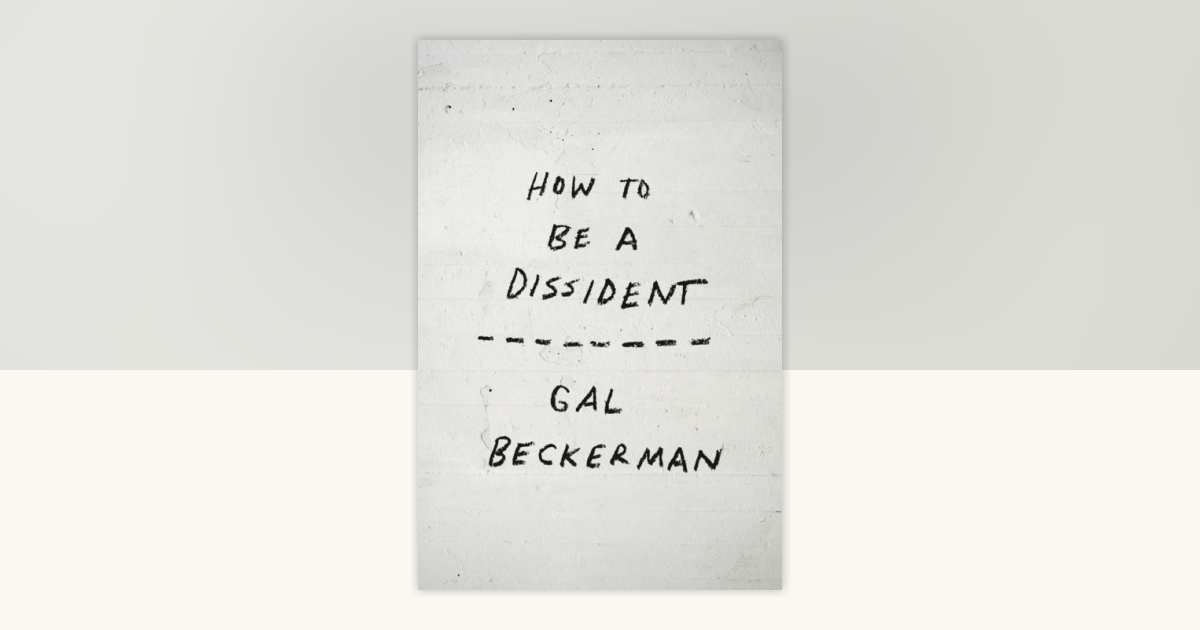
In an era marked by increasing political polarization and a global shift toward authoritarianism, the question of how to maintain individual integrity has moved from the realm of academic philosophy to a practical necessity. Gal Beckerman, a staff writer for The Atlantic, addresses this tension in his new book, How to Be a Dissident
, which serves as a historical and philosophical guide for those seeking to resist conformity and tyranny.
The work is described as part philosophy, part history, and part manual for living with integrity. By examining the lives of dissidents across different eras and geographies—ranging from the ancient wisdom of Socrates to the modern defiance of artist Ai Weiwei—Beckerman seeks to identify the shared characteristics of those who successfully pushed back against oppressive systems. The book aims to provide concrete models for resistance in a world where digital technology and political intimidation often flatten individual agency.
To further explore these themes, Beckerman is scheduled to appear in a discussion with podcast host Adam Harris on Wednesday, May 13, at 12:00 p.m. ET. The conversation will focus on the defining traits of extraordinary figures who resisted authority and the specific lessons their lives offer to contemporary audiences facing similar pressures of conformity.
Analyzing the Framework of Modern Dissidence
Beckerman’s approach in How to Be a Dissident
avoids simple political prescription, instead focusing on the psychological and ethical architecture of resistance. According to the author’s own framing, the book is an invigorating guide to fighting back
in an age characterized by authoritarian drift
via galbeckerman.com.
A central theme of the work is the distinction between fatalism and pessimism. In recent discussions regarding the book’s core philosophy, Beckerman has argued that pessimism is not the same as fatalism. Even as fatalism is the belief that things will necessarily get worse, pessimism is the belief that they probably will—a distinction that, according to Beckerman, creates the necessary space for action and agency.
The book similarly delves into the dangers of compliance, particularly in the context of modern democratic societies. Beckerman examines how prominent figures and institutions often comply with authoritarian shifts, and he uses historical examples—such as the poet Osip Mandelstam under Stalin—to illustrate the high cost of silence and the profound power of the written or spoken word as a tool of defiance.
Practical Application and Global Reach
The release of the book coincides with a broader global conversation about the fragility of democratic norms. How to Be a Dissident
was released on April 21, 2026, appearing in paperback and digital formats with a length of 208 pages via Penguin Random House.
For readers and practitioners, the book offers several key insights into the nature of dissent:
- The Role of Role Models: By studying historical dissidents, individuals can find blueprints for courage that are not based on innate heroism but on specific ethical choices.
- Resisting Dehumanization: The text explores how digital technology can dehumanize individuals, making it easier for authoritarian systems to manage populations through conformity.
- Integrity over Conformity: The “manual” aspect of the book provides a framework for maintaining a sense of self when the surrounding social or political environment demands submission.
Engagement and Public Dialogue
The upcoming event on May 13 is designed as an interactive session. Attendees are encouraged to submit questions in advance, which Beckerman will address live during the discussion with Adam Harris. This format reflects the book’s intent: to move the conversation from a passive reading experience to an active dialogue about how to apply these lessons in real-time.
For those unable to attend the live session, the book is available through major retailers, including Bookshop.org and Amazon. The discussion is expected to touch upon the specific challenges facing the current American political landscape, which Beckerman has suggested is experiencing abnormal authoritarian pressures.
Key Details for the Discussion Event
| Detail | Information |
|---|---|
| Date | Wednesday, May 13 |
| Time | 12:00 p.m. ET |
| Participants | Gal Beckerman and Adam Harris |
| Primary Focus | Lessons from global dissidents and resisting tyranny |
As the global political climate continues to evolve, the strategies outlined in How to Be a Dissident
provide a timely resource for those navigating the tension between personal conviction and systemic pressure. The next major milestone for the book’s public rollout is the May 13 live conversation, which aims to translate historical resistance into modern-day action.
We invite our readers to share their thoughts on the role of individual dissent in the comments below. How do you maintain integrity in the face of social conformity?
Worth a look