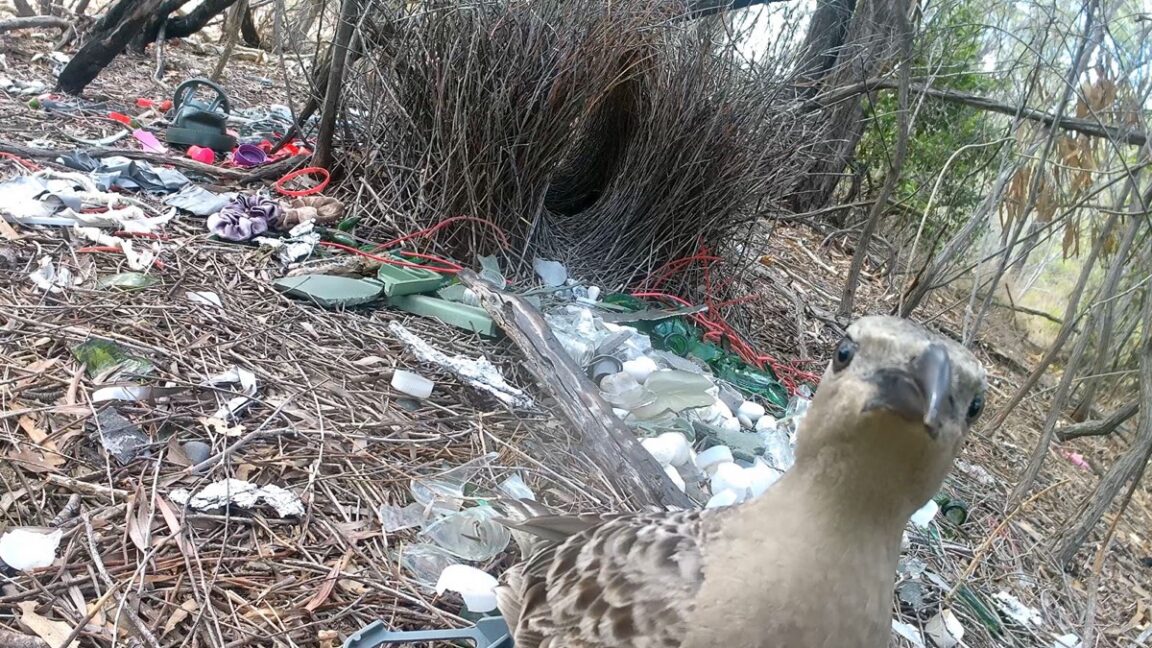
In the dense woodlands and suburban fringes of northern Queensland, Australia, a fascinating intersection of nature and human industry is playing out in the form of elaborate courtship rituals. Male great bowerbirds, known for their sophisticated mating displays, are increasingly incorporating human-made debris into their nesting sites, a trend that researchers suggest is being reshaped by the influence of urbanization.
For those of us who track the evolution of animal behavior alongside human technological advancement, this phenomenon offers a unique window into how wildlife adapts to the modern landscape. The great bowerbird (Chlamydera nuchalis) is renowned for constructing “bowers”—intricate, avenue-like structures made of twigs. These are not nests for raising young, but rather specialized stages designed to attract females. In a recent study published in the journal Royal Society Open Science, researchers from the University of Exeter examined how this courtship behavior differs between urban and rural environments.
The Urban Influence on Courtship Displays
The research, which focused on 61 male great bowerbirds, highlights a clear shift in the types of materials birds select for their displays. By monitoring sites in Townsville City (the urban environment) and the Dreghorn Cattle Station (the rural site) during the breeding season from September to December 2023, the team identified that urban birds are heavily utilizing human-made items to decorate their bowers. This study provides empirical evidence that the increased availability of anthropogenic objects in cities is directly impacting the aesthetic choices of these birds, as detailed in the findings published by the University of Exeter.
Bowerbirds are visual creatures, and their ability to perceive ultraviolet (UV) light plays a crucial role in how they decorate. The researchers utilized specialized photography to capture the bowers under both visible and UV light, employing umbrellas to ensure consistent, diffuse lighting conditions during the process. This methodology allowed the team to document the specific preferences of the birds in their natural habitat, confirming that both urban and rural populations show a distinct bias toward human-made materials when they are available.
Why Human Items Dazzle
The core question remains: why do these birds prefer bits of plastic, glass, and metal over the traditional berries and stones found in their natural environment? The answer likely lies in the sensory appeal of these objects. Many human-made items—such as blue plastic bottle caps or shiny metallic scraps—possess colors and reflective properties that may be more intense than those found in the surrounding natural landscape. For a female bowerbird, a bower decorated with these vibrant, high-contrast items may signal a male’s superior ability to forage and secure high-quality resources, effectively turning the bower into a display of fitness.
This shift represents a significant example of behavioral plasticity. As urbanization continues to alter landscapes, species that can adapt their resource usage—or in this case, their “interior design” choices—may find themselves at an advantage. However, the reliance on human-made materials also raises questions about the long-term implications for these birds, particularly as the availability of such items fluctuates with human activity.
Key Observations from the Study
- Study Scope: The research monitored 61 male great bowerbirds across two distinct sites in northern Queensland.
- Temporal Focus: Data collection took place during the peak breeding season between September and December 2023.
- Methodology: Researchers utilized in-situ photography under both visible and UV light to analyze the bower decorations.
- Core Finding: Urban birds demonstrated a marked tendency to use human-made items, likely driven by both increased availability and a preference for the sensory properties of these materials.
What In other words for Modern Ecology
As we observe the intersection of human expansion and wildlife behavior, it becomes clear that “urbanization” is not just a human phenomenon; It’s a transformative force for the species that share our environment. The great bowerbird’s adaptation is a reminder that animals are constantly reacting to the changes we introduce to their ecosystems. While the use of human items may seem like a simple quirk of behavior, it is a sophisticated response to a changing world.
The researchers involved in the study continue to monitor these populations to understand the long-term consequences of this behavioral shift. As of June 2026, further studies are expected to investigate whether this reliance on human-made materials affects reproductive success over multiple generations. For those interested in the ongoing intersection of technology, urban growth, and wildlife, keeping an eye on publications from the Royal Society and university research departments will provide the next chapter in this story.
We invite our readers to share their thoughts on how human infrastructure impacts the wildlife in your own local areas. Have you noticed animals adapting to urban environments in unexpected ways? Join the conversation in the comments section below.
Worth a look