Global financial giant Visa has deployed Anthropic’s advanced Claude Mythos AI model to test the core infrastructure supporting billions of daily transactions worldwide, according to corporate disclosures. Operating across more than 200 countries and territories while supporting roughly 160 currencies, the payment network connects nearly 5 billion credentials to more than 175 million merchant locations. Rather than relying solely on traditional security tooling, Visa directed the frontier model to hunt for deep-seated vulnerabilities within its own stack, subsequently open-sourcing the governance harness used in the operation and introducing new metrics for AI-era cyber defense.
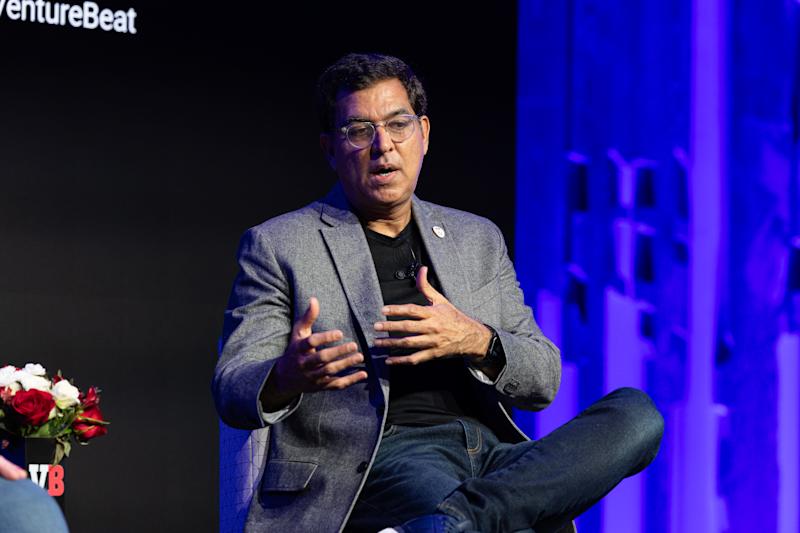
The development brings together advanced artificial intelligence and critical payments engineering at a time when automated attacks operate at machine speed. Rajat Taneja, Visa’s president of technology, detailed the initiative during an industry presentation, explaining how the model successfully stitched minor, isolated software weaknesses deep in the system architecture into working exploit chains. These multi-layered vulnerabilities typically remain undetected until late-stage penetration testing under conventional review methods.
Taneja, who has run technology strategy, product engineering, and global infrastructure at Visa since 2019, co-authored a technical white paper and a joint GitHub release alongside Visa chief information security officer Subra Kumaraswamy. The published reference implementation—titled the Visa Vulnerability Agentic Harness—provides security teams across the industry with a structured framework to inspect, adapt, and extend automated threat discovery tools.
Engineering Trust Through Zero-Trust Architecture and Pessimism
Operating a global financial network requires an operational philosophy grounded in constant vigilance. According to Taneja, trust at this scale is engineered through what he characterized as pessimism and paranoia—designing systems by actively assuming failure and mitigating risks before an incident materializes. Over many years, Visa has reinforced its underlying infrastructure using zero-trust architecture, strict network segmentation, and automated security operations tailored to the reliability standards required by international commerce.
The opportunity to test these defenses at AI scale arose when Anthropic invited software operators to evaluate Mythos under Project Glasswing. Across the broader technology sector, Glasswing participants collectively surfaced more than 10,000 high- or critical-severity vulnerabilities within the first month of testing. Anthropic’s subsequent analysis indicated that the primary bottleneck in modern cybersecurity no longer lies in vulnerability discovery, but rather in the speed of verification, disclosure, and patching.
Within Visa’s testing environment, Mythos executed system-wide, context-aware code analysis. The model flagged deeply buried flaws and complex multi-step attack paths that presented clean, actionable findings for internal engineering teams. While several discoveries carried critical severity ratings, Visa reported that its existing zero-trust controls, network segmentation, and layered safeguards successfully isolated and broke the attack chains before any external actor could intervene.
“In a world of agentic attacks, defense also has to be agentic,” Taneja noted, highlighting that even organizations with decades of mature defense-in-depth posture must reexamine legacy assumptions.
The Visa Vulnerability Agentic Harness
Rather than relying on a monolithic security scanner, Visa developed its automated pipeline over five generations. The Visa Vulnerability Agentic Harness operates across four distinct phases and eleven specific stages, guiding frontier large language models through threat modeling, deep-dive verification, exploit chain synthesis, and remediation validation. Strict deterministic controls, policy gates, and mandatory human oversight govern every step of the pipeline.
To ensure high finding quality, the architecture implements three core design choices. Threat modeling runs before analysis to target the active attack surface rather than blindly scanning entire repositories. Multi-agent deterministic voting requires independent reasoning chains to reach consensus before any finding advances. Finally, structured triage artifacts condense the remediation lifecycle into actionable items for software developers.
The framework is built with provider flexibility in mind through an LLM abstraction layer, enabling security teams to swap or combine backend models. While the open-source repository supports Anthropic Claude, OpenAI-compatible models, or hybrid configurations, complete functionality—including automated fix application via specialized file-editing tools—currently requires Anthropic backends. Industry surveys underscore the importance of such flexibility; recent enterprise research indicates that 82% of organizations rely on provider-native controls as their primary security layer, while 59% plan to adopt or switch agent security tooling within a year.
Replacing Legacy Metrics With Mean Time to Adapt
As automated vulnerability discovery accelerates, Visa’s leadership argues that traditional metrics like raw Common Vulnerabilities and Exposures (CVE) counts or Mean Time to Detect (MTTD) are no longer sufficient. An organization can close hundreds of low-impact findings monthly while leaving complex, end-to-end exploit paths completely open.
To address this gap, Visa introduced a new measurement framework termed Mean Time to Adapt (MTTA). The white paper tracks MTTA across three operational dimensions:
- Inventory Freshness: Measures the completeness and currency of an organization’s visibility into its code, configuration files, and runtime deployments.
- Exploitable Paths Per Release: Counts how many end-to-end attack chains remain viable after each software release, moving beyond simple vulnerability closure counts.
- Validation Cycle Time: Tracks the duration required to produce repeatable, evidence-backed proof that a deployed fix successfully closes an attack path in production.
Supporting this shift, Visa’s Secure Software Development Life Cycle (SSDLC) policy now assumes that every exploitable path will eventually be tested in production, requiring complete remediation before code is promoted. The policy references CISA Known Exploited Vulnerabilities data, noting that fewer than 1% of all documented CVEs are actively exploited in the wild.
Supply Chain Hardening and Agentic Commerce
Recognizing that an enterprise remains vulnerable through third-party vendors and open-source dependencies, Visa is integrating AI-driven security posture into its supplier due diligence. Requirements now include continuous vulnerability validation, living software bills of materials (SBOMs), and established MTTA baselines across the technology stack.
As part of these upstream efforts, Visa joined Project Lightwell, a $5 billion initiative led by IBM and Red Hat designed to harden widely used open-source components through AI-driven validation and coordinated patching. Visa participates in the initiative alongside major financial institutions including Bank of America, JPMorganChase, Goldman Sachs, and Mastercard.
Looking ahead, Visa is preparing for a future where autonomous AI agents conduct transactions on behalf of consumers and enterprises. The company is developing trust frameworks, identity layers, and agent readiness scoring systems through the Visa Payment Threats Lab, a simulation environment that replays real fraud scenarios against live authorization rules and configurations.
Security industry research highlights the urgency of these identity controls, noting that enterprises utilizing shared credentials experience significantly higher rates of security incidents and near-misses compared to those assigning scoped, individual identities to every automated agent. Visa’s technical white paper addresses this challenge directly, establishing “AI agents are identities” as a non-negotiable architectural practice requiring least-privilege permissions, full audit trails, and integration into existing Identity and Access Management (IAM) governance.
For security teams looking to adopt these strategies, the Visa Vulnerability Agentic Harness is publicly available on GitHub as a reference implementation. Organizations can review the complete architectural white paper and repository documentation to align their internal defenses with machine-speed threat environments.
Related reading