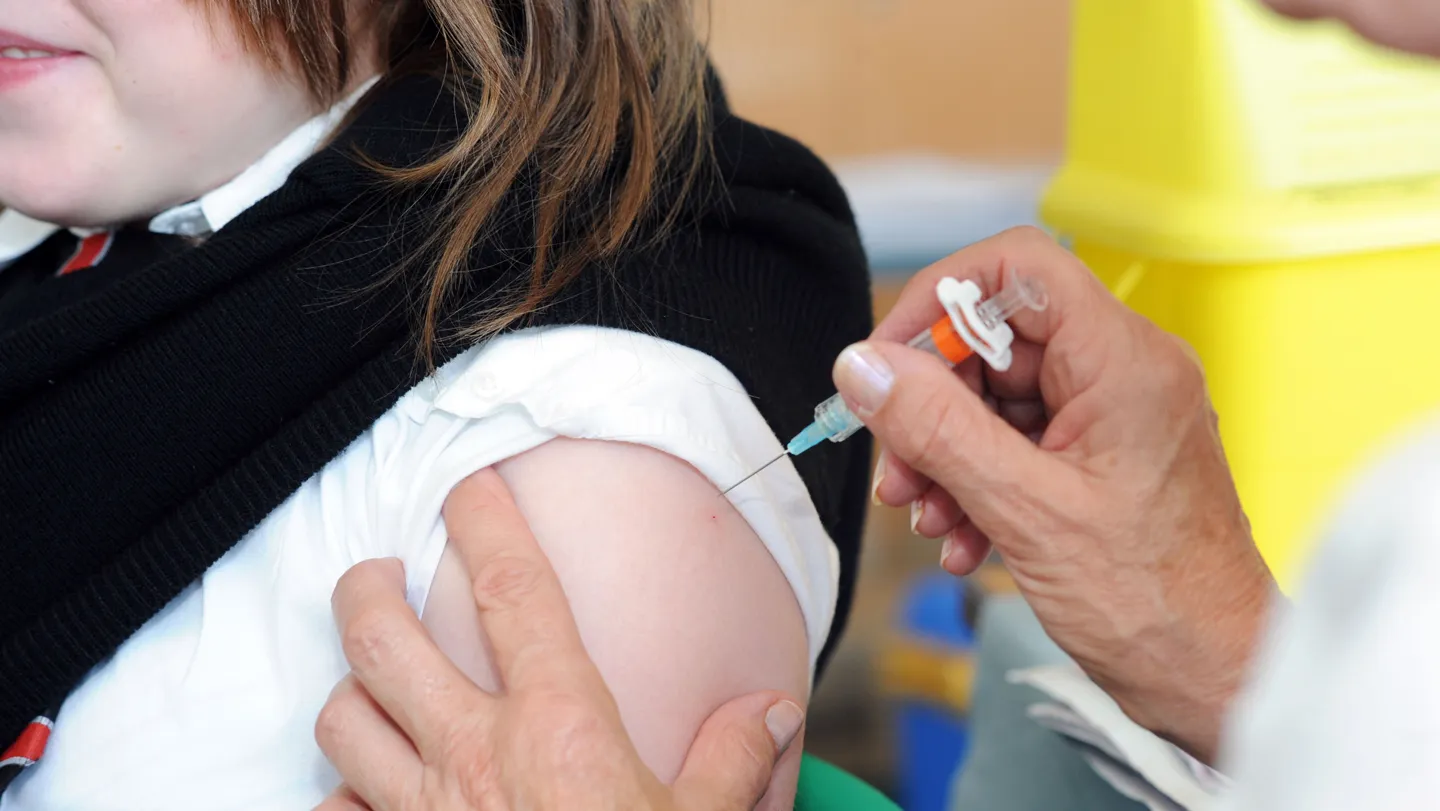
Say you lived in a country that has sky-high HPV vaccination coverage plus a uniform cervical cancer screening program. A new study suggests that, depending on when you got your shots, you might only need a few screenings in your lifetime.
In this case, that country is Norway. Using a mathematical model, researchers found that women in Norway who had been vaccinated between the ages of 12 and 24 would only need a screening once every 15 to 25 years. For women who received the HPV shots between the ages of 25 and 30 years, ten years between screenings would suffice, the researchers report February 3 in annals of Internal Medicine.
The HPV vaccine “is a cancer-preventing vaccine,” says Kimberly Levinson, the director of Johns Hopkins gynecologic Oncology at the Greater Baltimore Medical Center, who was not a part of the research team. There is already excellent efficacy data for this vaccine and the new research shows “the potential that exists if we can actually get people vaccinated at the appropriate time,” Levinson says.
Human papillomavirus is sexually transmitted, and nearly everyone will become infected with HPV after becoming sexually active. Most of the time, the immune system handles the infection. But if an infection persists with one of the high-risk HPV types, it can lead to cancer. HPV is responsible for cervical, throat, penile and anal cancers, among others. In Norway, girls and boys receive the HPV vaccine at the age of 12. In the United States, the vaccine is recommended for girls and boys who are 11 to 12 years old. There is a catch-up vaccination schedule for certain older ages.
In 2021, coverage for the HPV vaccine in Norway was more than 90 percent. HPV testing, which is recommended every five years, is the primary screening strategy in Norway, which has worldwide healthcare. Studies have shown that HPV testing does a better job than Pap tests at detecting abnormal cells before they become cancerous. Norway’s approach to cervical cancer has set them up to eliminate the cancer by 2039,another modeling study suggests.
In contrast, HPV vaccination coverage is around 57 percent for 13 to 15 year olds in the United States, as of 2023. And screening, with HPV testing or with Pap tests, isn’t as consistent. Around a quarter of women aged 21 to 65 were behind on cervical cancer screening in 2023.Screening rates for cervical cancer fell during the COVID-19 pandemic and haven’t yet bounced back to 2019 levels. And that’s in a backdrop of a steady decline in this screening that has occurred over roughly the last two decades.
Levinson says it’s critically important to see the new study in the context of the conditions in Norway, which include a very high vaccination rate and a much more strict and uniform screening program.“That differs from the situation that we are in, in the United States.”
Relying on both vaccination and screening for cervical cancer prevention will continue to be critically important in the united States, Levinson says. “We want to promote HPV vaccination because it is safe and efficacious,” she says, “and at the same time we don’t want to miss the chance to screen women.”
Related reading