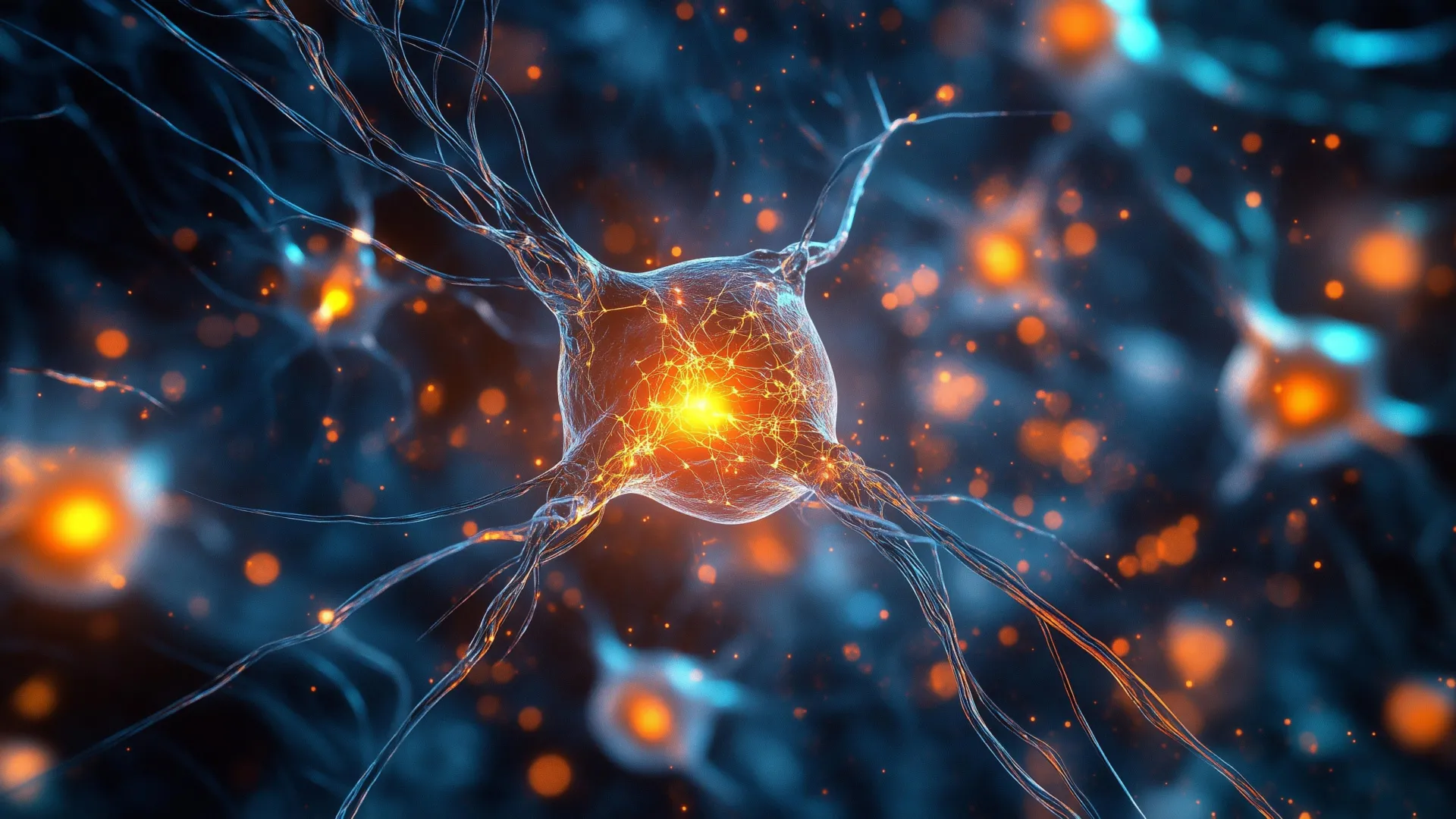
A new study published in the Proceedings of the National Academy of Sciences (PNAS) reveals that individual human neurons are capable of carrying out far more complex computations than comparable cells in other mammals. For decades, scientists attributed human intelligence primarily to the brain’s massive size, its close to 100 billion neurons, and the vast web of connections linking them together, as reported by SciTechDaily. However, the latest research indicates that exceptional cognitive abilities may also originate at a much smaller level, driven by the remarkable processing capabilities housed within single brain cells.
Individual Human Brain Cells Outperform Other Mammals in Computational Complexity
The research was led by Hebrew University professors Idan Segev and Mickey London, alongside PhD students Ido Aizenbud and Daniela Yoeli at the Edmond and Lily Safra Center for Brain Sciences (ELSC), in collaboration with Professor Chris de Kock from the Free University in Amsterdam. People often think of a neuron as a simple switch that either turns on or off,
said Segev, adding that a single human neuron functions instead as an extraordinarily sophisticated computing device.
Measuring Functional Complexity in Cortical Neurons
To investigate the computational capacity of individual brain cells, the researchers developed a new method and created detailed biophysical models of cortical pyramidal neurons from both humans and rats, according to Thebrighterside. The team tested how well a fixed artificial neural network could learn each cell’s input-output behavior. If an artificial system easily mimicked a neuron, that cell was considered less computationally complex; if the artificial network struggled by missing spikes or predicting them at the wrong times, the biological cell was classified as more complex.

From this testing, the team created the Functional Complexity Index (FCI). Across 24 modeled pyramidal neurons—12 human and 12 rat cells—human cortical neurons scored significantly higher, with a mean FCI of 0.3803 compared to 0.2244 in rat cells. These human cortical pyramidal neurons demonstrated computational capabilities comparable to those of a deep neural network, operating as layered computing systems rather than basic on-off components.
Dendritic Trees and Synaptic Structure Drive Processing Power
The superior computational power of human neurons stems largely from their physical structure. Human cortical neurons feature larger dendritic trees with longer branches and more elaborate arborization than those found in rodents. Among 58 measured morphological features, total dendritic area emerged as the strongest single predictor of complexity, while the strongest two-feature combination paired total dendritic area with the longest bifurcation branch.
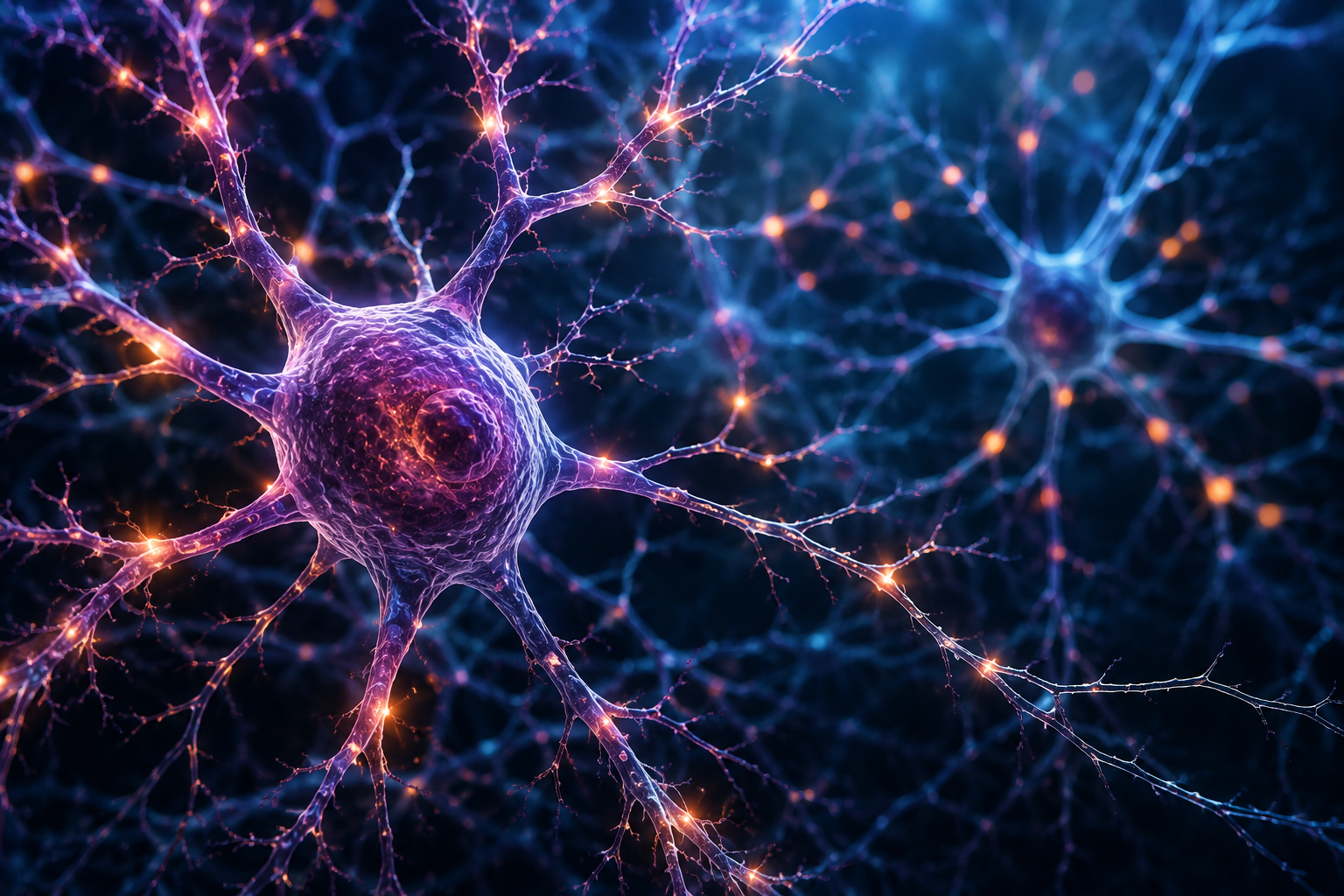
These sprawling dendritic trees and distinctive electrical characteristics allow cells to analyze combinations of incoming signals rather than simply adding them together, supporting demanding distinctions within sensory information such as differentiating between images of cats and dogs. Furthermore, human-type synapses push neurons toward more nonlinear behavior, demonstrating a sharp nonlinear response when roughly 35 simultaneous synapses are activated on a single branch.
Implications for Artificial Intelligence and Future Research
The findings challenge the long-standing assumption that human intelligence depends solely on total neuron count and intercellular connections, pointing instead to the evolutionary importance of individual neuronal sophistication. Furthermore, the discovery could influence the future of artificial intelligence. While current leading machine learning systems rely on highly simplified artificial units, the research points toward brain-inspired AI built from artificial units that are computationally deep and powerful, closely mirroring the capabilities of biological neurons.
Related reading