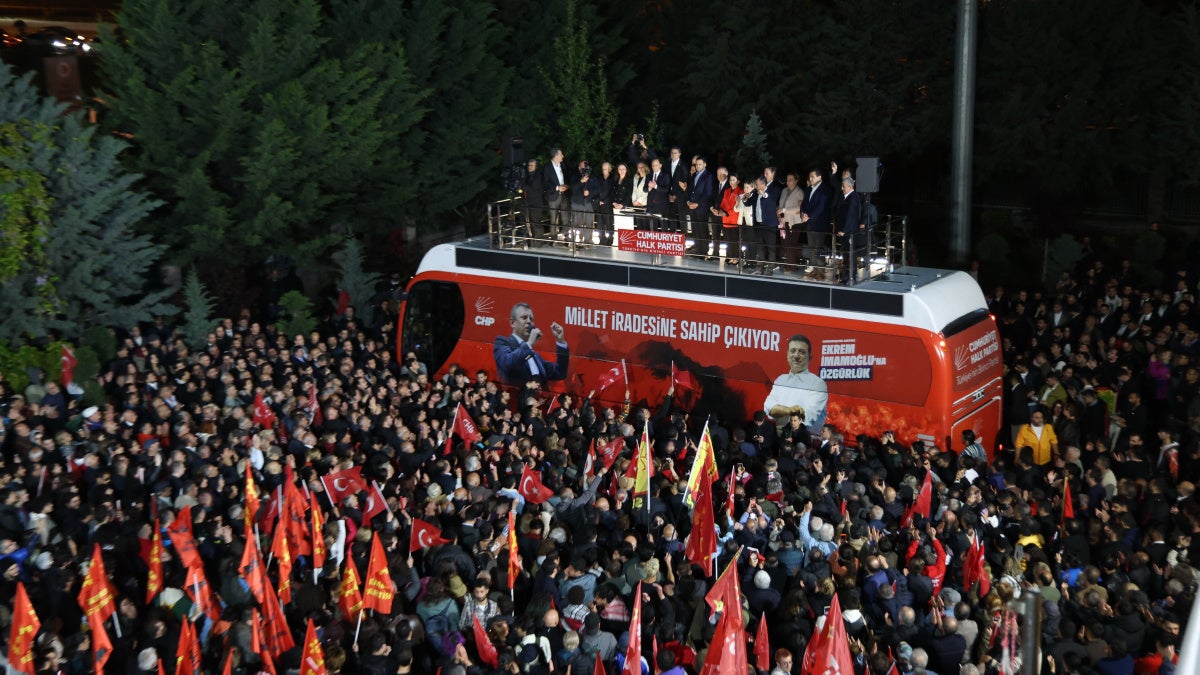
In a move that has sent shockwaves through Türkiye’s political landscape, the 36th Ankara regional court of appeal issued an interim measure on May 21, 2026, effectively removing the leadership of the Republican People’s Party (CHP). The court’s decision mandates the removal of party chair Özgür Özel and the entire executive leadership, while simultaneously nullifying the results of the party’s November 4-5, 2023, congress. This judicial intervention has effectively reinstated Kemal Kılıçdaroğlu, the former party leader who had been succeeded by Özel following his defeat in the May 2023 presidential election.
The court’s ruling—a significant development in the ongoing struggle over the country’s political future—has sparked intense debate regarding the independence of the judiciary and the protection of democratic norms in Türkiye. By annulling the internal elections of the nation’s primary opposition force, the court has taken an extraordinary step that critics argue undermines the fundamental right to freedom of association and the integrity of political processes. The decision to remove Özgür Özel and the entire CHP leadership is part of what observers describe as a broader pattern of political pressure aimed at sidelining the opposition, a strategy that has previously seen the prosecution of prominent figures, including the mayor of Istanbul.
Özgür Özel addresses supporters outside the Republican People’s Party (CHP) headquarters in Ankara after a court decision to remove him as party leader, May 21, 2026. © 2026 Necati Savas/EPA/Shutterstock
A Contested Leadership and Judicial Intervention
The controversy stems from allegations regarding the legitimacy of the November 2023 congress. While the CHP leadership has consistently rejected claims of electoral fraud, a small group of party members initiated legal complaints, alleging that the voting process had been compromised. These complaints eventually led to an investigation by the Ankara public prosecutor’s office, which commenced in February 2025. Despite an initial dismissal of the case by an Ankara administrative court in October 2025—which cited the fact that Özel had subsequently secured his leadership in two additional congresses—the complainants successfully appealed to the regional court.

The May 21 ruling not only nullified the 2023 results but also invalidated the subsequent congresses, effectively stripping the current leadership of their mandate. This decision was reached without the court citing specific evidence to justify the invalidation of the later internal elections. Under the European Convention on Human Rights, specifically Article 11 regarding the freedom of association and Article 3 of Protocol 1 concerning the right to free elections, such interference in the internal affairs of a political party is viewed by international observers as a serious concern for democratic governance.
Political Implications and Government Response
The timing of these legal maneuvers is particularly significant given the electoral performance of the CHP under Özel’s leadership. In the local elections of March 2024, the party achieved a notable success, securing 37.8 percent of the national vote compared to the 35.5 percent garnered by the governing Justice and Development Party (AKP). This shift marked the first time in 22 years that the AKP had lost its leading position, a development that preceded a series of public speeches by President Recep Tayyip Erdoğan questioning the legitimacy of Özel’s election.
The reaction from the government has been one of support for the judicial outcome. Justice Minister Akın Gürlek, who previously served as the Istanbul chief public prosecutor during the early stages of investigations into the CHP, described the court’s decision as a measure that “consolidates our citizens’ trust in democracy.” Gürlek’s transition from prosecutor to Justice Minister on February 10, 2026, has been highlighted by critics as evidence of the alignment between the judiciary and the executive branch in their efforts to target political opposition.
The Future of the Opposition
Following the court’s order, the situation at the CHP headquarters in Ankara became a focal point for political tension. Özgür Özel, addressing supporters who gathered outside the building, declared his refusal to vacate his position and characterized the court’s actions as a “coup against the opposition.” Meanwhile, the swift actions taken by the court-appointed leadership have further escalated the internal crisis. On May 22, Kemal Kılıçdaroğlu, acting in his capacity as the restored leader, moved to dismiss the legal team that had been managing the party’s appeal to the Court of Cassation. The newly appointed lawyers immediately filed a motion to withdraw the appeal, effectively attempting to close off the legal avenue for challenging the court’s ruling.

The situation remains fluid as stakeholders wait for further developments from the Court of Cassation, although the recent withdrawal of the appeal by the court-appointed leadership suggests a deliberate effort to solidify the current judicial outcome. The case of the CHP is widely seen as a litmus test for the rule of law in Türkiye, with the international community closely monitoring whether the country’s political landscape will allow for a viable, independent opposition or if such judicial interference will become the standard for managing political dissent.
Key Developments at a Glance
- November 2023: Özgür Özel is elected as CHP chair during the party’s congress.
- March 2024: The CHP achieves 37.8 percent of the national vote in local elections.
- February 2025: The Ankara public prosecutor’s office opens an investigation into the 2023 congress following complaints of voting irregularities.
- October 2025: An administrative court dismisses the case, citing Özel’s subsequent re-election in 2025.
- May 21, 2026: The Ankara regional court of appeal nullifies the 2023 and subsequent congresses, ordering the reinstatement of Kemal Kılıçdaroğlu.
- May 22, 2026: The new party leadership moves to withdraw the pending appeal to the Court of Cassation.
As this legal and political saga continues, the focus will remain on the upcoming filings at the Court of Cassation and whether any further avenues for recourse remain available to the ousted leadership. We will continue to track these developments and provide updates as official records and court filings become available. We invite our readers to follow this unfolding story and share their perspectives on the implications for Turkish democracy.
Worth a look
- Capital One Closes Over 300 Trump-Affiliated Accounts Over Money Laundering Risks
- Hallan cucarachas y excrementos de roedores en restaurantes del condado Tarrant
- Alex Ryvchin Painting: Jewish Community Leader with Tefillin in the Sea (archyde.com)
- Beyond the Teeth: A Dentist’s Reflection on Human Connection (world-today-news.com)