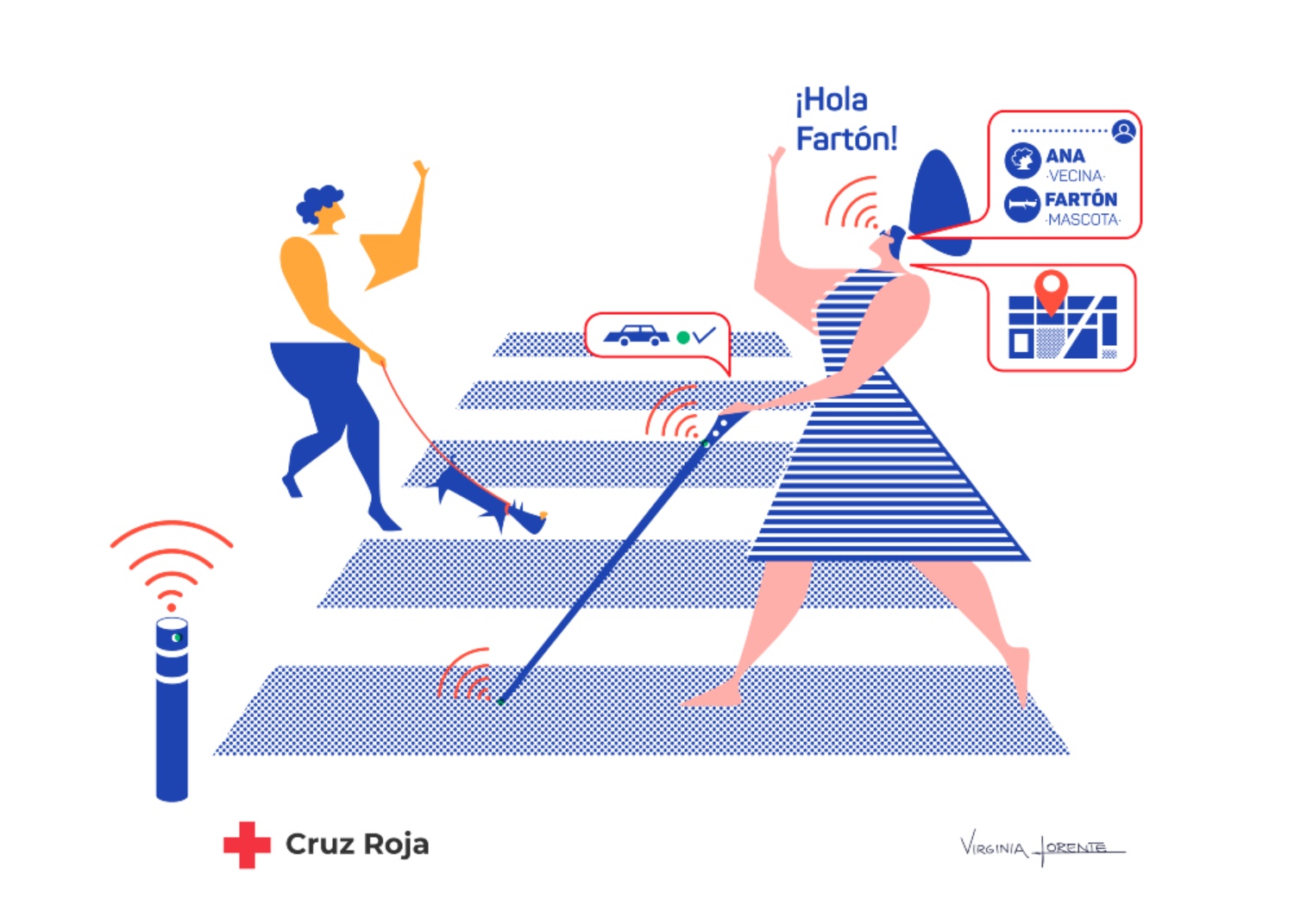
Virginia Lorente’s Illustration Highlights the Power of Humanitarian Technology
Lisbon, Portugal – In a world increasingly shaped by technological advancements, the intersection of innovation and humanitarian aid is becoming ever more critical. Illustrator and architect Virginia Lorente’s recent function, commissioned to mark the tenth anniversary of the Spanish Red Cross’s Technology Humanitarian Awards, powerfully embodies this connection. Her illustration isn’t merely a visual representation; it’s a testament to how technology can dismantle barriers and offer hope, particularly for vulnerable populations. The artwork underscores the potential of technology to foster inclusion, specifically mentioning its benefits for individuals with visual impairments or low vision. Lorente, specializing in illustrated architecture, brings a unique perspective to visualizing complex solutions.
The Spanish Red Cross’s commitment to recognizing and supporting technological innovation in the humanitarian sector is exemplified by these annual awards. The initiative, now in its tenth year, aims to champion proposals that leverage information and communication technologies (ICT) to address pressing humanitarian challenges. This year’s focus, and the theme reflected in Lorente’s illustration, is on the transformative power of technology to create a more equitable and accessible world. The awards aren’t simply about recognition; they too provide crucial financial support and development assistance to the winning projects, fostering the growth of impactful solutions.
The Spanish Red Cross and a Decade of Innovation
The Spanish Red Cross has long been a proponent of integrating technology into its humanitarian efforts. The Technology Humanitarian Awards, established a decade ago, represent a formalization of this commitment. The awards program seeks to identify and support projects that demonstrate creativity, feasibility, and, crucially, a significant potential for social impact. According to the official bases for the 2025 edition of the awards, the organization is looking for innovative approaches that can address a wide range of humanitarian needs. Details regarding the application process and eligibility criteria can be found on Scribd.
The awards program’s emphasis on practicality and impact sets it apart. It’s not enough for a project to be technologically sophisticated; it must also be demonstrably effective in addressing a real-world problem. This focus on tangible results ensures that the resources allocated to these initiatives are used efficiently and effectively, maximizing their positive impact on the communities they serve. The Spanish Red Cross’s dedication to this principle is evident in its rigorous evaluation process and its commitment to providing ongoing support to winning projects.
Virginia Lorente: Bridging Architecture and Illustration for Social Good
Virginia Lorente’s artistic background uniquely positions her to contribute to this intersection of technology and humanitarianism. As an architect and illustrator, she possesses a rare ability to visualize complex concepts and translate them into compelling visual narratives. Her specialization in illustrated architecture allows her to explore the relationship between the built environment and the people who inhabit it, often focusing on issues of accessibility and inclusivity. As highlighted by the Spanish Red Cross, Lorente’s work demonstrates a clear understanding of how technology can be used to overcome physical and social barriers.
Lorente’s portfolio extends beyond the humanitarian sector, encompassing a diverse range of public and private clients. This breadth of experience allows her to bring a unique perspective to her work with the Spanish Red Cross, drawing on her knowledge of various architectural styles and design principles. Her ability to adapt her artistic style to different contexts is a testament to her versatility and creativity. The illustration created for the Technology Humanitarian Awards is a powerful example of her ability to use her skills to promote social good.
The Principles of Humanity and Impartiality
Lorente’s illustration is framed by the core principles of the International Red Cross and Red Crescent Movement: humanity and impartiality. These principles, visually represented alongside the artwork, underscore the ethical foundation of the Technology Humanitarian Awards and the broader humanitarian mission. Humanity, as defined by the Red Cross, emphasizes the alleviation of human suffering wherever it may be found, with particular attention to the most vulnerable. Impartiality dictates that aid be provided solely on the basis of necessitate, without discrimination as to nationality, race, religious beliefs, class, or political opinions.
These principles are not merely abstract ideals; they are guiding forces that shape the Spanish Red Cross’s work on the ground. They inform the selection criteria for the Technology Humanitarian Awards, ensuring that the projects supported align with the organization’s core values. By highlighting these principles, Lorente’s illustration serves as a reminder of the ethical responsibilities that come with leveraging technology for humanitarian purposes. The visual representation of these principles reinforces their importance and encourages a commitment to ethical conduct within the humanitarian sector.
Looking Ahead: The Future of Technology and Humanitarian Aid
The tenth anniversary of the Spanish Red Cross’s Technology Humanitarian Awards marks a significant milestone in the organization’s ongoing efforts to harness the power of technology for social good. As technology continues to evolve at an unprecedented pace, the potential for innovation in the humanitarian sector is immense. From artificial intelligence and machine learning to virtual reality and augmented reality, fresh technologies are emerging that could revolutionize the way humanitarian aid is delivered.
However, it’s important to acknowledge that technology is not a panacea. It’s crucial to address the ethical considerations surrounding the use of technology in humanitarian contexts, ensuring that it is used responsibly and in a way that respects the dignity and autonomy of those it is intended to help. The Spanish Red Cross’s commitment to the principles of humanity and impartiality provides a strong ethical framework for navigating these challenges. The organization’s continued support for innovative projects, like those recognized through the Technology Humanitarian Awards, will be essential in shaping a future where technology is used to create a more just and equitable world.
The seventh edition of the awards, as reported by the Universidad Politécnica de Madrid, further emphasizes the importance of recognizing and supporting these innovative solutions. The university highlighted the awards’ role in addressing social challenges and generating positive impact. The upcoming awards cycle promises to showcase even more groundbreaking projects that demonstrate the transformative potential of technology in the humanitarian field.
The next key date for those interested in participating in the Technology Humanitarian Awards is the application deadline for the 2025 edition. Further details regarding the submission process and eligibility requirements will be announced on the Spanish Red Cross website in the coming months. Stay tuned for updates and consider submitting your innovative ideas to help shape the future of humanitarian aid.
What are your thoughts on the role of technology in humanitarian efforts? Share your comments below and let us know how you suppose innovation can further improve the lives of those in need.