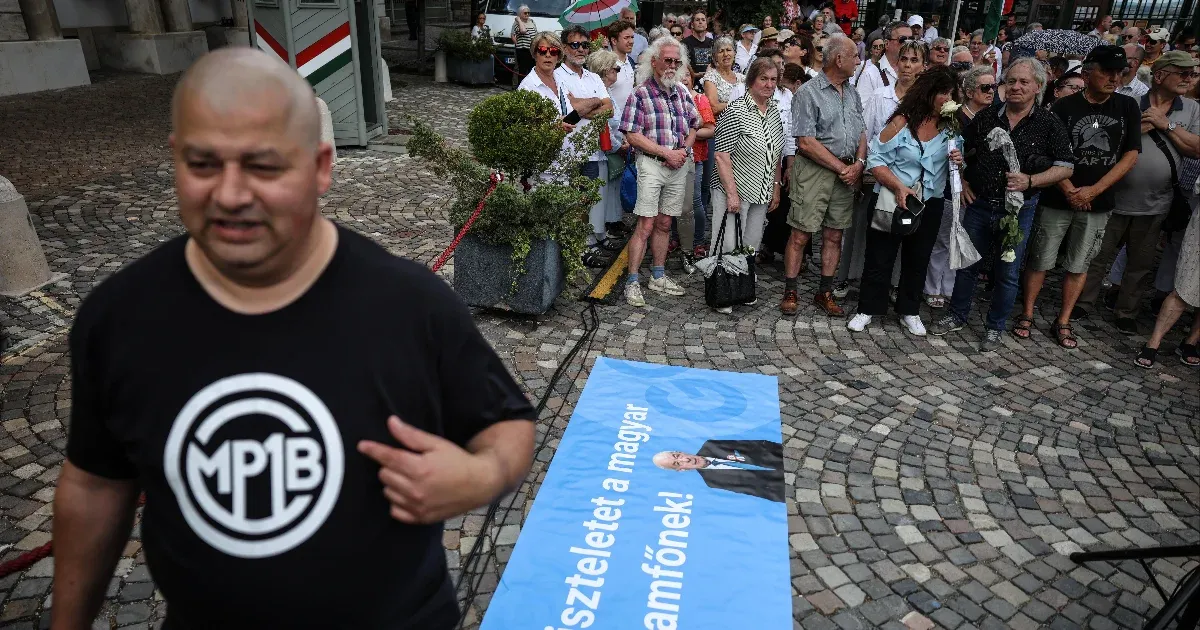
On Sunday, June 7, 2026, a demonstration took place at the Sándor Palace in Budapest, where supporters gathered to express their backing for Hungarian President Tamás Sulyok. The assembly, which drew hundreds of participants, occurred amidst ongoing political discourse regarding the presidency and the broader direction of the country.
The event, characterized by various slogans and the singing of songs such as “Tavaszi szél,” highlighted the current climate of political polarization in Hungary. While supporters of the government utilized the gathering to demonstrate solidarity with the head of state, the demonstration also served as a focal point for critics of the current administration to voice their opposition.
Political Tensions and Public Demonstration
The gathering at the Sándor Palace, the official residence of the President of Hungary, was marked by a visible presence of individuals supporting the incumbent leadership. The event followed calls for public demonstrations, with attendees using the space to signal their political allegiance. This public display of support comes at a time when the political landscape in Budapest remains highly scrutinized by both domestic and international observers.
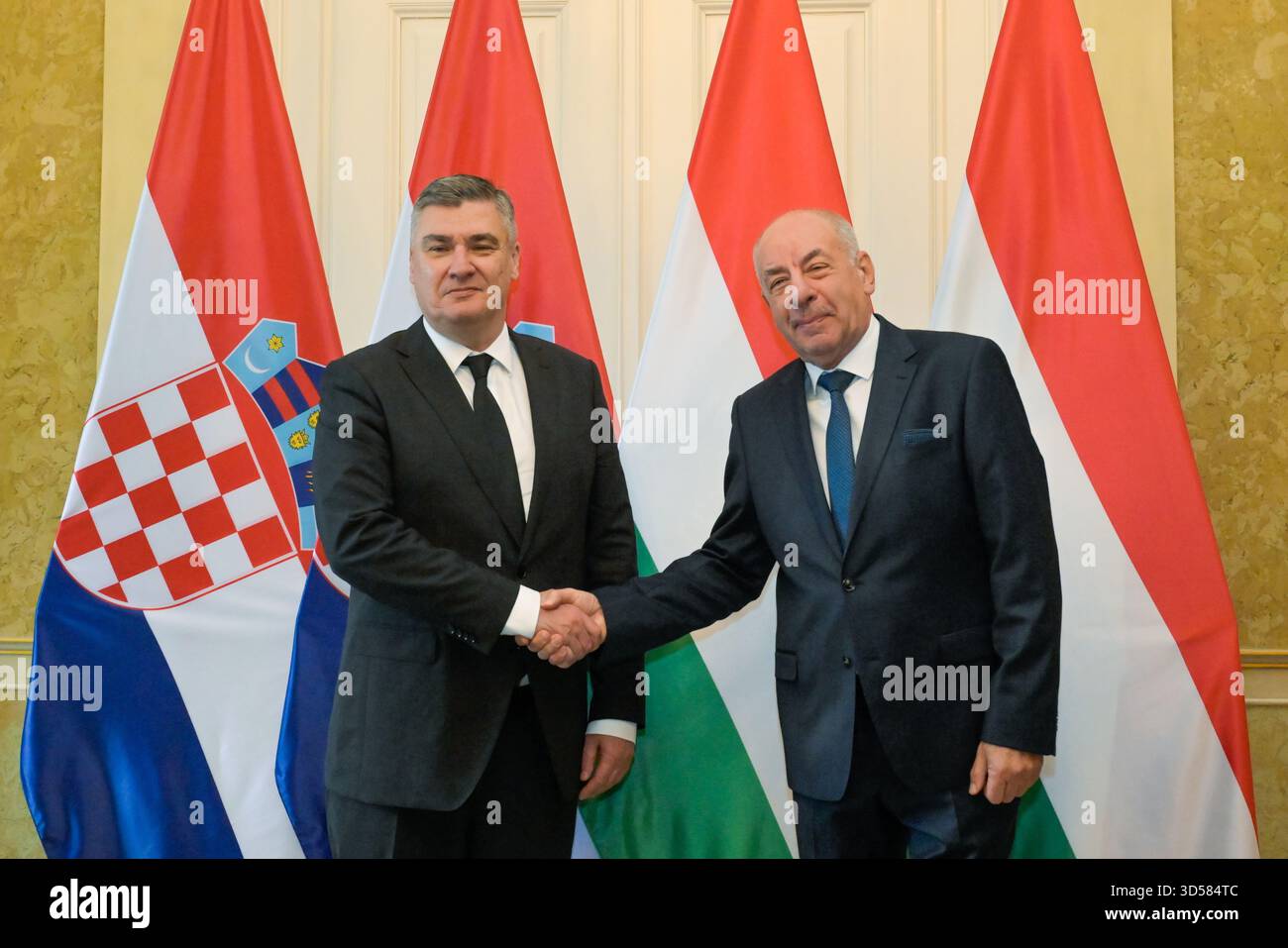
Opposition figures were quick to respond to the demonstration. Péter Magyar, a prominent political voice, addressed the gathering after the event concluded. In his remarks, he challenged the legitimacy of the support shown, suggesting that the current political establishment is facing a decline in public mandate. Magyar’s commentary focused on the perceived waning influence of government-led mobilization efforts, framing the turnout as a reflection of broader political shifts.
Evaluating Political Mobilization
The scale of the demonstration has been a subject of varying accounts. Reports from the scene indicated that while hundreds of people were present, the turnout was interpreted differently depending on the political perspective. Some sources noted that the demonstration was a response to an appeal for solidarity, while others, including opposition critics, described the event as a limited attempt to generate public support through organized channels.

The use of specific slogans and music, such as the folk song “Tavaszi szél,” was intended to evoke national sentiment. However, the juxtaposition of these cultural elements with political messaging underscored the deep divisions currently present in Hungarian society. Observers note that such events are increasingly common as political parties vie for influence ahead of future electoral cycles and policy decisions.
What Happens Next
As the political situation in Hungary continues to evolve, the focus remains on how the administration will address the criticisms raised by opposition leaders and the public. There are no immediate official sessions or hearings scheduled at the Sándor Palace regarding the specific grievances voiced during Sunday’s demonstration. However, the continued public discourse suggests that the tension between government supporters and the opposition will remain a defining feature of the upcoming months.
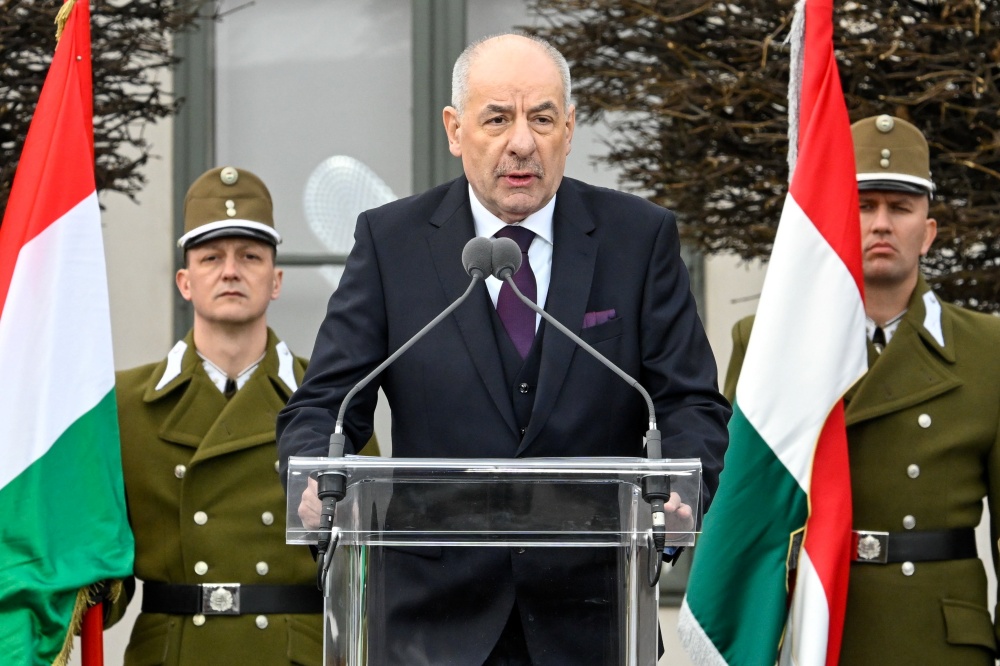
The government has not issued a formal statement regarding the specific turnout numbers reported by independent observers. Future political developments will likely be tracked through upcoming parliamentary sessions and official government communications. Citizens and stakeholders are encouraged to monitor official government portals for any announcements concerning presidential activities or upcoming public policy forums.
We invite our readers to share their perspectives on these developments in the comments section below. For ongoing coverage of international affairs and political updates, continue to follow the World Today Journal.
Related reading