
Hungary is shutting down its sole nuclear power plant as record-low water levels on the Danube River cripple cooling systems.
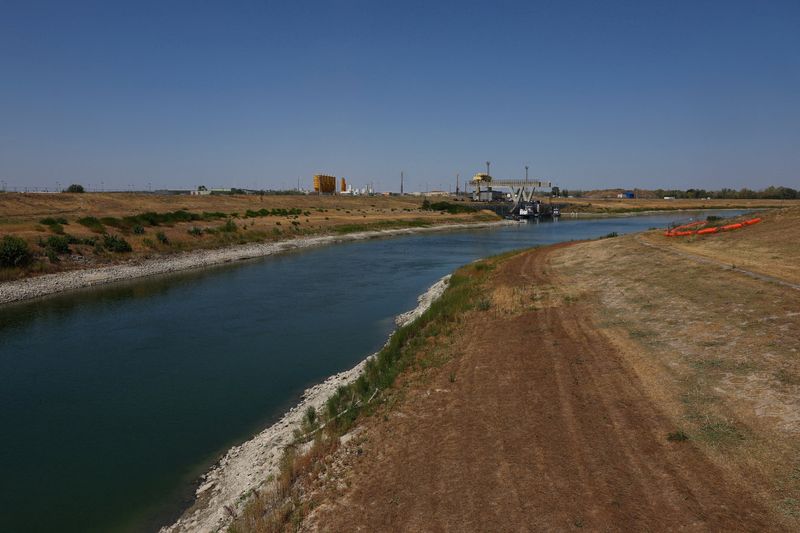
Record-breaking summer heat and months of low rainfall have driven the Danube River down to unprecedented depths, forcing sweeping government restrictions across Hungary. The crisis reaches its peak at the Paks Nuclear Power Plant in central Hungary, which relies directly on the river to cool its reactors. With water levels dropping past critical thresholds, the facility is powering down entirely for the first time since it began operating four decades ago.
Paks Nuclear Power Plant Output Collapses as Danube Levels Plummet
The Soviet-built, four-reactor plant normally accounts for roughly half of Hungary’s domestic electricity generation, possessing a combined capacity of about 2,000 megawatts. According to reporting from Al Jazeera, output dropped to 965 megawatts on Friday before plunging overnight to 240 megawatts as pumps struggled to draw sufficient water from the shrinking riverbed.
A full shutdown is triggered when water levels at Paks hit minus 134 centimeters. According to bbj.hu, the Danube level already dropped past minus 121 centimeters by Thursday, forcing engineers to halve output at the plant’s No. 2 block after earlier shutting down the No. 3 block. Current projections indicate the water level will fall as low as 144 centimeters, easily eclipsing the previous modern low-water record of 98 centimeters set in 2018.
Prime Minister Peter Magyar stated via AOL that, due to a further decline in the Danube’s water level, the second-to-last generating unit at the Paks nuclear power plant would be shut down at 1:30 a.m.
Prime Minister Peter Magyar, via AOL
Magyar added in a public statement carried by AOL that tomorrow (on Sunday), for the first time in 44 years, it would be completely shut down. Economy and Energy Affairs Minister István Kapitány stressed during a ministerial visit that the shutdown is not an emergency
and that staff are adhering strictly to established safety protocols. Kapitány noted that a new pumping station costing roughly HUF 10 billion might have protected the plant from the current crisis, criticizing prior administrations for failing to complete the infrastructure project while state energy firm MVM spent heavily on sports sponsorships and advertising.
Grid Strain Compound Outages and Escalating Economic Costs
The nuclear facility’s closure coincides with a simultaneous mechanical failure at the Dunamenti Power Plant, Hungary’s second-largest gas-fired electricity generator located south of Budapest. An anomaly in a special sealing component during a planned restart of the G3 block on Wednesday removed an extra 380 to 400 megawatts of generating capacity from the grid just as regional energy demand spiked in the heatwave. Repair components have been ordered from France and Switzerland, and officials expect the gas-fired block could restart and return to full capacity as early as Sunday.

To manage the immediate power shortfall, the Hungarian government is preparing emergency decrees and mobilizing domestic reserves alongside electricity imports. Mark Radnai, vice chairman of Magyar’s Tisza party, warned via social media that purchasing expensive replacement electricity from abroad could cost the state budget between 100 billion and 200 billion forints, or approximately $315 million to $630 million. Prime Minister Magyar estimated the overall cost to the state budget at HUF 50 bln.
The energy crunch arrives as Hungary’s broader economy struggles with sluggish growth following a three-year stagnation period.
- Rail cargo services will be suspended daily between 1500 GMT and 2000 GMT starting Monday.
- Public sector employees are ordered to work from home for the first three days of the week, with private companies encouraged to follow suit.
- Floodlights and non-essential lighting on all Hungarian public buildings will be turned off.
- Large industrial energy users face voluntary demand-reduction targets backed by the threat of mandatory grid disconnections enforced by grid operator MAVIR.
Widespread Drought Restrictions and Neighboring Solidarity
Beyond electricity generation, the months-long European heatwave and lack of rainfall have battered shipping, tourism, and agriculture along the Danube. Water-use restrictions have been imposed across more than 100 cities and villages, including areas on the outskirts of Budapest. Magyar emphasized the severity of the shortage to local residents, stating that each drop of water counts,
while pledging that households would remain the last in the chain of restrictions.
Further compounding industrial bottlenecks, the MOL oil and gas refinery south of Budapest is operating at slightly over half capacity due to ongoing repairs, though full output is expected to resume in September. Amid these cascading pressures, international neighbors have stepped forward. Slovakia’s Prime Minister Robert Fico announced that his administration was closely monitoring the energy situation
in Hungary and declared full readiness to assist, noting that Slovak nuclear plants continue running at planned capacity.
Related reading