
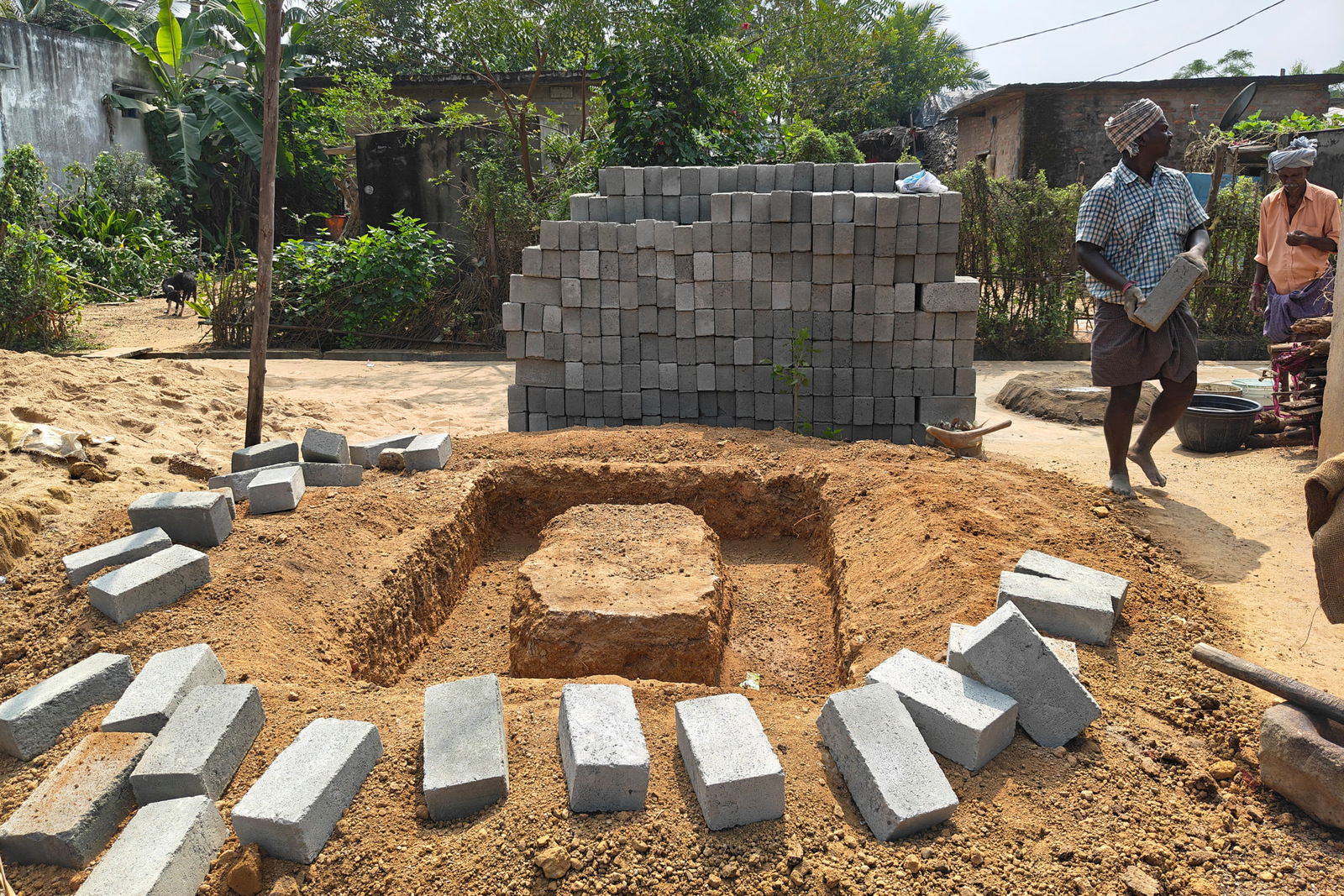
In the rural village of Kantepalli in Andhra Pradesh, India, a collaborative effort between German aid organization STELP and local partner Multipurpose Social Development Society (MSDS) is addressing critical gaps in sanitation infrastructure. The project focuses on constructing 40 permanent household toilets with attached bathing facilities for families who previously lacked access to safe, private sanitation. This initiative directly supports approximately 280 residents, many of whom had been practicing open defecation due to the absence of basic facilities.
Beyond physical construction, the program emphasizes hygiene education and community ownership through the establishment of Village Level Health Committees. These committees are designed to ensure long-term maintenance and proper use of the new facilities, recognizing that sustainable impact requires more than just building toilets—it demands behavioral change and local engagement. According to project documentation shared by MSDS, the initiative includes training sessions on handwashing, safe waste disposal, and disease prevention, particularly targeting children and women who are disproportionately affected by poor sanitation.
The lack of adequate sanitation in rural India remains a significant public health challenge. Open defecation contaminates water sources and spreads diarrheal diseases, which are a leading cause of malnutrition and child mortality in the region. By providing private, dignified sanitation options, the STELP-MSDS project aims to reduce infection risks and improve overall quality of life. Proper toilet use, combined with accessible water for handwashing, interrupts the transmission cycle of pathogens that spread through fecal-oral routes.
Hygiene infrastructure details are also being carefully considered. As noted in public health guidance, effective toilet hygiene requires consistent access to materials like toilet paper or water for cleansing, depending on local practices. In many Indian households, water-based cleaning is traditional, so the project includes provisions for water availability near toilets to support hygienic practices without relying solely on paper products. This approach aligns with World Health Organization recommendations that stress the importance of culturally appropriate, accessible hygiene tools in low-resource settings.
The project’s timing reflects growing attention to sanitation as a foundation for broader development goals. Access to safe toilets is linked to improved school attendance, especially for adolescent girls who may otherwise miss classes during menstruation due to lack of private, clean facilities. Although this specific initiative does not include school-based components, its focus on household sanitation contributes to a cleaner community environment that indirectly supports educational and economic stability.
STELP, based in Stuttgart, Germany, has a history of implementing humanitarian projects worldwide with an emphasis on dignity and self-determination. Their partnership with MSDS—a local organization deeply rooted in the social fabric of Andhra Pradesh—ensures that interventions are culturally sensitive and community-driven. Local labor is employed in the construction process, providing short-term employment opportunities and fostering technical skills that can be maintained beyond the project’s lifespan.
Monitoring and evaluation are integral to the project’s design. Health committees will track usage rates, maintenance needs, and any emerging hygiene concerns, feeding this data back into ongoing training efforts. This feedback loop allows for adaptive management, ensuring that the facilities remain functional and hygienic over time. Such accountability mechanisms are increasingly recognized as essential in international development work to prevent the common pitfall of infrastructure falling into disrepair shortly after installation.
While the project does not disclose specific funding amounts or construction timelines in publicly available materials, its alignment with national and global sanitation goals is evident. India’s Swachh Bharat Mission (Clean India Mission), launched in 2014, has aimed to eliminate open defecation and improve solid waste management across the country. Initiatives like the one in Kantepalli complement these efforts by working at the grassroots level where government programs may face logistical or cultural barriers to implementation.
The World Health Organization estimates that over 3.6 billion people globally still lack access to safely managed sanitation services, with rural populations in South Asia and Sub-Saharan Africa being most affected. In India alone, despite significant progress, millions continue to live without basic toilet access, particularly in remote villages. Projects that combine infrastructure with education and community governance offer a model for how external support can catalyze lasting change when designed in close collaboration with those it aims to serve.
As the toilets in Kantepalli near completion and hygiene training begins, the focus will shift to sustaining use and measuring health outcomes. Future updates from STELP or MSDS may include data on reductions in reported diarrheal cases, school attendance patterns, or user satisfaction surveys—metrics that help determine whether the intervention achieves its goal of long-term improvement. For now, the project stands as a testament to the power of targeted, partnership-driven action in advancing one of the most fundamental aspects of public health: access to a safe, clean toilet.
Readers interested in supporting similar initiatives can visit the official websites of STELP (stelp.org) and Multipurpose Social Development Society (msdsindia.org) to learn about ongoing projects and ways to contribute. These organizations regularly publish updates on their fieldwork, financial transparency, and impact assessments.
What are your thoughts on how sanitation projects can balance immediate needs with long-term sustainability? Share your experiences or insights in the comments below, and help spread awareness by sharing this article with others who care about global health equity.