
HyperMillennium: The Largest Cosmological Simulation Ever Created Reveals Universe’s Hidden Structures
In a landmark achievement for astrophysics, an international team of researchers led by China’s National Astronomical Observatories (NAOC) has unveiled HyperMillennium, the largest-ever cosmological simulation of the universe. Spanning a staggering 12 billion light-years and modeling 4.2 trillion virtual dark matter particles, this digital cosmos provides scientists with an unprecedented tool to study galaxy formation, dark energy, and the large-scale structure of the universe over 10 billion years.
The simulation, completed in April 2026, represents a quantum leap in computational cosmology. By employing N-body numerical simulations—a technique that tracks the gravitational interactions of millions of particles—researchers have recreated the universe’s evolution from just after the Big Bang to the present day. The result is a virtual universe that allows astronomers to “rewind time” and analyze how galaxies, galaxy clusters, and cosmic voids formed in exquisite detail.
What sets HyperMillennium apart is not just its unprecedented scale but its ability to balance high-resolution detail with statistical power. While previous simulations often sacrificed one for the other, this project delivers both: fine-grained modeling of rare, massive cosmic structures while maintaining robust statistical reliability across the entire simulated volume.
HyperMillennium is already proving invaluable for upcoming astronomical missions. It provides theoretical support for the European Space Agency’s Euclid mission, which aims to map the geometry of the dark universe, and China’s China Space Station Telescope, slated to conduct high-precision observations of cosmic structures.
Why This Simulation Matters: Unlocking the Secrets of Dark Matter and Dark Energy
Dark matter and dark energy remain two of the most profound mysteries in modern astrophysics. Together, they make up approximately 95% of the universe’s total mass-energy content, yet their nature remains poorly understood. HyperMillennium offers a critical bridge between theory and observation by:
- Recreating cosmic web formation: The simulation models how dark matter halos collapse under gravity to form the filamentary structures we observe today.
- Testing dark energy models: By comparing the simulation’s predicted large-scale structures with real data from telescopes like Euclid, researchers can refine theories about the accelerating expansion of the universe.
- Identifying rare cosmic structures: The high resolution allows scientists to study extremely massive galaxy clusters and supervoids that would otherwise be statistically insignificant in smaller simulations.
Dr. Wang Qiao, a researcher at NAOC and lead scientist on the project, emphasized the simulation’s breakthroughs in computational scale and accuracy. “This allows us to study extremely rare, massive cosmic structures in fine detail while maintaining strong statistical power,” he stated in a press release from the Chinese Academy of Sciences.
How the Simulation Works: From Big Bang to Present Day
The HyperMillennium simulation begins with the universe as it was just 50 million years after the Big Bang—a period known as the recombination era, when the first atoms formed. From there, the simulation advances in time steps, calculating how dark matter particles interact gravitationally to form the cosmic web: a vast network of filaments and nodes where galaxies reside, separated by enormous voids.
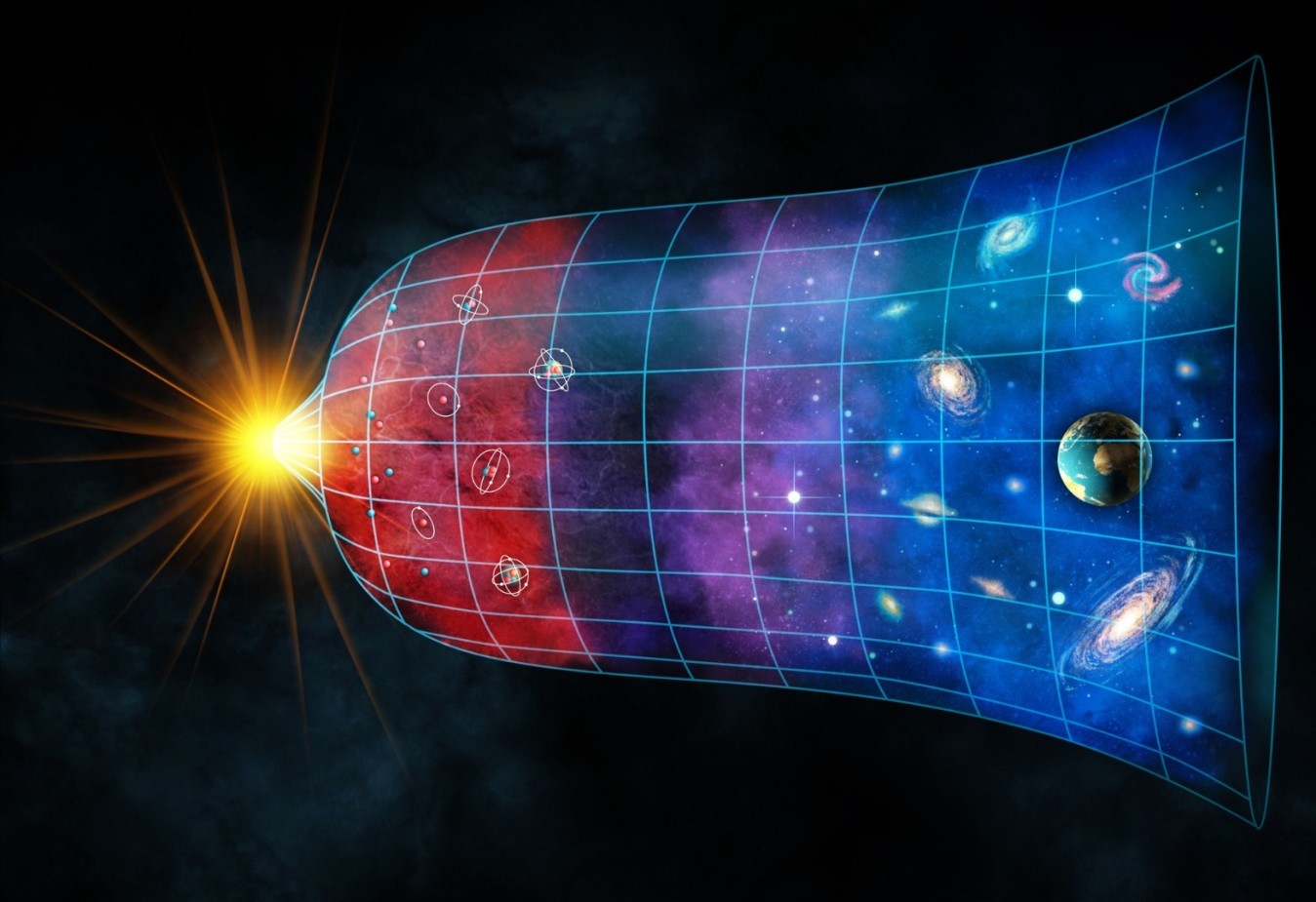
By incorporating additional physical models of galaxy formation, the team generated a catalog of virtual galaxies with realistic properties, including positions, brightness, and spectral characteristics. This “observational mock catalog” serves as a testbed for upcoming surveys, helping astronomers interpret real telescope data more accurately.
Global Collaboration and Future Applications
HyperMillennium is the result of a collaborative effort involving researchers from China, the United States, Germany, and other nations. The project required supercomputing resources equivalent to millions of hours of CPU time, distributed across high-performance computing clusters.
Looking ahead, the simulation will play a pivotal role in:
- Calibrating instruments for the Euclid Space Telescope, launched in 2023 to map the dark universe.
- Supporting the China Space Station Telescope, which will conduct high-resolution surveys of cosmic structures.
- Refining models of dark energy, potentially resolving discrepancies between theoretical predictions and observational data.
Key Takeaways
- Scale: HyperMillennium simulates a volume of 12 billion light-years on each side, containing 4.2 trillion dark matter particles.
- Resolution: The simulation achieves unprecedented balance between high-resolution detail of rare cosmic structures and robust statistical power.
- Purpose: It serves as a “digital twin” of the universe, helping astronomers interpret data from next-generation telescopes.
- Impact: The project advances research into dark matter, dark energy, and the large-scale structure of the cosmos.
- Collaboration: An international team led by China’s NAOC developed the simulation using supercomputing resources.
What’s Next for HyperMillennium?
The team behind HyperMillennium is now working to expand its applications, including:
- Generating synthetic observations to train machine-learning algorithms for galaxy classification.
- Exploring alternative cosmological models to test the standard Lambda-CDM paradigm.
- Collaborating with observatories to validate simulation predictions against real data.
For researchers and the public alike, HyperMillennium represents more than just a computational milestone—it’s a window into the universe’s hidden architecture. As Dr. Wang Qiao noted, “This simulation is not just about recreating the universe; it’s about unlocking its deepest secrets.”
To stay updated on the latest developments, follow official announcements from the Chinese Academy of Sciences and the European Space Agency.
Worth a look