
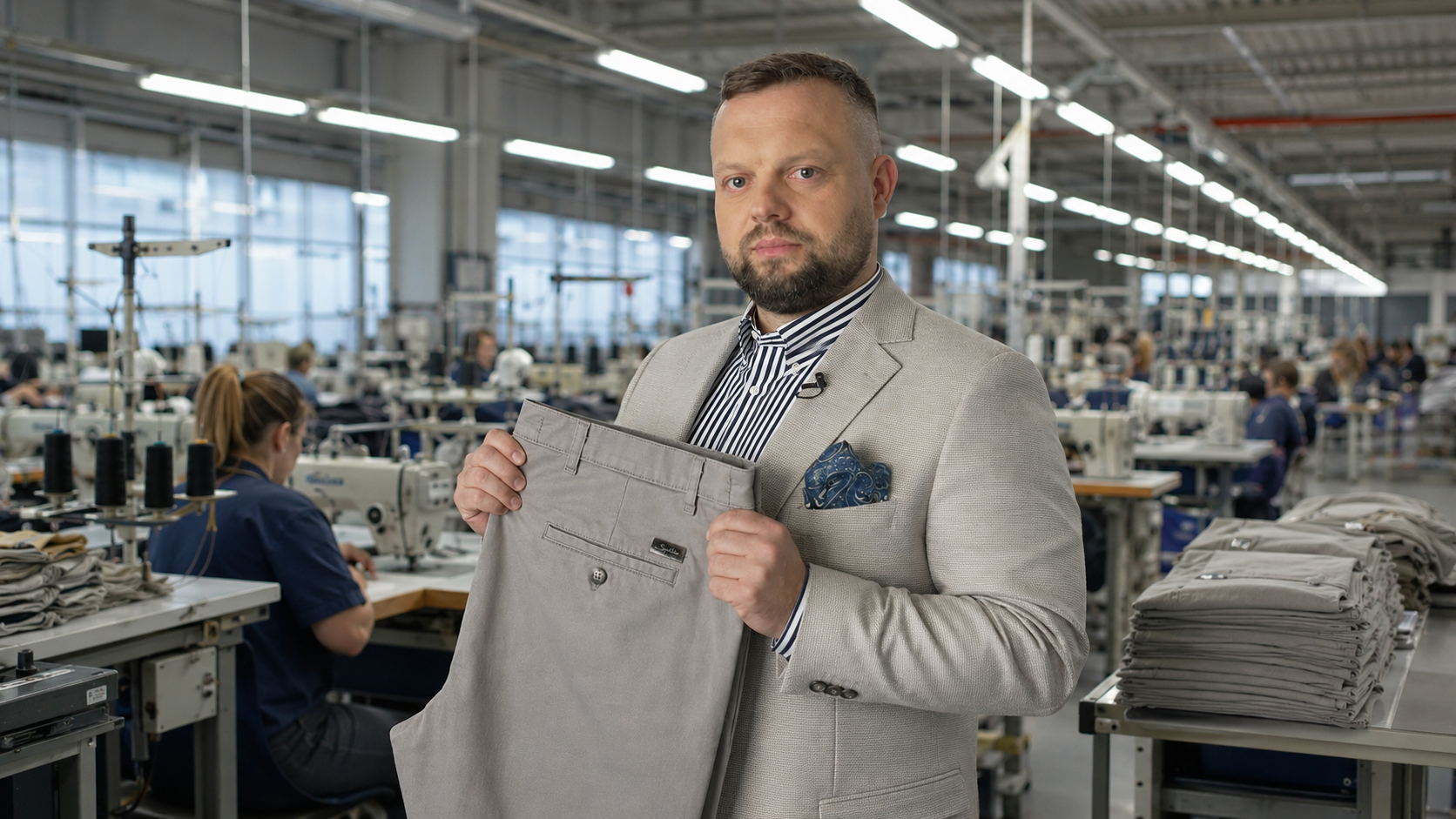
The decision to liquidate one’s only home to fund a business venture is a gamble that few entrepreneurs are willing to take. For most, the risk of total personal insolvency outweighs the potential for industrial success. However, in the competitive landscape of European textile manufacturing, such extreme stakes are sometimes the only way to secure the infrastructure necessary for rapid scaling.
This high-stakes approach to scaling a garment business through strategic acquisition has recently come to the forefront as a case study in industrial turnaround. By transitioning a facility from a dependent subcontractor for a global giant into a diversified, independent manufacturer, one entrepreneur has demonstrated the precarious but potentially rewarding path of “skin in the game” investing.
The transition from operating as a “shadow factory” for a global brand to becoming a market leader requires more than just capital; it requires a fundamental shift in operational philosophy. In the garment industry, where margins are often razor-thin and reliance on a single large client can lead to catastrophic failure, the move toward diversification is not just a growth strategy—it is a survival mechanism.
The High Cost of Entry: From Residential Asset to Industrial Capital
The journey began with a decisive and risky financial maneuver: the sale of a personal apartment to provide the necessary liquidity for an acquisition. In the world of corporate finance, this is the purest form of bootstrapping, where the founder’s personal net worth is directly tied to the company’s daily operational success. This level of commitment often signals a deep conviction in the underlying asset’s value that traditional lenders may overlook.
The target of the acquisition was a sewing plant that had previously operated as a primary supplier for a global industry leader. While such a pedigree provides an initial stamp of quality and a blueprint for high-volume production, it also creates a dangerous dependency. When a facility is optimized solely to meet the specifications and pricing demands of one “giant,” it often loses the agility required to serve a broader market.
The initial challenge was not merely maintaining the existing output but dismantling the psychological and operational reliance on a single corporate entity. The infrastructure was in place, but the business model was fragile. To move beyond this, the new ownership had to reinvest in technology and talent, shifting the focus from low-margin volume to high-value specialization.
Breaking the Cycle of Subcontracting Dependency
For many garment factories in Central and Eastern Europe, the “giant” model—producing massive quantities for a single global brand—is a trap. While it guarantees a steady stream of work in the short term, the global brand holds all the leverage. A slight shift in the brand’s sourcing strategy or a demand for lower unit costs can bankrupt a subcontractor overnight.
To mitigate this risk, the strategy shifted toward a diversified B2B portfolio. This involved identifying niches where quality and lead times are more critical than the absolute lowest cost. By pivoting toward a wider array of clients, the company insulated itself from the volatility of a single corporate partner’s decisions.
Key operational changes included:

- Diversification of Client Base: Moving away from a single-anchor client to a portfolio of mid-sized brands and specialized labels.
- Quality Upgrading: Implementing stricter quality control protocols to attract premium clients who are willing to pay a margin for reliability.
- Capacity Optimization: Reconfiguring the sewing lines to handle smaller, more complex batches rather than just monolithic runs of a single product.
This shift reflects a broader trend in the European textile sector. As brands seek to reduce their reliance on long-distance supply chains, “nearshoring”—the practice of moving production closer to the end consumer—has become a strategic priority. This shift is supported by data showing a growing preference for regional manufacturing to reduce carbon footprints and improve response times to fashion trends.
The Economics of Nearshoring and Industrial Resilience
The success of this turnaround is inextricably linked to the current macroeconomic shift toward regionalized production. For decades, the garment industry chased the lowest possible labor costs, leading to the mass migration of factories to Southeast Asia. However, the fragility of these long-distance chains was exposed during the global disruptions of the early 2020s.
Today, European manufacturers are finding a second wind. The ability to produce high-quality garments within the European Union allows brands to implement “just-in-time” inventory models, reducing waste and increasing the speed to market. For an entrepreneur who has invested their personal life savings into a plant, this systemic shift provides a powerful tailwind.
According to industry analysis, the move toward nearshoring is driven by three primary factors: the need for greater transparency in labor practices, the demand for faster turnaround times, and the desire to reduce the environmental impact of shipping. By positioning a factory as a reliable, agile European partner, a business can command higher prices than it ever could as a mere subcontractor for a global giant.
Comparing the ‘Giant’ Model vs. The Diversified Model
The difference in risk profiles between these two operational modes is stark. The following table illustrates the fundamental shift in business logic required for a successful turnaround:

| Feature | The ‘Giant’ Subcontractor Model | The Diversified Independent Model |
|---|---|---|
| Revenue Source | Single, dominant corporate client | Broad portfolio of diverse clients |
| Pricing Power | Low (Dictated by the client) | Moderate to High (Based on value/quality) |
| Risk Level | High (Single point of failure) | Distributed (Balanced risk) |
| Production Focus | High-volume, low-complexity | Flexible, specialized, and agile |
| Strategic Goal | Cost minimization | Value creation and reliability |
Lessons in Entrepreneurial Risk Management
While the sale of a home to fund a business is an extreme measure, the underlying principle is one of alignment. When a founder’s personal survival is linked to the company’s performance, the level of scrutiny applied to every operational detail increases exponentially. This “extreme ownership” often leads to faster decision-making and a more rigorous approach to cost management.
However, for the broader business community, the lesson is not necessarily to risk one’s primary residence, but to understand the importance of asset utilization. The entrepreneur in this case did not just buy a company; they bought a productive asset (the machinery and the skilled workforce) and changed the way that asset was deployed in the market.

For those looking to scale a business through acquisition, this story highlights several critical checkpoints:
- Identify Underutilized Assets: Look for companies with strong physical infrastructure but weak strategic direction.
- Assess Dependency Risks: Evaluate whether the target company is too dependent on a single client or supplier.
- Plan for the Pivot: Have a clear strategy for how to diversify revenue streams immediately after the acquisition.
- Calculate the “Worst-Case” Scenario: Understand the personal and professional cost of failure before committing non-diversified capital.
The Future of European Garment Manufacturing
The trajectory of this sewing plant is a microcosm of the wider struggle for industrial relevance in Europe. The competition is no longer just about who can sew a garment the cheapest, but who can do it the most sustainably and the most quickly. The integration of smart manufacturing—such as automated cutting and digital pattern making—will be the next frontier for businesses that have successfully navigated the transition to independence.
As the industry evolves, the focus is shifting toward “circular fashion,” where factories are not just creating new clothes but are equipped to repair, recycle, and repurpose existing textiles. For a diversified manufacturer, these new service lines represent an additional opportunity to further reduce dependency on any single market segment.
The transition from a subcontractor to a strategic partner is a difficult journey, but as this case demonstrates, the reward for taking a calculated (albeit extreme) risk can be the creation of a resilient, sustainable business that can withstand the volatility of global markets.
The next major benchmark for the regional textile industry will be the release of the upcoming EU textile strategy updates, which are expected to introduce stricter mandates on garment durability and recyclability. These regulations will likely favor agile, European-based manufacturers over distant, high-volume producers.
Do you believe that extreme personal financial risk is a necessary component of entrepreneurial success, or is it a gamble that modern business owners should avoid? Share your thoughts in the comments below.