
Lorraine Boissoneault’s personal account of tuberculosis treatment highlights enduring gaps in global healthcare access, particularly as concerns grow over potential policy shifts under latest U.S. Health leadership. The article, published in The Nation, connects her individual experience with systemic failures that leave millions without adequate care for preventable and treatable diseases like tuberculosis.
Boissoneault describes undergoing treatment for tuberculosis while observing how structural inequities in healthcare systems deny similar care to vast populations worldwide. Her narrative underscores the irony that while she received medical attention, many others face barriers rooted in poverty, race, and geographic location—factors that determine access to life-saving interventions more than medical need.
The piece specifically references Robert F. Kennedy Jr.’s leadership role at the U.S. Department of Health and Human Services (HHS), suggesting his approach could exacerbate existing disparities in care for diseases deemed “arcane” or neglected by mainstream public health systems. This claim ties her personal story to broader political developments affecting global health equity.
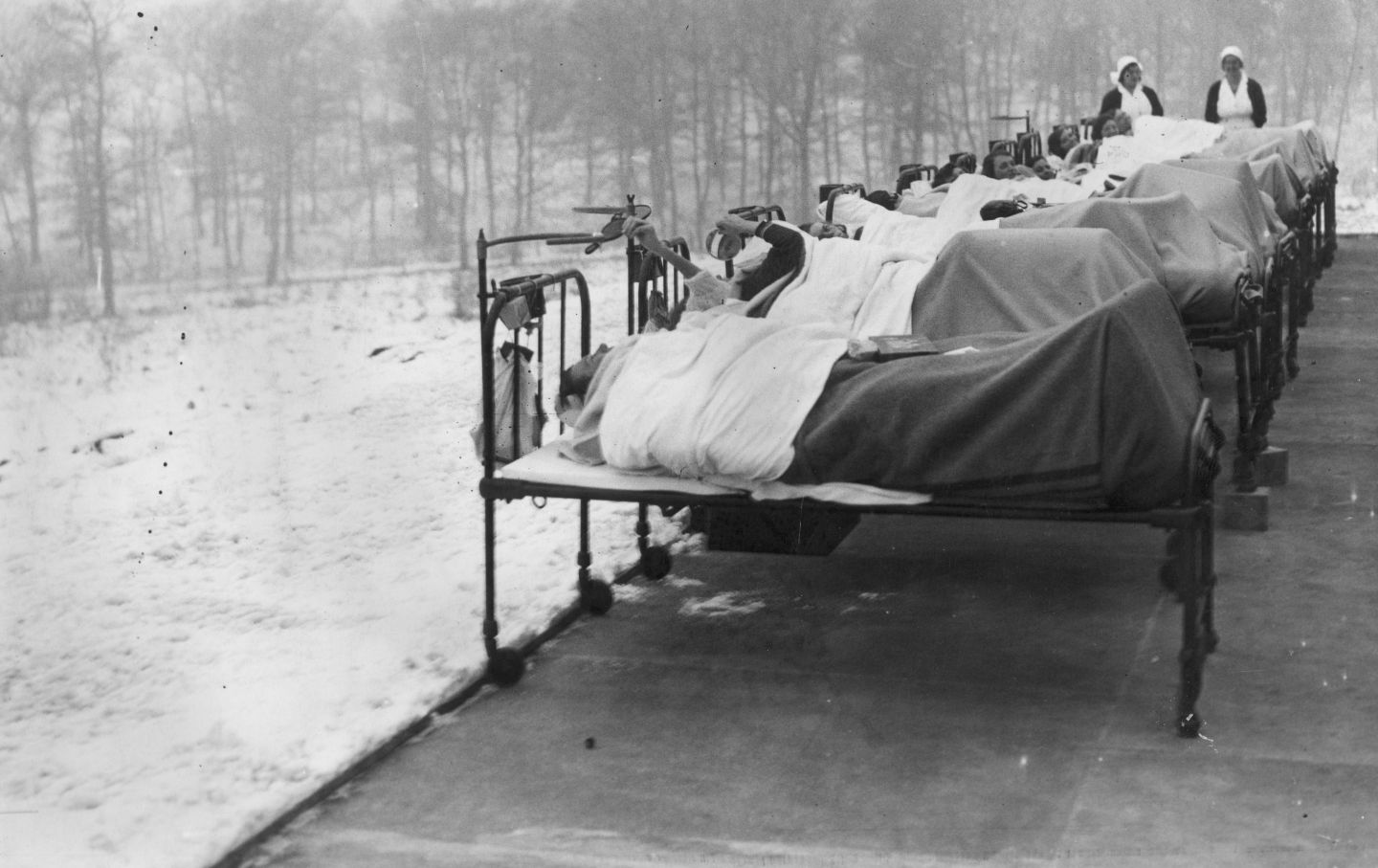
Historical context provided in the article includes a 1933 photograph from Harlow Wood Orthopaedic Hospital in Nottinghamshire, showing tuberculosis patients treated outdoors in snowy conditions—a once-common “curative” practice involving prolonged exposure to fresh air. This archival image illustrates how tuberculosis care has evolved, though access to modern treatment remains uneven across regions and socioeconomic groups.
Boissoneault’s critique extends beyond tuberculosis to question whether emerging technologies in other sectors—such as AI in judicial systems—might similarly reinforce existing biases rather than alleviate them. Drawing parallels between healthcare and justice system inequities, she argues that technological solutions often fail to address root causes of disparity when deployed without equity-focused design.
The article positions tuberculosis not merely as a medical condition but as a litmus test for societal commitment to equitable healthcare. By framing her treatment within the context of millions left untreated, Boissoneault challenges readers to consider how healthcare priorities are set and whose lives are valued in resource allocation decisions.
While the piece does not cite specific recent statistics on global tuberculosis incidence or mortality, it aligns with long-standing concerns raised by organizations like the World Health Organization about funding gaps in TB prevention, diagnosis, and treatment programs—particularly in low- and middle-income countries where over 80% of cases occur.
Boissoneault’s writing blends personal reflection with political commentary, using her experience as a lens to examine structural failures in public health infrastructure. Her argument centers on the idea that access to care should not depend on identity or geography, and that policy decisions at national levels—such as those involving HHS leadership—have tangible consequences for vulnerable populations worldwide.
The Nation article concludes by warning that without deliberate efforts to center equity in health policy, advances in medical science will continue to bypass those most in need, perpetuating cycles of illness and poverty that diseases like tuberculosis have long exploited.