ICE Detainee Deaths Under Scrutiny Following 911 Call Revelations
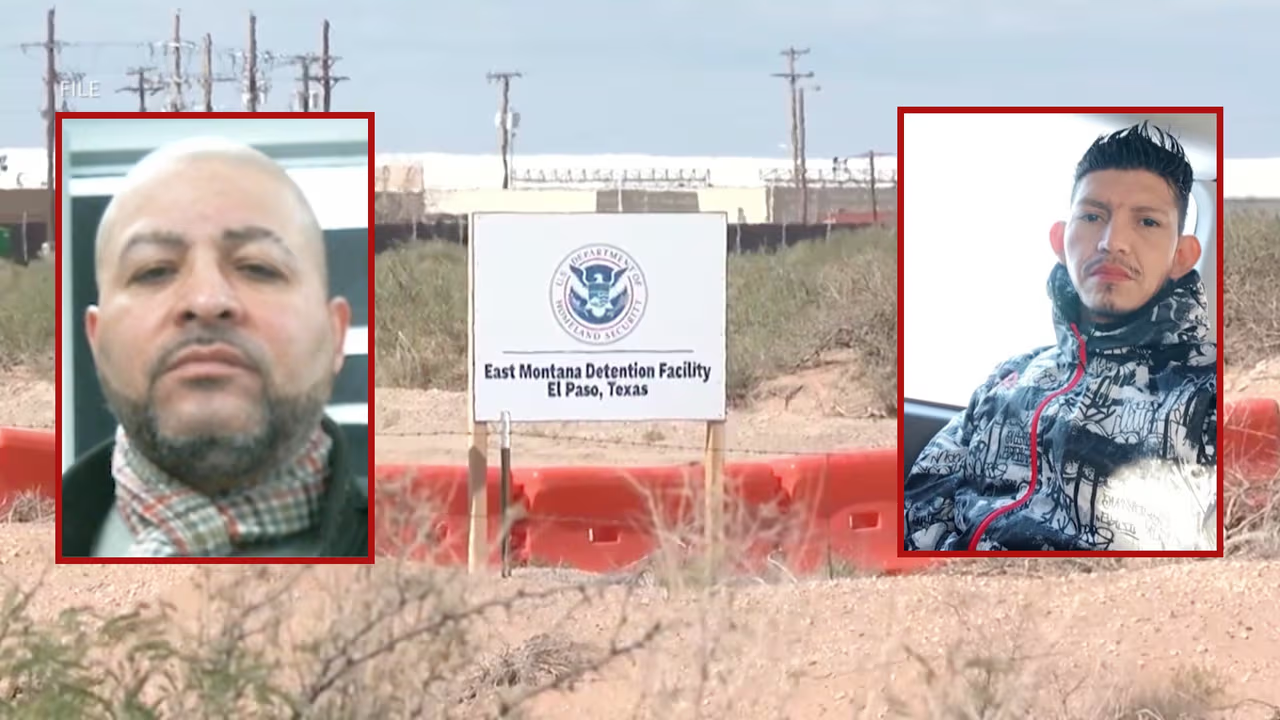
Recent disclosures of 911 calls originating from the Immigration and Customs Enforcement (ICE) detention facility at Camp East Montana in Fort Bliss, El Paso, Texas, are intensifying scrutiny surrounding the deaths of two detainees: Geraldo Lunas Campos and Víctor Manuel Díaz. The calls, made in January 2026, detail medical emergencies and raise questions about the quality of care provided within the facility, as investigations into the circumstances of both deaths remain ongoing and ICE disputes certain official findings. The cases highlight broader concerns about conditions within ICE detention centers and the treatment of individuals in immigration custody.
The renewed attention stems from audio recordings obtained and reported on by Univision San Antonio KWEX, which reveal urgent requests for medical assistance. These calls, coupled with an autopsy report ruling the death of Lunas Campos a homicide, are fueling calls for greater transparency and accountability from ICE. The agency has faced criticism for its handling of detainee medical care and its initial reporting on these incidents, prompting further investigation by advocacy groups and media outlets.
Geraldo Lunas Campos: From Medical Distress to Homicide Ruling
Geraldo Lunas Campos, a 55-year-old Cuban national with a complex criminal history, died on January 3, 2026, at Camp East Montana. Initially, ICE reported his death as resulting from “medical distress,” stating that medical staff responded and attempted life-saving measures before he was pronounced deceased by emergency medical services. However, the El Paso County Medical Examiner subsequently ruled his death a homicide, a determination that has significantly altered the narrative surrounding the case. NBC News reported the homicide ruling on January 30, 2026.
The autopsy revealed that Campos died of asphyxia due to neck and torso compression, indicating he was unable to breathe due to pressure on his neck and chest. According to the autopsy, Campos was “unresponsive while being physically restrained by law enforcement.” ICE, however, maintains that Campos had attempted to seize his own life and that security staff intervened to save him, claiming he “violently resisted” and continued to attempt self-harm during the struggle. A Department of Homeland Security spokesperson stated that Campos stopped breathing during the struggle and was pronounced dead at the scene after resuscitation attempts failed.
Campos had been in ICE custody since July 14, 2025, when he was arrested during an enforcement operation in Rochester, New York. He entered the U.S. In 1996 and had a lengthy criminal record, including convictions for criminal possession of a weapon (1998), petit larceny (1999, 2005, 2006), unlawful possession of a weapon during a robbery (2002), sexual contact with a child under 11 (2003), reckless driving (2006), possession of a controlled substance (2007), driving while intoxicated (2007) and sale of a controlled substance (2009). An immigration judge ordered his removal from the U.S. In 2005, but he remained in the country due to difficulties obtaining travel documents. He was transferred to Camp East Montana on September 6, 2025. ICE’s initial report detailed his criminal history.
Prior to his death, Campos reportedly experienced episodes of significant psychological distress, including self-harm and placements on suicide watch. He also had a documented history of tuberculosis, depression, anxiety, and asthma, as well as long-term psychotropic medication use. Six detainees at Camp East Montana reportedly told federal court statements that Campos begged for days to receive his asthma medication, but detention staff refused and threatened him with solitary confinement.
Víctor Manuel Díaz: Details Remain Limited
While details surrounding the death of Víctor Manuel Díaz are less publicly available than those concerning Campos, the 911 calls also pertain to his case. The calls suggest Díaz experienced medical emergencies while in ICE custody at Camp East Montana in January. The circumstances of his death are currently under review, and ICE’s findings are being disputed. Further information regarding Díaz’s background and the specifics of his medical condition have not been widely released.
Concerns Over ICE Detention Conditions and Medical Care
These deaths, and the accompanying revelations about emergency calls, are amplifying existing concerns about conditions within ICE detention facilities. Advocacy groups have long criticized the agency for inadequate medical care, overcrowding, and a lack of transparency. The Texas Tribune reported that investigators found Lunas Campos had a “complex medical and mental health history.”
The ruling of Campos’ death as a homicide is particularly significant, marking the first such determination in an ICE detainee’s death linked to staff in at least 15 years, according to experts. This raises serious questions about the use of force by ICE personnel and the protocols in place to handle detainees experiencing medical or mental health crises. The incident has prompted calls for independent investigations and a review of ICE’s detention standards.
ICE maintains that it takes seriously the health and safety of those in its custody and that it makes official notifications to Congress, non-governmental organizations, and the media upon reports of in-custody deaths. However, critics argue that the agency’s initial reporting often downplays the severity of incidents and lacks sufficient detail. The agency’s response to the recent revelations has been met with skepticism from advocacy groups and legal observers.
Looking Ahead
The deaths of Geraldo Lunas Campos and Víctor Manuel Díaz are likely to fuel further debate over immigration detention policies and the treatment of detainees. Investigations into both cases are ongoing, and the findings could lead to policy changes or legal action. The Department of Homeland Security has stated that the Campos case remains an active investigation. The public and advocacy groups are awaiting further details and a full accounting of the events leading to these deaths.
As of February 21, 2026, ICE has not announced any immediate changes to its detention procedures. However, the increased scrutiny and public pressure may compel the agency to re-evaluate its medical care protocols and oversight mechanisms. The outcome of these investigations will be crucial in determining the future of ICE detention practices and ensuring the safety and well-being of individuals in immigration custody.
What are your thoughts on the recent revelations regarding ICE detainee deaths? Share your comments below and share this article with your network.