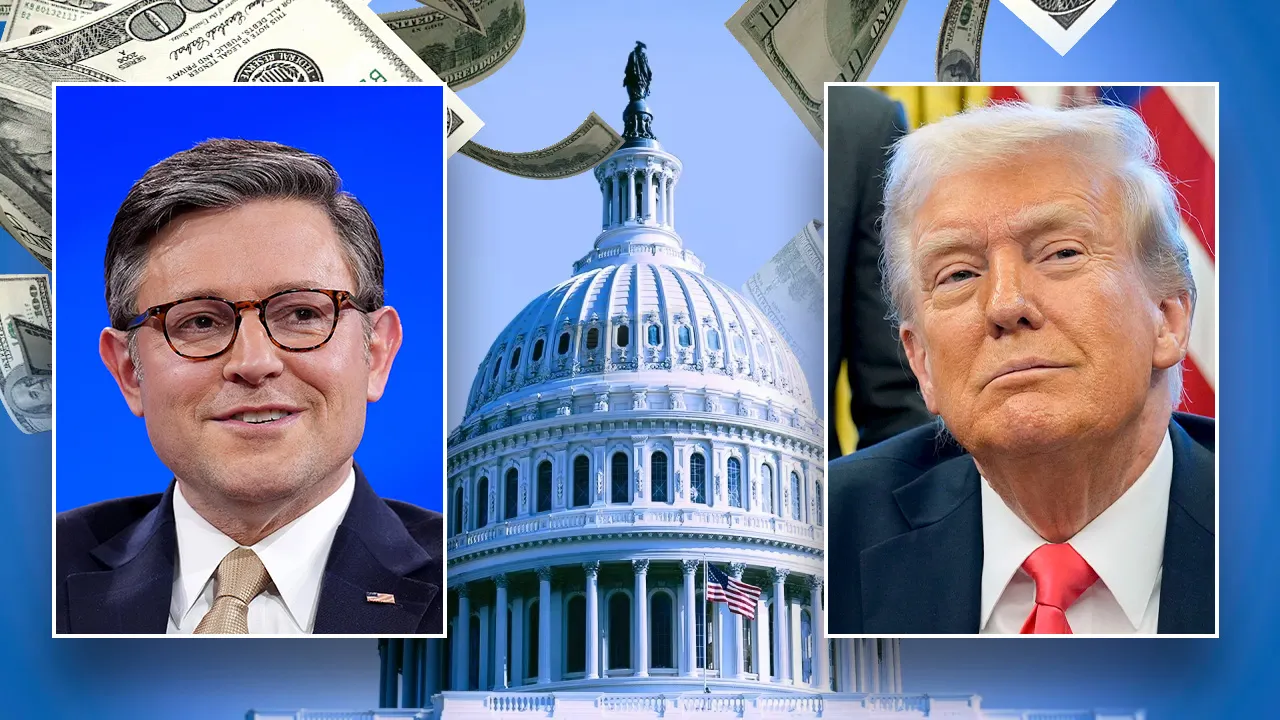
Concerns are growing among lawmakers and civil rights advocates that increased funding for U.S. Immigration and Customs Enforcement (ICE) could be used to intimidate voters in the upcoming 2026 midterm elections. The debate centers on a Republican-backed proposal to allocate an additional $70 billion to ICE and Customs and Border Protection (CBP), bringing the agency’s total budget to over $210 billion if approved.
This funding proposal follows the passage of the “Large Beautiful Bill” in 2025, which allocated $140 billion to ICE and CBP under the Department of Homeland Security (DHS). Critics argue that the scale of the proposed increase—representing a 400% budget growth over two years—raises serious questions about the agency’s expanding role beyond immigration enforcement into domestic political activities.
Representative Adriano Espaillat (D-NY), chair of the Congressional Hispanic Caucus, has been vocal in questioning the necessity of the additional funds. During a press conference at the U.S. Capitol in March 2026, Espaillat asked why ICE requires more funding after receiving record allocations the previous year, suggesting the money could be used to target voters in Democratic-leaning districts.
“We’ve already seen ICE conduct operations in cities like Chicago, Los Angeles, and Minneapolis that feel less like immigration enforcement and more like political intimidation,” Espaillat said. “If this funding passes without safeguards, we risk seeing federal agents deployed not to enforce immigration law, but to suppress voter turnout in communities of color.”
These concerns were echoed by Representative Robert Menendez (D-NJ), who warned that the additional $70 billion could be used to “militarize ICE” and deploy agents in blue states to interfere with elections. Menendez pointed to the lack of agreed-upon reforms—such as bans on warrantless raids and mandatory body cameras—as evidence that the agency is moving in a direction that threatens civil liberties.
“We’ve asked for basic accountability measures repeatedly, and they’ve been rejected,” Menendez stated. “When an agency refuses transparency and accountability although seeking unprecedented funding, the public has every right to question its intentions.”
The scale of the proposed budget has drawn comparisons to other federal agencies. If approved, ICE and CBP’s combined budget would exceed that of the Federal Bureau of Investigation (FBI), which received approximately $11 billion in 2025, and would surpass the total annual budget of the Federal Bureau of Prisons, which oversees federal incarceration at around $8 billion per year.
Critics also highlight the growing role of private prison contractors in ICE operations. Companies such as CoreCivic and GEO Group, which operate detention facilities under ICE contracts, have reported significant revenue growth. In 2024, CoreCivic reported over $1.8 billion in revenue, while GEO Group reported approximately $2.3 billion, much of it tied to immigrant detention services.
These financial ties have raised concerns about a “prison-industrial complex” influencing immigration policy. Advocacy groups like the Detention Watch Network argue that profit motives may be driving demands for higher detention levels, regardless of actual enforcement needs.
Meanwhile, the Department of Justice has continued to pursue legal actions related to election integrity, including lawsuits against 29 states to obtain voter data and requests for ballot records from jurisdictions such as Wayne County, Michigan, and Fulton County, Georgia. While the Justice Department has cited past allegations of fraud, no evidence has been presented linking these requests to the 2024 election outcomes.
The appointment of individuals who have promoted false claims about the 2020 election to oversight roles has further fueled skepticism. In early 2026, the Trump administration appointed Erik Olson—a known promoter of election fraud conspiracy theories—to lead a novel presidential advisory committee on election integrity. Olson previously worked with Mike Lindell, CEO of MyPillow, on failed legal challenges to the 2020 election results.
Constitutional scholars note that the president has no direct authority over election administration, which is primarily managed by state and local officials. However, federal agencies like the Department of Justice and DHS can influence elections through actions such as voter challenges, immigration enforcement near polling places, or public statements that undermine confidence in the electoral process.
Historical precedent shows that federal law enforcement has, at times, been used in ways that disproportionately affect minority communities during elections. In 2020 and 2022, reports emerged of ICE agents conducting operations near polling places in states like Arizona and Texas, though no direct evidence of coordinated voter suppression was proven.
Legal experts emphasize that any use of federal agents to intimidate or interfere with voters would violate federal law, including the Voting Rights Act of 1965 and 18 U.S.C. § 245, which prohibits interference with voting rights. The Department of Justice maintains a Public Integrity Section tasked with investigating such allegations.
As of April 2026, the proposed $70 billion increase for ICE and CBP remains under consideration in Congress. No vote has been scheduled, and the bill has not yet been formally introduced in either chamber. The House Appropriations Committee has not released a draft of the funding measure, and Senate leaders have not indicated whether they will accept up the proposal.
Immigrant rights organizations, including the American Immigration Council and UnidosUS, have urged Congress to reject the funding increase without strong oversight mechanisms. They argue that resources would be better spent on immigration court backlogs, which currently exceed 3.7 million cases, rather than expanding enforcement capacity.
“We are not opposed to responsible border management,” said one advocate who requested anonymity due to ongoing litigation. “But we are deeply concerned about giving an agency with a history of misconduct and minimal oversight the kind of budget that could allow it to operate as a political tool rather than a law enforcement body.”
The debate over ICE funding reflects broader tensions about the role of federal agencies in domestic politics, the influence of private contractors in public safety, and the potential for enforcement powers to be used in ways that undermine democratic participation. As the 2026 midterms approach, the question of whether ICE will be used to intimidate voters remains unresolved—and increasingly urgent.
For updates on congressional action regarding ICE funding, readers can monitor the official websites of the House Committee on Appropriations (appropriations.house.gov) and the Senate Committee on Appropriations (appropriations.senate.gov).
Keep reading