The Moral Imperative: Building a Fusion Movement for Life and Justice
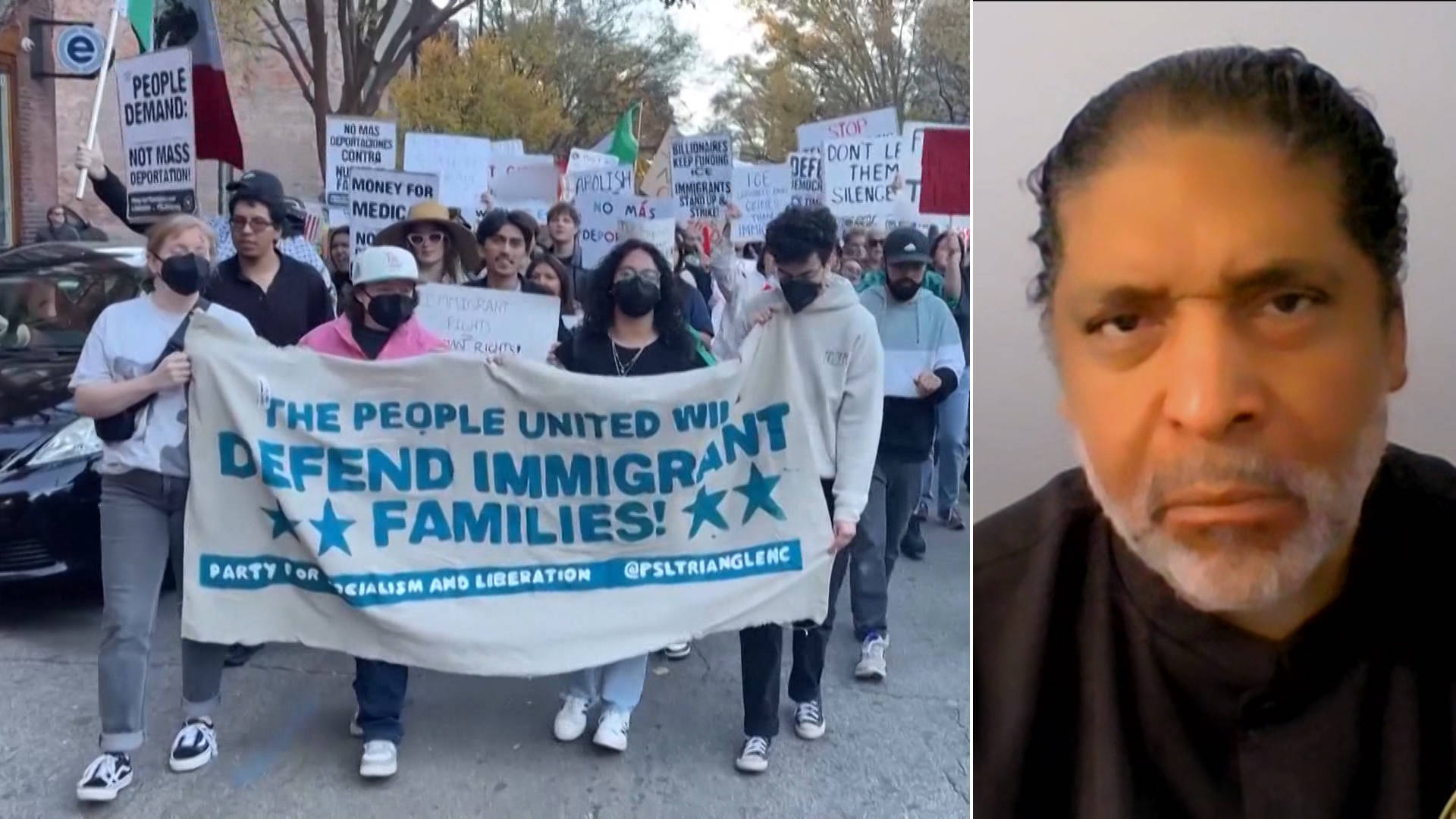
Bishop William Barber II, a leading voice in the modern American social justice movement and co-chair of the Poor People’s Campaign, recently articulated a powerful call to action on Democracy Now! His message isn’t simply about political opposition; it’s a fundamental challenge to policies he argues are actively destructive to human life. This isn’t a fleeting moment, but a sustained effort – a “Moral Mondays“ movement expanding across the nation – demanding a reckoning with the forces impacting the most vulnerable among us.
This article delves into Barber’s core arguments, the burgeoning solidarity across communities, and the urgent need for a unified, intersectional approach to fighting for a more just and equitable society. We’ll explore how you can understand and participate in this critical movement.
Beyond Partisan lines: A Fight for Survival
Barber frames the current struggle not as a left-versus-right debate, but as a stark choice between ”life versus death.” He points to policies impacting access to healthcare, food security, voting rights, and living wages as directly contributing to suffering and premature mortality. This isn’t hyperbole; it’s a direct response to the tangible pain experienced by millions of Americans.
The movement’s tactics are deliberately provocative. Beyond customary protests,organizers are bringing caskets to legislative bodies – a visceral symbol of the consequences of harmful policies. This isn’t meant to shock for shock’s sake, but to force a confrontation with the human cost of political decisions.
building Bridges: The Power of Intersectional Solidarity
A key theme emerging from the interview is the growing coalition of communities uniting against injustice. Barber emphasizes the crucial role of solidarity between Black, Brown, White, and Asian communities, alongside faith groups (Jewish, Muslim, Christian) and others.
This isn’t simply about acknowledging diversity; it’s about recognizing the interconnectedness of struggles. The pain caused by discriminatory policies, whether targeting immigrants, denying healthcare, or suppressing voting rights, resonates across communities.
* Shared Experiences: Recognizing that systemic oppression impacts multiple groups fosters empathy and understanding.
* Collective Power: A unified front amplifies voices and increases the pressure on policymakers.
* Strategic Alliances: Collaboration allows for the sharing of resources, knowledge, and strategies.
The recent success in Chicago, where community pressure led to the temporary removal of ICE from the city, exemplifies this power. However, organizers are prepared for a potential shift in tactics, anticipating ICE may operate more covertly. This highlights the need for sustained vigilance and proactive planning.
Preparing for the Long Haul: “Get Ready”
Barber’s message isn’t one of passive hope. He urges communities to “get ready” – to organize, train, and connect the dots between seemingly disparate issues. This preparation involves:
- Local Organizing: Building grassroots movements at the city, county, and state levels.
- Strategic Planning: Developing proactive responses to anticipated challenges.
- Issue Integration: Recognizing the interconnectedness of issues like healthcare, food security, immigration, and voting rights.
- Historical Awareness: Understanding that the fight for justice has a long and storied history in America.
This isn’t a new battle, Barber stresses. It’s a continuation of struggles waged by generations before us.
The Poor people’s Campaign: A Historical Framework
The foundation for this current movement lies in the legacy of the original Poor people’s Campaign, launched by Martin Luther King Jr. in 1968. Barber’s organization, Repairers of the Breach, carries forward this vision, advocating for policies that address systemic poverty and inequality.
The core principles of the Poor People’s Campaign remain remarkably relevant today:
* Economic Justice: Guaranteeing a living wage, affordable housing, and access to essential services.
* Social Justice: Combating racism,sexism,and all forms of discrimination.
* Political Justice: Protecting voting rights and ensuring equal depiction.
* moral Leadership: Grounding the movement in ethical principles and a commitment to human dignity.
What You Can Do: Join the Fusion movement
You don’t have to be a seasoned activist to contribute to this movement. Here are some concrete steps you can take:
*
Worth a look