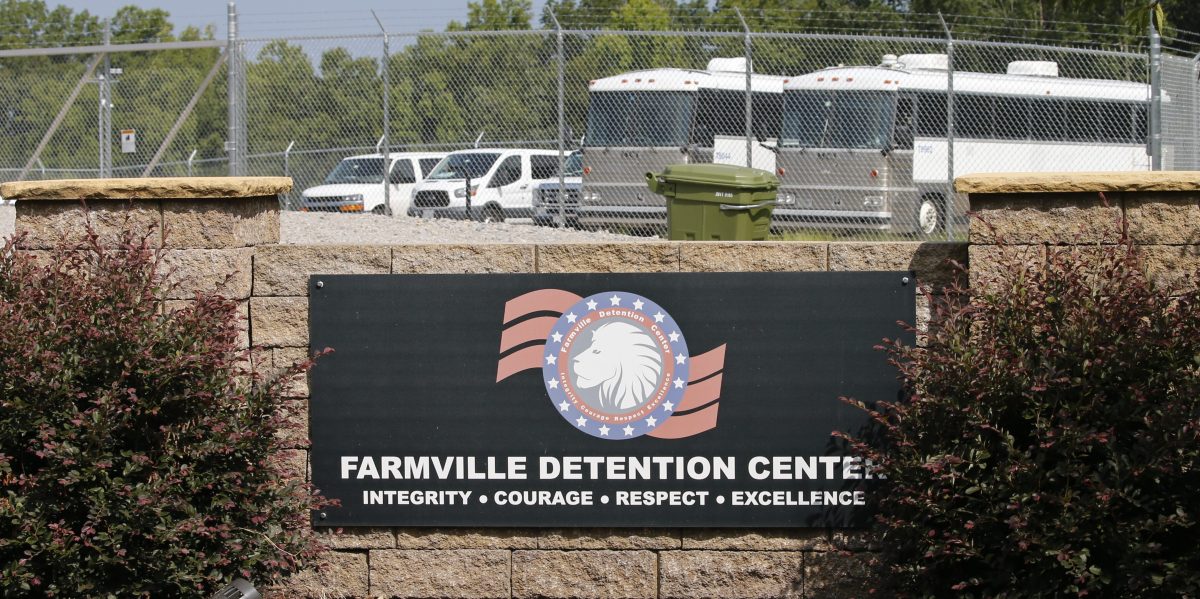
Aliaksei Shcharbachenia, a 35-year-old Belarusian asylum-seeker, alleges he is suffering from medical neglect at the Farmville Detention Center in Virginia, where a growing tumor on his arm has reportedly not been treated by a specialist. His case has drawn attention to the conditions within private immigration detention centers managed by contractors like CoreCivic.
Shcharbachenia, who has been detained for nearly a year, claims that despite multiple requests for medical evaluation, he has not received a diagnosis or specialist care. His grievances follow a reported attempted deportation to Belarus that he alleges involved physical assault by immigration agents while in transit through Turkey and Azerbaijan.
What medical care is available at Farmville Detention Center?
Shcharbachenia reports that a growth, described as being the size of an egg, has developed on his arm and has resulted in a loss of sensation in his right hand. According to complaints he submitted to the Department of Homeland Security (DHS) Office of Inspector General, he requested to see a medical specialist in December but has not yet received a formal diagnosis or specialized treatment.

While Shcharbachenia claims he has been denied adequate care, CoreCivic spokesperson Brian Todd stated that the detainee has been seen multiple times by onsite medical staff. Todd noted that the company’s priority is the “safety, health and well-being of the individuals entrusted to our care” and asserted that the facility adheres to all federal detention standards.

Regarding the facility’s environment, Shcharbachenia has alleged that the drinking water is “undrinkable,” the ventilation system is substandard, and the food quality is poor. CoreCivic has denied these claims, stating that the facility uses the same clean drinking water and ventilation systems as the surrounding local community.
Sophia Gregg, a senior immigrants’ rights attorney at the American Civil Liberties Union (ACLU) of Virginia, stated that medical services in these facilities can be “difficult to get for individuals, if not impossible.” Gregg suggested that the drive to expedite deportations may reduce the incentive for administrators to maintain humane medical conditions.
How did the attempted deportation to Belarus unfold?
Shcharbachenia alleges that on May 20, following a two-week period in isolation, he was moved to a facility in Chantilly, Virginia, before being placed on a flight intended to return him to Belarus. He claims that during this process, immigration agents attempted to force him onto a plane despite his documented fears of political persecution in his home country.
The asylum-seeker describes a traumatic sequence of events involving a transfer through Turkey and Azerbaijan. Shcharbachenia alleges that while in a cell in Turkey, a U.S. immigration agent struck him in the head, causing him to lose consciousness. He further claims that upon waking, he was restrained with white plastic collars around his limbs and was choked by an officer. These allegations were detailed in three separate complaints filed with internal DHS oversight agencies.
CoreCivic has denied allegations of retaliatory treatment and stated that the company utilizes “restrictive housing” rather than solitary confinement. ICE has not responded to requests for comment regarding the specific incidents involving Shcharbachenia’s attempted deportation.
What is the history of conditions at the Farmville facility?
The Farmville Detention Center, which was purchased by CoreCivic for $67 million, has a documented history of operational controversies. Advocates and records indicate several past incidents of misconduct and neglect at the site:
- 2015: U.S. Immigration and Customs Enforcement (ICE) records released via the Freedom of Information Act showed a guard pepper-sprayed a detainee while they were in full restraints in a medical isolation cell.
- 2020: A 72-year-old Canadian man, James Hill, died after contracting COVID-19 while in the facility during a period of detainee hunger strikes.
- Food Safety: The facility’s previous owner, Immigration Centers of America, previously faced a monthly invoice deduction after detainees reported finding “white worms” in their food.
The facility was originally opened in 2010. While its initial owners marketed the center as a “summer camp environment,” monitors from the organization Free Them All VA argue that the facility has long been characterized by neglectful conditions.
The expansion of private immigration detention
The case of Shcharbachenia comes amid a broader trend of increasing investment in the U.S. immigration enforcement infrastructure. Recent legislative and administrative moves have signaled a significant expansion of detention capacity.
According to reports, Congress recently approved approximately $70 billion for immigration enforcement efforts. Furthermore, the “One Big, Beautiful Bill Act” was reported to have allocated more than $170 billion over a four-year period for similar enforcement purposes. The Trump administration is reportedly moving to purchase additional detention centers with the goal of reaching a capacity to hold 100,000 immigrants simultaneously.
Advocates warn that this influx of capital may lead to an increase in facilities operated by private businesses that prioritize cost-cutting over detainee welfare. Gregg of the ACLU noted that many of these new sites may consist of converted warehouses or temporary shelters, raising concerns about their ability to provide humane oversight.
Key Details of the Shcharbachenia Case
| Category | Reported Detail |
|---|---|
| Detainee Name | Aliaksei Shcharbachenia |
| Nationality | Belarusian |
| Primary Allegation | Medical neglect (growing tumor) |
| Facility Location | Farmville, Virginia |
| Facility Operator | CoreCivic |
The next official updates regarding Shcharbachenia’s status will likely depend on the outcome of the complaints filed with the DHS Office of Inspector General and any subsequent medical evaluations ordered by federal oversight bodies.
Have thoughts on immigration detention oversight? Share your comments below and share this report to keep the conversation going.
Related reading
- Swiss Chilbi and Autumn Markets 2026: Dates and Locations Overview
- Two Soldiers Dead After Fort Hood Apache Helicopter Crashes in Texas, Sparking Wildfire
- DR Congo Ebola Outbreak: Over 2,000 Dead in Fastest-Growing Epidemic (world-today-news.com)
- USS Abraham Lincoln Sailors Attempt Suicide Amid Extended Deployment (news-usa.today)