As we cross the threshold of 60, the way we move through the world begins to shift. While we often focus on cardiovascular health or joint flexibility, there is a quieter, more critical indicator of functional longevity: balance. It is the invisible thread that connects our strength, our neurological health, and our independence. When balance is sharp, we navigate uneven sidewalks with confidence and reach for a high shelf without a second thought.
From my experience in internal medicine and medical journalism, I have seen that balance after 60 is rarely just about muscle strength. It is a complex symphony involving the vestibular system in the inner ear, visual cues from the eyes, and proprioception—the body’s innate ability to sense its position in space. When these systems synchronize, we move with fluidity. When they diverge, the risk of falls increases, which can lead to a cascade of health complications that compromise quality of life.
Maintaining stability is not a matter of luck but of consistent, targeted engagement. Research indicates that specific interventions can attenuate the hallmarks of aging, helping to preserve the neuromuscular pathways required for stability. By utilizing a few key balance exercises after 60, adults can not only test their current stability but also create a blueprint for improving their coordination and reducing the risk of injury.
The following four movements serve as both a diagnostic tool and a training regimen. They challenge different facets of stability—from static holding to dynamic reaching—providing a comprehensive look at how well the body controls its center of gravity.
The Foundation: The Single-Leg Stand
The single-leg stand is the gold standard for gauging baseline stability. This exercise forces the foot, ankle, and hip to work in unison to maintain an upright posture. Because the base of support is halved, the core must remain engaged to prevent the torso from tilting, while the lower leg makes constant, micro-adjustments to keep the body centered.
To perform this, stand tall with feet hip-width apart. Lift one foot entirely off the ground, balancing on the standing leg. Maintain a tall posture and keep the core tight. For those who find this easy, the difficulty increases significantly by closing the eyes. Removing visual input forces the brain to rely entirely on proprioceptive feedback from the joints and muscles, a critical skill for navigating dimly lit environments or avoiding trips.
Muscles Targeted: Foot stabilizers, calves, glutes, and the core.
Recommended Protocol: 2 to 3 rounds of 20 to 30 seconds per leg.
Form Tip: Keep the hips level; avoid the tendency to lean the torso toward the supporting leg.
Testing the Perimeter: The Stand and Reach
While the single-leg stand tests static balance, the stand and reach test challenges the ability to control the body while moving the center of gravity outside the base of support. This mimics real-world scenarios, such as reaching for a grocery item or stepping around an obstacle.

Begin by standing tall with feet hip-width apart. Shift the majority of the weight onto one leg. While keeping the standing leg steady, reach both hands forward as far as possible without losing balance or stepping. The goal is to extend the reach while maintaining a controlled, steady posture. Return to the starting position with deliberate movement.
Muscles Targeted: Glutes, hamstrings, and core.
Recommended Protocol: 2 to 3 sets of 5 controlled reaches per side.
Form Tip: Move slowly. Rushing the movement often leads to a loss of balance and increases the risk of a stumble.
Stability Under Pressure: The Split Squat Hold
The split squat hold assesses stability when weight is distributed unevenly between the front and back of the body. This position closely mirrors the mechanics of walking and changing direction. If you can hold this position without shifting side-to-side, it indicates strong pelvic stability and lower-body control.
Stand in a split stance with one foot forward and one foot back. Lower the hips into a lunge position until both knees are bent. Hold the bottom position, keeping the torso upright and the weight centered. Switch sides after the hold is complete.
Muscles Targeted: Quadriceps, glutes, and core.
Recommended Protocol: 2 to 3 rounds of 20 to 30 second holds per side.
Form Tip: Ensure the front knee does not extend past the toes to protect the joint.
Coordination and Hinge: The Single-Leg Reach
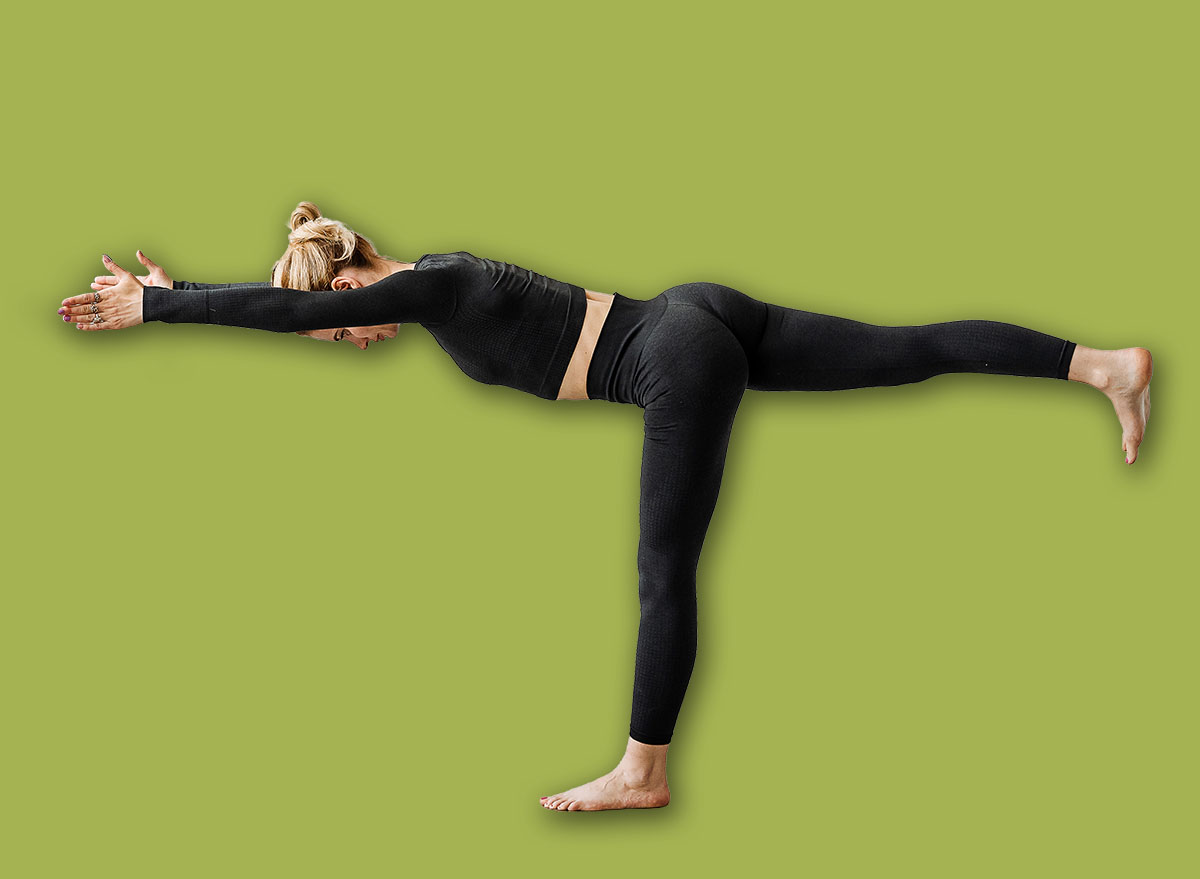
The final movement is the single-leg reach, often referred to as a Romanian Deadlift (RDL) pattern. This exercise is a sophisticated test of coordination, as it requires the body to hinge at the hips while simultaneously extending the opposite leg. It checks the ability to maintain a flat back and level hips while the center of gravity shifts forward and backward.
Stand tall with weight on one leg. Hinge at the hips, reaching the hands forward while extending the opposite leg straight back behind the body. The torso and the back leg should form a relatively straight line. Return to the standing position with control, focusing on the engagement of the posterior chain.
Muscles Targeted: Glutes, hamstrings, and core.
Recommended Protocol: 2 to 3 sets of 5 to 8 reps per leg.
Form Tip: Focus on the hip hinge; avoid rounding the spine.
Evaluating Your Results: What “Good Shape” Looks Like
When performing these balance exercises after 60, the objective is not athletic perfection, but functional control. Balance is a spectrum, and small adjustments—known as “postural sway”—are normal and necessary. However, there are specific markers that indicate whether your stability is in a strong place or requires more attention.
First, look for smooth, rhythmic movement. If the reps are jerky or if there is a moment of hesitation before each movement, it suggests the neuromuscular connection is lagging. Second, monitor the degree of “wobble.” A slight tremor is acceptable, but constant shifting or the need to “tap” the lifted foot on the floor indicates a deficit in stability.
Symmetry is also a key indicator. It is common for one side to feel more stable than the other. A significant discrepancy between the left and right sides can point to muscle imbalances or previous injuries that may need to be addressed to prevent future falls. For those who feel unsteady, using a wall or a sturdy chair for light support is a recommended starting point to build confidence before progressing to unsupported movements.
The Medical Imperative: Why Balance Declines
The decline in balance is often a multifaceted process. As we age, we may experience sarcopenia—the gradual loss of skeletal muscle mass—which weakens the stabilizers in the ankles and hips. Simultaneously, the sensory systems can degrade; the inner ear may become less sensitive, and visual acuity may diminish. According to the Centers for Disease Control and Prevention (CDC), falls are a leading cause of injury among older adults, making fall prevention strategies a critical component of public health.

However, the brain remains plastic. Engaging in balance training encourages neuroplasticity, allowing the brain to find new ways to process sensory information and maintain equilibrium. Research published in Aging and Disease emphasizes that age-related dysfunction in balance is not an inevitable decline but a condition that can be managed through targeted interventions and comprehensive reviews of movement patterns.
By integrating these exercises into a weekly routine, adults can maintain the “functional reserve” needed to handle unexpected slips or trips. This proactive approach to stability is as essential as managing blood pressure or cholesterol; it is a fundamental pillar of maintaining independence and autonomy in later life.
Key Takeaways for Stability Training
- Consistency Over Intensity: Short, frequent sessions (a few times a week) are more effective for neurological adaptation than occasional long workouts.
- Safety First: Always perform balance tests near a wall or stable furniture to prevent accidental falls during the learning phase.
- Focus on Proprioception: Progressing from eyes-open to eyes-closed exercises challenges the brain to rely on internal sensory cues.
- Prioritize Control: Value a slow, steady movement over a prompt, unstable one.
- Consult Professionals: If you experience sudden dizziness or significant instability, consult a healthcare provider to rule out vestibular or neurological issues.
The path to lasting mobility is built on a foundation of stability. By regularly testing and challenging your balance, you are doing more than just exercising; you are safeguarding your ability to move freely and confidently through the world.
For those seeking further guidance on fall prevention and mobility, the National Institutes of Health (NIH) provides extensive peer-reviewed research on the efficacy of balance training in older populations.
As we continue to explore the intersection of aging and wellness, the next major focus for health practitioners will be the integration of wearable stability sensors to track balance decay in real-time. Stay tuned for further updates on medical innovations in geriatric care.
Do you have a favorite stability exercise or a tip for staying balanced as you age? Share your experiences in the comments below or share this article with someone who wants to keep their mobility sharp.