Indonesia’s Stock Market Reels as Geopolitical Tensions Rise
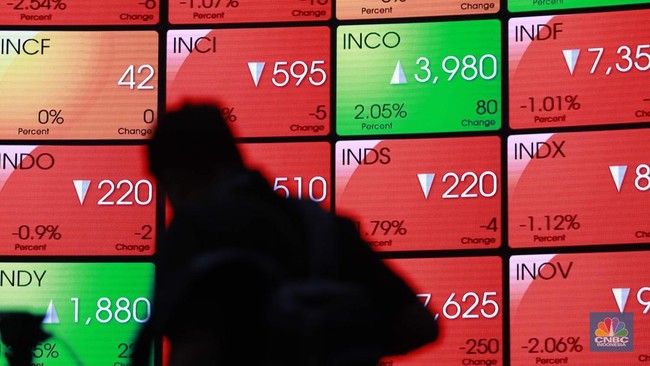
Jakarta, Indonesia – Indonesian shares experienced a significant downturn on Monday, March 2, 2026, as escalating tensions between the United States, Israel, and Iran rattled global financial markets. The Jakarta Composite Index (IHSG) closed down 2.66%, or 218.66 points, at 8,016.83, reflecting investor anxieties over the potential for wider conflict in the Middle East. The decline underscores the vulnerability of emerging markets to geopolitical shocks and the swiftness with which risk aversion can take hold.
Trading volume was robust, reaching Rp29.83 trillion (approximately $1.94 billion USD based on a March 3, 2026 exchange rate of 15,365 IDR per USD), with 56.60 billion shares changing hands across 3.65 million transactions. While 108 stocks managed to gain ground, a substantial 674 declined, and 41 remained unchanged, illustrating the broad-based selling pressure. The Indonesian Rupiah (IDR) also experienced some volatility, though it remained within recent trading ranges.
Foreign investors were net sellers on Monday, offloading Rp631.01 billion (approximately $41.04 million USD) across the Indonesian stock market. This outflow was split between Rp490.53 billion in regular market transactions and Rp140.49 billion in negotiated and cash trades. The substantial foreign selling contributed significantly to the IHSG’s decline, signaling a flight to safer assets amid heightened uncertainty. This trend mirrors similar movements in other Asian markets, as investors reassess their risk exposure.
Stocks Hit Hardest by Foreign Sell-Off
Several Indonesian stocks experienced particularly heavy selling pressure from foreign investors on Monday. Data compiled by Stockbit, a popular Indonesian investment platform, revealed the following net foreign sales:
- PT Medco Energi Internasional Tbk. (MEDC) – Rp528.10 billion
- PT Bank Central Asia Tbk. (BBCA) – Rp522.3 billion
- PT Bank Negara Indonesia (Persero) Tbk. (BBNI) – Rp119.04 billion
- PT Bank Mandiri (Persero) Tbk. (BMRI) – Rp118.51 billion
- PT Elnusa Tbk. (ELSA) – Rp76.76 billion
- PT Merdeka Gold Resources Tbk. (EMAS) – Rp69.85 billion
- PT Vale Indonesia Tbk. (INCO) – Rp59.28 billion
- PT Hartadinata Abadi Tbk. (HRTA) – Rp57.98 billion
- PT Petrindo Jaya Kreasi Tbk. (CUAN) – Rp43.69 billion
- PT Bumi Resources Tbk. (BUMI) – Rp41.87 billion
The concentration of foreign selling in these ten stocks suggests a targeted reassessment of risk within specific sectors. Medco Energi, a major Indonesian energy company, and the large banking institutions – BCA, BNI, and Mandiri – were particularly affected. Vale Indonesia, a subsidiary of the Brazilian mining giant Vale, also saw significant outflows, potentially reflecting concerns about the impact of geopolitical instability on commodity prices and supply chains. Bumi Resources, a natural resources company, experienced similar selling pressure.
Market Response and Calls for Rationality
Jeffrey Hendrik, the acting Director General of the Indonesia Stock Exchange (IDX), acknowledged the impact of escalating geopolitical tensions on the IHSG. Speaking on Monday, Hendrik urged investors to remain rational and focus on fundamental investment principles. He emphasized the importance of aligning investment strategies with individual risk tolerance levels. This message is consistent with the IDX’s broader efforts to promote market stability and investor confidence during periods of volatility. Detik Finance reported on Hendrik’s statement, highlighting the IDX’s commitment to maintaining market order.
The recent escalation in conflict began with reported attacks by the United States and Israel on Iranian targets on Saturday, February 28, 2026. Reports indicate that Ali Khamenei, the Supreme Leader of Iran, was confirmed to have been killed in the attacks. This development significantly raises the stakes in the conflict and increases the risk of further retaliation and escalation. The situation remains highly fluid and unpredictable, making it difficult to assess the long-term impact on global markets.
Impact on Commodity Prices
The conflict in the Middle East has the potential to disrupt global oil supplies, leading to increased prices. Iran is a significant oil producer, and any disruption to its production or exports could have a substantial impact on the global energy market. Higher oil prices could contribute to inflationary pressures and potentially dampen global economic growth. Indonesia, as a net importer of oil, is particularly vulnerable to these effects. Kompas.com suggests that commodity-related stocks may offer some resilience in the current environment, though this remains subject to significant uncertainty.
Sectoral Implications
While the IHSG experienced broad-based selling, certain sectors may be more vulnerable than others. The energy sector, as mentioned above, is likely to be heavily influenced by oil price movements. The financial sector, represented by the significant foreign selling in BCA, BNI, and Mandiri, could face headwinds if the economic outlook deteriorates. The mining sector, as evidenced by the outflows from Vale Indonesia, is also susceptible to geopolitical risks and commodity price volatility. Conversely, defensive sectors, such as consumer staples and healthcare, may offer some protection during periods of market turmoil.
Looking Ahead
The Indonesian stock market is expected to remain volatile in the near term as investors continue to assess the evolving geopolitical situation. The IDX’s call for rationality and a focus on fundamentals is a prudent approach for investors navigating these uncertain times. Monitoring developments in the Middle East and their potential impact on global markets will be crucial. The next key event to watch will be any further escalation or de-escalation of the conflict between the United States, Israel, and Iran, as well as any policy responses from major central banks.
As of Tuesday, March 3, 2026, market participants are awaiting further clarity on the situation and potential diplomatic efforts to de-escalate tensions. The Indonesian government has not yet issued a formal statement regarding the conflict, but is likely monitoring the situation closely. Investors are encouraged to stay informed and consult with financial advisors before making any investment decisions.
What are your thoughts on the current market volatility? Share your insights and perspectives in the comments below. Don’t forget to share this article with your network to keep them informed about the latest developments in the Indonesian stock market.
Worth a look