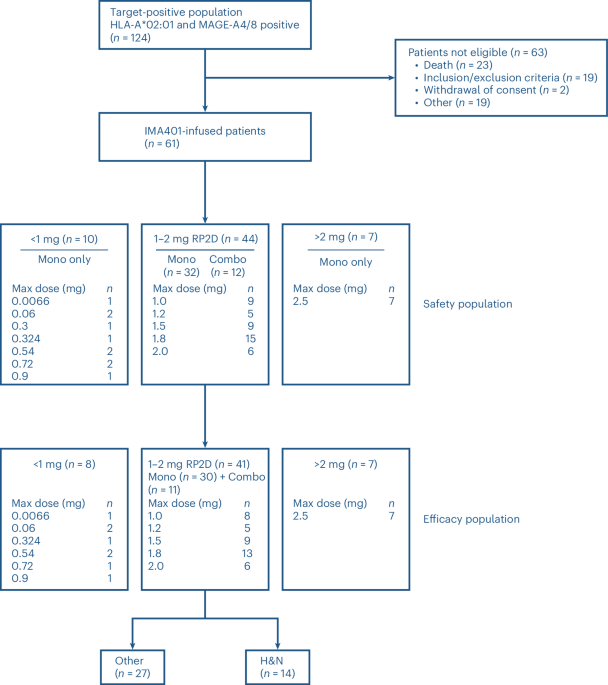
Recent developments in the field of precision oncology have brought renewed attention to the potential of T cell-based immunotherapies. As researchers continue to explore novel ways to harness the body’s immune system to identify and eliminate cancer cells, a specific class of drugs known as bispecific T cell engagers is moving through early-stage clinical evaluation. Among these, the investigational agent IMA401, designed to target MAGE-A4 and MAGE-A8 proteins, has become a focal point of clinical interest for patients with advanced, treatment-resistant solid tumors.
At the 2026 ASCO Annual Meeting, investigators presented interim data from a Phase 1a clinical trial evaluating the safety and preliminary activity of this T cell receptor (TCR)-based therapeutic. The study focuses on a patient population that has faced significant challenges, specifically those with recurrent or refractory solid tumors—cancers that have either returned after initial treatment or have failed to respond to standard-of-care therapies. The trial, officially registered as NCT05915505, represents an ongoing effort by Immatics N.V. To expand the reach of immunotherapy into solid tumor types that have historically been difficult to treat with conventional checkpoint inhibitors alone.
Understanding TCR-Based Bispecific T Cell Engagers
To understand the significance of this research, This proves helpful to look at how these molecules function. Unlike traditional CAR-T cell therapies, which require the engineering of a patient’s own T cells in a laboratory, bispecific T cell engagers are “off-the-shelf” biologic agents. They are designed to act as a bridge between a patient’s immune system and the tumor. One arm of the molecule binds to a specific T cell receptor, while the other arm targets a peptide presented by the human leukocyte antigen (HLA) on the surface of the cancer cell.
In the case of IMA401, the targets are MAGE-A4 and MAGE-A8—proteins that are part of the cancer-testis antigen family. These proteins are typically expressed in the testes but are often “switched on” in various solid tumors, making them attractive targets for immunotherapy because they are generally absent in healthy adult tissues. The trial assesses the drug’s ability to bind these peptides when presented by HLA-A*02:01, a common genetic marker, as noted in the official company disclosure regarding the interim findings.
Preliminary Findings and Clinical Observations
The interim analysis presented at the 2026 ASCO conference offered the first look at the safety profile of IMA401 in humans. Clinical researchers observed encouraging safety signals, which is a critical milestone for any early-phase dose-escalation study. In oncology, Phase 1 trials are primarily designed to establish the maximum tolerated dose and to identify dose-limiting toxicities, ensuring that the treatment does not cause unacceptable harm to the patient.

Beyond safety, the data provided a preliminary efficacy signal. This was observed in a cohort of patients suffering from head and neck cancers and melanoma. Notably, the study included patients treated with the engager as a monotherapy, as well as those receiving a combination regimen that included anti-PD-1 therapy. The inclusion of anti-PD-1, a standard checkpoint inhibitor, is a strategic choice. these drugs work by “releasing the brakes” on the immune system, potentially allowing the bispecific engager to be more effective by preventing the cancer from suppressing the T cell response.
Key Takeaways from the Interim Data
- Target Specificity: The agent focuses on MAGE-A4/A8, aiming to minimize “off-target” toxicity by targeting proteins primarily expressed in tumor cells.
- Patient Population: The trial specifically recruits patients with recurrent or refractory solid tumors who have exhausted standard treatment options.
- Combination Potential: Preliminary data suggests that combining TCR-bispecifics with checkpoint inhibitors like anti-PD-1 may be a viable path forward for enhancing immune-mediated tumor clearance.
- Safety Monitoring: As reported by the American Society of Clinical Oncology, ongoing monitoring remains a priority as the trial moves into higher dosage cohorts.
The Road Ahead for Solid Tumor Immunotherapy
While these initial results are promising, it is essential to maintain a measured perspective. Phase 1a trials are small by design and are intended to provide proof-of-concept rather than definitive proof of efficacy. The medical community will be watching for the full data set, which will provide a more comprehensive view of the duration of response and the long-term safety profile of the treatment.
The challenge with solid tumors, compared to blood cancers, has long been the “tumor microenvironment”—a physical and chemical barrier that often prevents immune cells from penetrating the tumor. By utilizing a bispecific engager that can potentially recruit and activate T cells directly at the site of the malignancy, researchers hope to overcome these barriers. However, further validation through Phase 1b and Phase 2 trials will be required to determine if these early signals translate into meaningful clinical benefits, such as progression-free survival or overall survival for patients.
How to Stay Informed
For patients and their families seeking the most current information regarding this trial, the best resource is the official registry maintained by the U.S. National Library of Medicine. Clinical trials are dynamic; inclusion criteria, site locations, and status updates can change as the study progresses. It is always recommended to consult with a medical oncologist to discuss whether a clinical trial is a suitable option based on an individual’s specific tumor profile and medical history.
The next major update for this study is expected as the researchers complete the dose-escalation phase and move toward establishing a recommended Phase 2 dose. These updates are typically presented at major oncology gatherings or published in peer-reviewed medical journals. As we continue to track the development of IMA401, we remain committed to reporting on the advancements in precision medicine that offer hope to those facing the most difficult-to-treat cancers.
Are you or a loved one navigating a cancer diagnosis? We invite you to share your thoughts or questions in the comments below. For more in-depth reporting on the latest in medical innovation and public health policy, subscribe to our newsletter for weekly updates from the world of clinical research.
Worth a look
- New Breathalyzer-Style Device Accurately Measures Fat Burning Through Exhaled Air
- Researchers Aim to Heal Broken Hearts Using the Body’s Own Immune Defense
- Marlen Reusser wins Stage 4 time trial to claim Tour de France Femmes yellow jersey (time.news)
- Ada Mage Zayas Fine Arts Center Reopens in Juana Díaz, Puerto Rico (archynewsy.com)